Most travelers book an all-inclusive expecting to order whatever they want at the bar without ever seeing a bill. Then day two arrives, someone asks for a glass of champagne or a whiskey with a recognizable label, and the bartender quietly mentions a surcharge. Add in minibar fees and drink menus that change from one resort to the next, and what “unlimited drinks” actually means becomes surprisingly unclear.
The truth is that all-inclusive resort drinks vary more than most booking pages suggest. Some properties pour premium brands and restock your minibar for free, while others charge extra for anything beyond house liquor and draft beer. This guide walks through what is usually included, what often costs extra, how minibars and room service work, when a premium drink package pays off, and how inclusions differ by destination and resort tier. You’ll also find a simple checklist for verifying the drink policy before you book, so the only surprise at the bar is how fast the waiter remembers your order.
What All-Inclusive Resort Drinks Are Usually Included
At nearly every all-inclusive resort, the base package covers a solid range of drinks from morning to last call. The key word is “house”: most resorts pour their own label or a local brand for spirits, wine and beer, and that house selection is included everywhere on the property, from the buffet to the swim-up bar.
House wine is usually available by the glass in red, white and rosé, both at meals and at the bars. Local and draft beer flows freely, and the standard well spirits (vodka, rum, gin, whiskey and tequila) are all part of the package. Non-alcoholic options are just as generous, and you can typically get them at every bar and restaurant without limits.
Bartenders also make the classic cocktails you’d expect at a beach resort, using the house liquors rather than name brands. The taste is nearly identical; the difference only matters if you insist on a specific label.
- House-brand spirits: the well versions of vodka, rum, gin, whiskey and tequila, poured at every bar on the property.
- Local and draft beer: usually the country’s mainstream lager on tap, with bottled imports often kept behind the paid tier.
- House wine by the glass: red, white and rosé served at meals and bars; bottles from the wine list usually cost extra.
- Soft drinks, juices, coffee, tea and hot chocolate: unlimited at all bars and restaurants, including fountain sodas and drip or basic espresso coffee.
- Classic cocktails: mojitos, margaritas, piña coladas and similar favorites, made with house liquors and typically included even at budget-tier properties, along with happy-hour specials and daily cocktail menus.
- Pool, beach and lobby bar service: included during opening hours, which typically run from around 10am to midnight, though exact times vary by property.
Drinks That Often Cost Extra
This is where surprise bar bills come from. The drinks most commonly kept behind a paywall are the premium ones: imported champagne, top-shelf whiskey, aged rum and name-brand spirits. Ask for a specific label by name and there’s a good chance the bartender will point to the drinks menu with prices, or offer the house version instead.
À la carte restaurants and specialty venues are another gray zone. Many resorts include standard drinks during dinner, but treat anything “craft” as an upsell. That can mean specialty coffees like Irish coffee or a dedicated espresso-bar menu, guided wine tastings, and mixology classes that sound included in the brochure but show up on your folio at checkout.
Bottled wine is the classic example. House wine by the glass is included, but the moment you order a bottle from the restaurant’s wine list, you’re paying for it, often $25-60 per bottle depending on the selection. Some guests happily spend that on a nice dinner wine; others discover the charge only when the bill arrives.
A few smaller extras catch people off guard too, and they vary by property:
- Energy drinks: often excluded from the base package even when sodas and juices are included, since they’re treated as a separate product category.
- Fresh coconut drinks: sometimes free when served at a beach bar, but charged as a specialty item at other properties, especially when served in the coconut itself.
- Smoothies and fresh-fruit blends: frequently sit outside the standard juice selection and are billed as premium non-alcoholic drinks.
- Specialty coffees and tastings: espresso-bar drinks, wine tastings and cocktail-making classes at à la carte venues are the most common paid add-ons in this category.
Minibars, Room Service and In-Room Drinks
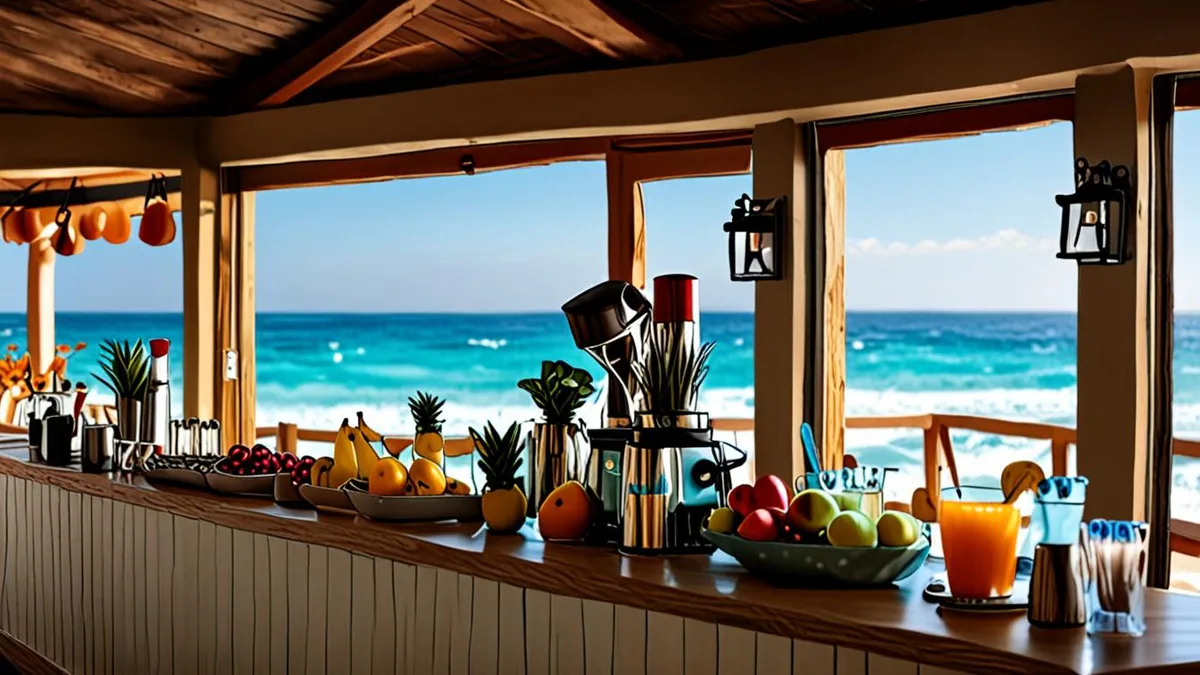
Your room is where drink policies differ the most between resorts, and it’s the area travelers research the least. In Mexico and the Caribbean, many all-inclusives restock the minibar daily with beer, soda and bottled water at no charge. Use them, and the fridge is refilled the next day as part of your package.
Elsewhere the picture changes. Some European-style clubs and budget all-inclusives either charge for everything in the minibar or leave it empty altogether, treating it as a paid convenience rather than an inclusion. This is one of the biggest practical differences between destinations, and it’s exactly the kind of detail worth checking when you’re comparing resorts before you book.
Room service and late-night drinks
At 4-5 star all-inclusives, 24-hour room service with drinks is fairly common, which matters if you want a cold beer on the balcony at 2am. Smaller properties usually limit room service to set hours, often ending late in the evening, so late-night drinks mean a walk to the lobby bar if it’s still open.
Watch out for sensor-tracked minibars
Before you lift anything out of the fridge, check whether it’s complimentary or sensor-tracked. Some resorts use weight sensors or optical tags that register an item the moment you remove it, triggering an automatic charge to your room even if you put it back. If you’re unsure, ask at check-in or call the front desk before touching anything. A one-minute question beats an unexpected line on your checkout bill, especially at resorts where minibar items are excluded from the package.
Premium Drink Packages: When the Upgrade Pays Off
Most mid-range all-inclusive resorts sell a premium drink tier on top of the standard package. These upgrades commonly run $20-50 per person per day and unlock imported spirits, name-brand beers and sometimes sparkling wine or champagne by the glass. If the base package only pours house rum in your piña colada, the upgrade is what gets you the real thing.
The math is simple. If you typically drink three or four cocktails a day and you prefer name-brand liquors, you can break even or come out ahead, since a single premium cocktail at the swim-up bar might otherwise cost what you would pay at a regular bar back home. Heavy drinkers who care about labels are the clear target market for these packages.
When the upgrade rarely pays off
Couples who mostly stick to beer, wine and classic house cocktails usually struggle to recover the cost. House brands at most resorts are perfectly drinkable, and the rotating drink promotions included even at budget-tier properties give you plenty of variety without spending a cent more. If you order two drinks a day and spend the afternoon in the pool rather than at the bar, skip the upgrade.
One more thing to check before you pay: some resorts, particularly adults-only properties and higher room categories, already include premium drinks in the base rate instead of selling a separate package. In that case, paying for an upgrade would be money for nothing. And if you are still weighing whether an all-inclusive rate makes sense for you at all, it helps to compare it honestly against a half-board arrangement where you pay for drinks as you go.
How Drink Inclusions Differ by Destination and Resort Tier
Where you book matters almost as much as what you pay. Drink inclusions vary widely by region, and a package that feels generous in one destination can feel restrictive in another.
Where the drinks flow freely
Caribbean and Riviera Maya all-inclusives are generally the most generous in the world. The standard formula there usually covers everything except top-shelf labels: house spirits, local and imported beer, wines by the glass, cocktails, soft drinks and coffee, served from morning until the bars close. Pool and beach bar service is normally part of the deal, so you rarely see a drink menu with prices on it. If maximum inclusion is your priority, resorts in this region, and the beach resorts along Mexico’s Riviera Maya in particular, set the benchmark.
Where you need to read the fine print
Mediterranean clubs and Red Sea resorts often work differently. Many limit all-inclusive drinks to set hours, such as meals and afternoon slots, then switch bars to paid service in the evening. European-style club properties vary by location, so two resorts in the same chain can have different rules. Budget three-star properties can be tighter still: some restrict included drinks to meals only, leaving the pool bar on a pay-as-you-go basis.
Adults-only resorts tend to be the exception to the restrictions. Because they charge more per night and cater to couples who drink more, they more often include premium brands as standard in the base rate. If you are traveling without kids and like a good whiskey or gin, an adults-only property may give you the upgrade tier for free.
How to Verify Drink Inclusions Before You Book
The fastest way to ruin a resort vacation is discovering on day two that your favorite drinks are not included. It happens constantly: guests assume the “all-inclusive” label covers everything behind the bar, then get hit with a checkout bill full of charges they never expected. A few minutes of checking before you book prevents almost every surprise bar bill, and none of it requires insider knowledge. Here is how to do it properly.
- Read the drink section of the rate plan. On the resort’s own site or a booking platform, find the detailed description of your specific rate rather than relying on the “all-inclusive” label. The drink section lists exactly which spirits, wines and services are covered, and it is where exclusions like premium brands or evening hours are disclosed.
- Email the resort directly. Ask in writing whether the minibar is restocked free, whether room service drinks are included, and which brands fall under the base package for your room category. A written reply is your proof if anything is disputed at check-in, and it takes one short message to get.
- Study recent reviews with drink complaints in mind. Search reviews for mentions of bar queues, watered drinks and unexpected charges on checkout bills. A pattern of the same complaint across multiple recent reviews tells you far more than the resort’s marketing copy.
- Price the upgrade into your comparison. If you are weighing an all-inclusive rate against a half-board stay, include any drink package you would realistically buy in the total. Only then are you comparing true costs rather than headline prices.
Doing this takes maybe fifteen minutes in total, and it pays for itself many times over. The resorts that surprise guests with bar bills are almost always the ones whose guests skipped these steps, so a little homework puts you in the confident majority. If the answers you get are vague or contradictory, treat that as a warning sign and look elsewhere. Clear, written details about what your rate includes are a good sign of a well-run property in general.
The Bottom Line on All-Inclusive Resort Drinks
The short answer to the big question: yes, most all-inclusive resorts really do cover your drinks, as long as you stick to the standard lineup. House-brand spirits, local beer, house wine, soft drinks, juices, coffee and tea are part of the deal at nearly every property. The surprise bar bills people complain about almost always come from the details that vary between resorts, not from the concept itself.
The three things worth checking before you book are premium-brand spirits, minibar access and room service, since these are included at some properties and charged at others. If you only want a margarita by the pool or a glass of wine at dinner, the base rate is usually all you need. A drink package upgrade makes sense only if you specifically want imported labels, and confirming the drink list in writing with the resort beforehand prevents the most common surprise. If this helped you plan your trip, leave a comment or share the article.