Booking a hotel for the whole family usually comes down to one decision: squeeze everyone into a single family room, or pay for two connecting rooms. Get it wrong and you can end up with no privacy, broken sleep and a bill that’s bigger than you planned. The family rooms vs connecting rooms question trips up even experienced travelers, because the two setups suit very different trips.
This guide breaks down both options clearly. We’ll explain what a family room actually looks like and how much space you can expect, what connecting rooms offer for the extra cost, and the key differences between them at a glance. Then we’ll show you when a family room is the smarter choice, when connecting rooms justify the price, and how to book and confirm the right setup so there are no surprises at check-in. By the end, you’ll know exactly which option fits your family, your budget and your next trip.
What Is a Family Room, Exactly?
A family room is a single, open space designed to sleep four to six guests under one roof. There are no internal walls or doors dividing the sleeping areas, so everyone shares the same room, the same light and the same noise. Most family rooms combine a double bed for the parents with extra beds for the kids, which can be bunk beds, a sofa bed or rollaway beds brought in by housekeeping.
Common layouts you’ll encounter
The most typical setup is a double bed plus a set of bunk beds, which children tend to love. Some hotels instead offer two double beds, which works well for families with older kids. Resort hotels sometimes go a step further with a mezzanine or loft layout, where the children sleep on an upper level reached by stairs. These can feel more spacious, but the stairs matter if you have a toddler.
How much space should you expect?
In European city hotels, family rooms often start around 20-25 m2. That’s enough to sleep everyone, but not much more. Suitcases end up stacked by the door, and once the kids are asleep, parents usually whisper in the dark or retreat to the bathroom to read. Privacy is essentially zero, and there’s typically only one bathroom for the whole family. For a night or two this is perfectly manageable. For a week, it can wear thin, which is exactly where connecting rooms start to look appealing.
What Connecting Rooms Offer
Connecting rooms are two fully separate rooms joined by an internal door, so you get the space of two rooms with direct access between them. The classic configuration is a double room for the parents plus a twin room for the children. Everyone gets their own beds, their own storage and their own breathing room, without ever having to walk down a hallway.
The space and privacy advantage
A connecting pair typically totals 40-50 m2, roughly double the floor space of a standard family room. That extra room changes the rhythm of your stay. Parents can watch a show or read with the lights on while the kids sleep next door. Babies can nap in one room while the rest of the family moves around in the other. And with separate bathrooms, morning routines stop being a queue outside one door.
What it costs
The trade-off is price. Connecting rooms are priced as two separate rooms, usually around 1.6-2x the rate of one family room, though some hotels offer a small family discount when you book the pair together. Whether that premium is worth it depends on the length of your stay and how much you value sleep and space. For longer trips, many families find the extra cost pays for itself in everyone’s mood by day three.
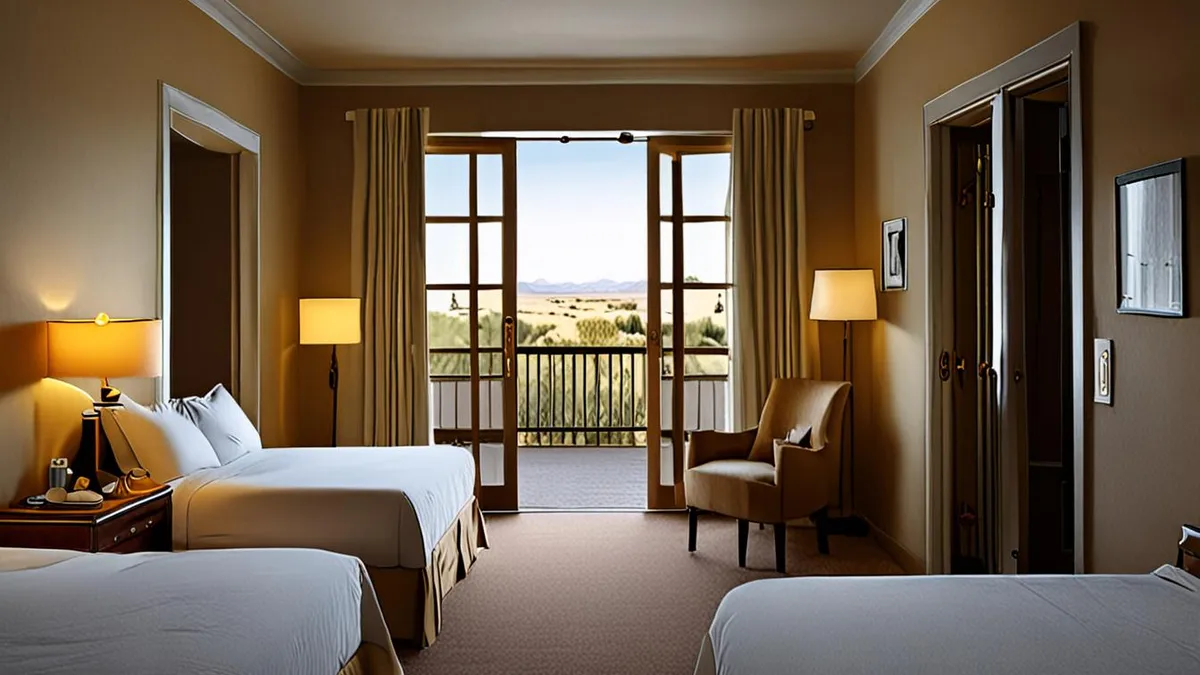
Family Rooms vs Connecting Rooms: Key Differences at a Glance
The choice between these two setups comes down to four practical factors: what you pay, how well everyone sleeps, how safely young children are contained, and how easy the configuration is to actually get. Family rooms win clearly on price, since connecting rooms cost roughly 1.6-2x as much for the same number of beds. On sleep and privacy, connecting rooms have the edge, because a baby can nap in one room while adults stay up in the other, and teenagers get a door that closes. Safety cuts both ways in an interesting way: an internal door keeps young children within reach at night without anyone wandering into a hallway, something an open family room achieves by default and connecting rooms replicate with a door between you.
Availability is where things get tricky, and it deserves a closer look. A room that looks perfect on a hotel’s website is only useful if you can actually secure it for your dates, and the two options behave very differently here.
- Family rooms are scarce by design. Most hotels keep only a handful of family rooms on their floor plan, so they sell out first during school holidays even when plenty of standard rooms remain. Booking early matters more for this room type than for almost any other.
- Connecting pairs depend on the building’s layout. Hotels can only join rooms that share an internal door, so a pair may exist on one floor only, or not at all in older buildings. That physical limitation is something no amount of planning can change.
- Connecting rooms are rarely guaranteed at booking. Unless the hotel confirms both room numbers in writing, you may arrive to find the pair was given away or never blocked for you. This is the single biggest risk with this option.
- Family rooms have no such confirmation problem. What you book is what you get, which removes an entire category of check-in stress and makes them the safer bet for trips where the room setup simply cannot fail.
When a Family Room Is the Better Choice
A family room shines when your stay is short and simple. If you are checking in for one to three nights and the room is really just a place to sleep and shower, one open space with a double bed plus bunks or a sofa bed does the job perfectly. Nobody unpacks much, nobody needs their own corner, and the smaller footprint of around 20-25 m2 in a European city hotel barely matters.
They are also the natural pick for families with children under six. Little ones at that age often wake at night, and having everyone within arm’s reach means you can soothe a nightmare or a fever without crossing a hallway. One shared room also makes bedtime routines easier to manage when you are on your own with two kids.
The budget argument
Then there is the price. Since connecting rooms are sold as two separate rooms, you can expect to pay close to double what a single family room costs. On a short city break, that gap can easily fund an extra night, a museum day, or a nice dinner. If your priority is stretching the trip rather than spreading out in it, the family room wins almost every time. Just book early, since most hotels keep only a handful of them.
When Connecting Rooms Are Worth the Extra Cost
Longer trips change the math. Once you are staying four or more nights, everyone starts to feel the strain of one shared space, and the extra cost of connecting rooms starts to look like money spent on sanity rather than square meters.
Teenagers and separate bedtimes
Traveling with teenagers is the classic case. They want their own space, they go to bed later, and they do not want to whisper in the dark while parents read. A twin room next door with an internal door gives them independence while keeping everyone safely connected. Adults can stay up, talk, or watch something without waking the kids.
Jet lag and city breaks
Jet-lag recovery trips are another strong argument. When one parent and a baby are wide awake at 3 a.m. and the rest of the family is asleep, staggered sleep schedules only work if you can close a door between you. Separate rooms turn a rough adjustment week into a manageable one.
City-break trips with lots of luggage benefit too. Connecting pairs usually combine two rooms of roughly 40-50 m2 total, often with two bathrooms. That means two showers running at once and no morning queue for the toilet before a day of sightseeing. For a family of four, that alone can be worth the roughly 1.6-2x price difference.
How to Book and Secure the Right Setup
Getting the room setup you actually want takes a little more effort than clicking “book now”. Hotels hold only a handful of family rooms and connecting pairs, and a connecting pair is only safe to rely on once the hotel has confirmed both specific room numbers. Family room configurations also vary a lot between properties, so a few deliberate steps before and after booking will save you from unpleasant surprises at check-in.
- Time your booking around your season. For peak summer travel, request connecting rooms 2-3 months ahead; for shoulder season, 3-4 weeks is usually enough. Good family setups are limited in number and sell out first.
- Confirm the internal door after booking. Call or email the hotel directly and ask specifically whether the two rooms are joined by an internal connecting door, not just adjacent. “Next to each other” is not the same thing.
- Get both room numbers in writing. Ask the hotel to confirm the exact room numbers by email. This is the only reliable proof that you have a genuine connecting pair, and it gives you something to show at the front desk if something goes wrong.
- Check the child age caps. Many family rooms cap children at 11 or 12 years old for free or discounted stays. If your kids are older, the “family” rate may quietly become two full-priced rooms, so ask before you assume.
- Compare the true total cost. Family rooms sometimes bundle breakfast, while two separate rooms often do not. Add resort fees and city taxes to both options before deciding, because the headline rate can be misleading.
For more on when to book and which tools help you find the best rate, this guide on how to book hotels for less pairs nicely with the timing advice above. Ten minutes of planning here usually makes the difference between the room you pictured and the room you get.
The Bottom Line for Your Next Family Stay
Choosing between a family room and connecting rooms comes down to how long you are staying, how old your children are, and how much privacy your family needs. Family rooms suit short, budget-conscious trips with young children, since everyone shares one open space and you avoid paying twice. Connecting rooms suit longer stays and families needing privacy, at roughly double the price of a single family room.
Whichever option you lean toward, confirm the exact room configuration with the hotel before you travel. Ask what beds are actually in the room, whether the connecting door really exists, and get the details in writing so nothing catches you off guard when you arrive. A few minutes of checking can save your family’s sleep, privacy and money. If this helped you plan your next trip, leave a comment or share the article with another traveling family.