Sleeping under a sky full of Saharan stars sounds like a dream, but most travelers hit the same wall: what does a desert camp actually offer, what will it cost, and when should you go? Between Berber-style bivouacs and luxury tents with en-suite bathrooms, the options can feel confusing before you even start booking.
This guide to glamping in Morocco breaks it all down. We explain what a Moroccan desert camp really is, compare the three main regions of Merzouga, Zagora and Agafay, and cover the best months to travel. You’ll also find realistic price ranges, a walk-through of a typical night at camp, and practical tips for choosing and booking the right one for your trip and budget.
What Is a Moroccan Desert Camp?
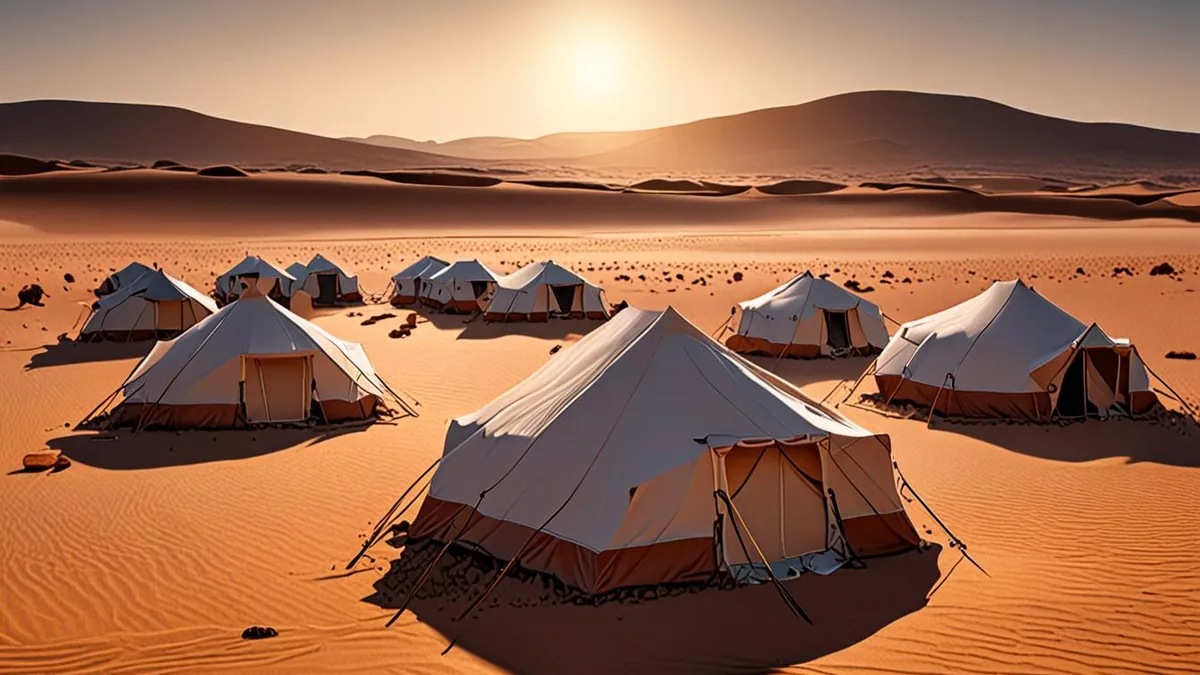
A Moroccan desert camp is exactly what it sounds like: a cluster of tents set up in the desert where you sleep, eat and spend the night. But the range within that simple definition is huge. At one end you’ll find traditional Berber-style canvas tents with woven rugs on the floor, low beds or mattresses, and lanterns for light. At the other end sit modern luxury tents with king beds, proper furniture and private en-suite bathrooms built right inside the tent.
The type of camp matters just as much as the tent itself. Most travelers stay in fixed permanent camps positioned on the edges of the dunes, which run year after year with solid structures and established facilities. Mobile bivouac camps are a different beast entirely: they’re set up temporarily for trekking groups, carried in by camel or 4×4, and offer a more rustic, expedition-style night.
How basic or comfortable can it get?
Comfort levels span a wide spectrum. Budget and traditional camps may have shared bathroom blocks and bucket showers, which is part of the adventure for many visitors. Mid-range and luxury camps typically offer hot running water, electricity in the tents, and proper plumbing. Before booking, it pays to know exactly which end of that spectrum you’re paying for, because “desert camp” alone tells you very little about what awaits you after dark.
Where to Go: Merzouga, Zagora and Agafay
Morocco has several desert regions that cater to camp stays, and they’re not interchangeable. The right choice depends on how much time you have, how far you’re willing to drive, and whether tall sand dunes are essential to your experience. The three most popular options for glamping in Morocco are Merzouga, Zagora and the Agafay desert, each with a distinct character.
Merzouga sits beside Erg Chebbi, the classic tall-dune experience most people picture when they imagine the Sahara. It’s a serious journey, though: around 9 hours’ drive from Marrakech, usually broken up over two days. Zagora is closer, roughly 7 hours from Marrakech, with smaller dunes and a quieter, less touristed feel. The Agafay is the odd one out, a stone desert less than an hour from Marrakech with no sand dunes at all, but unbeatable access for short stays. If you’re traveling with a dog or other companion, it’s also smart to check whether a glamping site accepts pets before you book, since policies vary widely between camps.
- Merzouga and Erg Chebbi: the dunes here rise dramatically from the desert floor, and most camps sit right on the dune edge, so you can walk straight from your tent onto the sand.
- Zagora: the landscape is more reg and hamada with scattered dunes, and the region tends to attract travelers who want atmosphere without the biggest crowds.
- Agafay: its rocky, moon-like terrain works well for sunset dinners, one-night stays and add-ons to a Marrakech city trip, since the transfer is short enough to do in an afternoon.
When to Book Glamping in Morocco
Timing makes or breaks a desert camp stay. The main season runs from October to April, when daytime temperatures are manageable and nights are cold but survivable. Within that window, November and March generally offer the most comfortable temperatures of all, warm enough for barefoot dune walks and cool enough to sleep well.
Winter nights catch travelers off guard
From December to February, desert nights can drop near 5°C, a shock for anyone who packed only for Marrakech sunshine. Days can still be pleasant, but once the sun sets, temperatures fall fast. Pack warm layers, a proper jacket and thick socks, and don’t assume a blanket will be provided in every camp, especially in simpler bivouacs. Luxury tents usually have good bedding, but it never hurts to ask.
On the booking side, reserve 2–3 months ahead if you’re traveling during the October to April high season, particularly around holidays when the best camps fill up first. Summer is a different story entirely: daytime temperatures in the Sahara often exceed 40°C, which makes most camps close or run a reduced service. If your dates fall between May and September, confirm directly with the camp that it’s actually operating before you plan anything else around it.
How Much a Desert Camp Stay Costs
Desert camp pricing in Morocco is refreshingly straightforward compared to European glamping, but the range is wide, and understanding it will help you avoid overpaying. Standard camps typically charge roughly €50–€150 per person per night, and that rate usually covers dinner and breakfast, so you are effectively paying for accommodation plus two meals. If you want a benchmark, our guide to how much glamping costs by stay type puts Moroccan desert camps among the better-value options worldwide, especially when you consider that dinner, breakfast and often the camel ride are bundled into one rate.
At the top end, luxury camps with en-suite tents generally run €150–€300 per person per night. For that you get a proper bed, private bathroom, hot water and often extras like sunset drinks or private dining setups on the dunes. Prices can also shift with the season, so always ask for the total cost per person rather than per tent, since some operators quote tent rates that assume two guests sharing.
Before you compare prices, make sure you know exactly what each rate includes. Two camps advertising the same nightly figure can offer very different value once transfers, meals and activities are counted, so request an itemized breakdown in writing before you pay any deposit.
- Transfers: camel or 4×4 rides to dune camps are often included, but some operators charge separately, so confirm before booking.
- Meals: most rates include dinner and breakfast, but drinks are usually extra, and lunch is rarely covered if you arrive midday.
- Activities: sandboarding equipment and guided dune walks are sometimes free and sometimes an add-on.
- Private transfers: shared 4×4 rides cost less, while a private vehicle or solo camel trek typically raises the price.
What a Night at a Desert Camp Is Like
Most camps follow a similar rhythm. You arrive in the late afternoon, either on a 4×4 or on camelback, and are welcomed with mint tea while staff show you to your tent. Then comes the best hour of the day: walking up the nearest dune to watch the sun set and the sand shift from gold to deep orange to violet.
Dinner is usually a tagine served in a communal dining tent or at low tables under the stars. Afterward, staff often bring out drums, and guests gather around the fire for music that can last well into the evening. Join in or simply listen; nobody minds either way.
Stargazing Worth Staying Up For
With near-zero light pollution, the night sky is the real show. On clear nights you can pick out the Milky Way with the naked eye, and even casual photographers get impressive shots with a tripod and a long exposure. Step away from the fire for a few minutes and let your eyes adjust; the difference is remarkable.
Facilities to Check Before You Book
Ask whether tents are en-suite or share bathroom blocks, since this shapes the experience more than anything else. Find out where charging points are, as many camps only offer them in the reception or dining tent. Wi-Fi is often limited or absent entirely, which is part of the charm, but good to know in advance if you need to stay reachable.
Choosing and Booking the Right Camp
Not all desert camps are equal, and the difference between a magical night under the stars and a disappointing one usually comes down to how well you vet the place beforehand. Photos on booking pages can be flattering, and a few glowing testimonials tell you very little on their own. A little structured research goes a long way, and learning how to read glamping site reviews like a pro will help you separate genuine, detailed feedback from vague praise. Here is a simple process to follow before you commit your deposit.
- Read recent reviews with specifics in mind. Look for comments that mention tent condition, bathroom cleanliness and how smoothly the camel or 4×4 transfers ran. Generic five-star ratings with no detail tell you far less than one review describing a torn canvas roof, a cold bucket shower or a spotless en-suite bathroom.
- Confirm exactly what the price includes. Ask directly whether transfers, dinner, breakfast and activities like sandboarding or guided dune walks are part of the rate, so you are not surprised by add-on charges at the camp.
- Match the camp to your group. Families should confirm tent configurations, such as whether one tent can sleep four or whether you will be split across two. Couples should look for camps with private, well-spaced tents rather than rows of canvas packed close together, which can undercut the sense of desert solitude you came for.
- Book early for high season. The best camps fill up months in advance for the October to April season, so reserving ahead gives you the pick of tent types and locations.
Once you have shortlisted two or three camps, message them directly with your questions. Ask how they handle cold winter nights, what happens if your transfer is delayed, and whether the generator runs all night or switches off at a set hour. The speed, honesty and clarity of the reply is often the best indicator of the service you will actually receive on the night itself. If a camp dodges simple questions or pushes you to pay a deposit immediately, treat that as useful information too.
Final Thoughts on Desert Glamping in Morocco
If you’ve been dreaming of sleeping under Saharan stars but weren’t sure what a desert camp actually involves, the short answer is this: Moroccan camps blend Berber tradition with real comfort, and there’s an option for almost every budget. Simple bivouacs suit travelers who want the raw dune experience, while luxury tents with en-suite bathrooms deliver a genuine glamping stay.
Location matters too. Merzouga, Zagora and the Agafay each suit different trip lengths and budgets, so pick the one that fits your itinerary rather than chasing a single “best” spot. Aim for travel between October and April, with November and March offering the most comfortable temperatures, and book 2–3 months ahead to secure the camp you want. Have you stayed in a desert camp in Morocco, or are you planning your first night under the dunes? Share your thoughts or questions in the comments, or pass this article along to a fellow traveler.