Those photos of canvas tents and glass domes look dreamy online, but here’s what booking sites rarely show you: the shared glamping site facilities that shape your entire stay. A stunning tent means little if the communal kitchen is grim, the firepit has no wood, and the only seating area is a wet bench. On a multi-day trip, you’ll spend far more waking hours in these spaces than inside your accommodation.
This guide walks you through what to look for, starting with why facilities matter more than the tent itself. We’ll cover what a good shared kitchen includes, how firepits work (including firewood and fire bans), and why lounges, barns and covered spaces can rescue a rainy trip. Then we’ll help you match facilities to your trip type and season, verify everything before you book, and weigh up whether a well-equipped site is worth the premium. Let’s get into it.
Why Glamping Site Facilities Matter More Than the Tent
Think about how you actually spend a glamping trip. The tent or dome is where you sleep, maybe an hour or two of reading before lights out. Everything else — morning coffee, cooking dinner, evening conversation, drying wet socks — happens in the shared spaces. On a three-night stay, that’s easily two-thirds of your waking hours spent in the kitchen, around the firepit or in the lounge, not in your accommodation.
This is also why facility quality shows up so strongly in guest reviews. When people rate a glamping site highly or complain loudly, they’re usually talking about the kitchen that ran out of hot water, the firepit with no seating, or the games barn that saved a rainy weekend. Checking what a site offers before you book is the most reliable way to predict how your stay will actually feel, rather than how the photos look.
Facilities matter differently depending on who you travel with
Families with children lean heavily on kitchens and lounges — somewhere to prep meals, somewhere to keep kids occupied when the weather turns. Couples often care about the opposite end: a private firepit, a quiet seating corner, a lounge where they’re not sharing a sofa with a family of five. Knowing which facilities matter most for your trip type helps you compare sites on the things you’ll actually use, not just the longest list of amenities.
Shared Kitchens: What a Good Glamping Kitchen Includes
The kitchen is the facility that makes or breaks a self-catering glamping trip. A well-equipped communal kitchen should have a stove or hob, a fridge, a sink with hot water, cookware, utensils and cleaning supplies. If any of those basics is missing, you’ll feel it on the first morning — usually when the kettle is missing and the only pan has a warped base.
Beyond the basics, look for two things that separate a good shared kitchen from a frustrating one: per-cabin food storage and enough counter space. Labeled shelves or lockers mean your milk doesn’t disappear overnight, and generous counter space means several guests can cook dinner at the same time without an elbow-based negotiation. It’s also worth asking whether the kitchen is self-catering only or whether the site offers breakfast and meal services — that changes what you pack considerably, and our complete glamping packing checklist covers how to adjust for either setup.
One more thing to know before you book: roughly 60-70% of UK and European glamping sites include shared kitchen access, which means a meaningful share don’t. Confirm kitchen access directly rather than assuming it comes with the tent.
- Check the appliance list, not just “kitchen available.” Some sites advertise a kitchenette with a microwave and kettle only — fine for reheating, useless for cooking a proper dinner on a multi-day stay.
- Ask about cookware quality and quantity. A kitchen with two battered pans for a twenty-unit site will cause queues; a well-run site stocks enough pots, pans and chopping boards for several parties at once.
- Find out where cleaning supplies live. Washing-up liquid, cloths and a drying rack should be provided — if guests are expected to bring their own, that’s a sign of a more basic setup.
- Confirm fridge space per unit. Shared fridges fill fast in peak season, so ask whether there’s dedicated storage or just a couple of communal shelves.
Firepits: Communal Flames, Firewood and Fire Bans
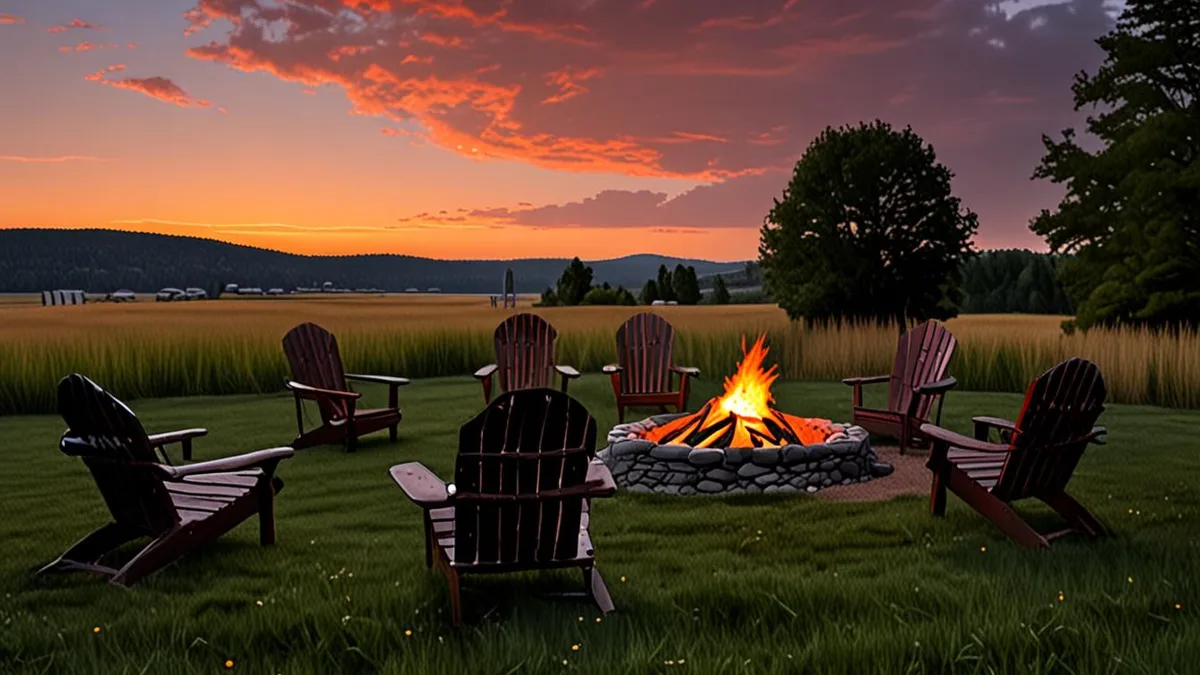
Firepits are the heart of most glamping sites, and for good reason — an evening around the flames is often the memory that lasts. But here’s the detail that catches people out: while most glamping sites offer firepits, wood is included at only about half of them. Before you book, check whether you buy bundles on site, bring your own, or whether logs come with your stay. Arriving without wood and without a shop nearby turns the highlight of the evening into a logistical problem.
Communal flames or private firepits?
The two setups suit very different trips. Communal firepits double as social hubs in the evening — great if you enjoy meeting fellow travelers, and often where kids make friends while parents trade recommendations. Private firepits at your own unit suit couples who want quiet: your own flames, your own conversation, no need to share the last log. Neither is better; they just serve different trips, so pick based on how social you want your evenings to be.
One seasonal caveat: during summer dry spells, fire bans can restrict or close firepit use entirely, sometimes with little notice. If an evening fire is central to your plans, ask the host about their fire-ban policy and have an indoor backup plan — a lounge, a games room or at least a covered shelter.
That leads to the last point: many sites pair firepits with grills, pizza ovens and covered cooking shelters. These extras extend usability in wet weather and give you cooking options when open flames are off the table. If you’re traveling with a dog and planning evenings outdoors, it’s also worth checking how firepit areas and pet policies interact — our guide to finding out whether a glamping site is pet-friendly covers what to ask.
Communal Areas: Lounges, Barns and Covered Spaces
If you have ever spent a chilly, drizzly evening huddled inside a small tent, you already know the value of a good indoor communal space. Lounges, games rooms and covered barns are the facilities that rescue shoulder-season stays in April-May and September-October, when evenings turn cold and wet and the firepit is not always an option. A solid barn with a roof and a heater can be the difference between a cozy trip and a miserable one.
The best communal areas get the basics right: comfortable seating, decent lighting, some form of heating and plenty of charging points so nobody fights over a single socket. Books, board games and card decks are a welcome bonus for screen-free evenings, especially if you are traveling with children or a group of friends who have run out of conversation topics by night three.
Pay attention to how a site splits its social and quiet zones. Family-focused sites often run lively barns where kids can be loud until bedtime, while adult-oriented sites keep lounges calm and conversation-friendly. Neither is better — but a mismatch between the site’s atmosphere and your expectations can sour a stay quickly.
Some of the most useful communal facilities are the least glamorous. For longer trips or wet-weather travel, these are the ones worth asking about:
- Laundry machines — essential for stays of a week or more, and far cheaper than packing a fresh outfit for every day.
- Drying rooms — heated rooms or cupboards where soaked jackets, hiking boots and towels dry overnight instead of staying damp for the rest of your trip.
- Boot stores and mud rooms — designated spots to leave muddy footwear at the door, which keeps tent floors and lounge carpets livable.
Indoor space matters even more when temperatures drop further, and it is worth reading up on how cold-weather glamping stays actually work before booking a trip outside the warmer months.
Matching Facilities to Your Trip Type and Season
The right facilities depend heavily on who is traveling and when. A site that is perfect for a family in August can be a poor fit for a couple in October, so start by matching amenities to your trip type rather than to a photo gallery.
Matching facilities to who you are
Families should put kitchens, laundry and covered play areas at the top of the list. Self-catering for children is far easier with a proper communal kitchen, and a covered play barn saves rainy afternoons. Honeymooners and couples should look for the opposite: private firepits at or near their unit, quiet lounges and sites that market themselves as adults-only or low-key. If your idea of romance is not sharing a firepit with a group of strangers, this detail matters more than the tent style.
Matching facilities to the season
Timing changes the equation. In peak season (July-August), shared kitchens and firepits can be busy, so sites with multiple cooking stations or several separate firepit zones cope much better with full occupancy. A single kitchen serving dozens of guests turns dinner into a queue. For winter and shoulder-season trips, weight indoor communal space and heating heavily in your decision — a heated lounge and drying room will shape your stay far more than an outdoor pizza oven you will never use in the rain.
Budget matters too. Sites with full shared facilities typically charge 10-20% more than basic sites with minimal amenities. That premium is worth it if you will actually cook, socialize and use the lounge; if you plan to eat out every night and spend all day hiking, a simpler and cheaper site may serve you just as well.
How to Verify Glamping Site Facilities Before You Book
Facility listings can drift out of date, and marketing photos rarely show the communal kitchen at 7 pm with six people cooking. Websites are written once and forgotten, while equipment breaks, furniture wears out and management changes hands. Before you book, spend twenty minutes verifying that what is advertised matches what you will actually find. This is not about distrust — most hosts are honest — it is about closing the gap between a glossy photo taken on opening day and the reality you will encounter mid-stay. A short checklist makes this easy:
- Read the site’s own facility page first. Note exactly what is claimed — kitchen equipment, firepit access, lounge details — so you have a baseline to compare everything else against. Screenshot or save the page in case you need to reference it later if something is missing on arrival.
- Cross-check recent reviews. Search reviews for mentions of the kitchen, firepit or lounge by name. Reviews from the last few months tell you whether the facilities are still in good shape or have quietly deteriorated. Pay attention to how hosts respond to critical reviews, too — a thoughtful reply suggests problems get fixed.
- Message the host with specific questions. Ask about firewood supply, what the kitchen actually contains, whether communal areas are heated, and what the quiet-hours policy is. Specific questions get specific answers, and a slow or vague reply is itself useful information about how the site is run.
- Study guest photos, not marketing shots. Traveler-uploaded images show the real state of shared kitchens, seating areas and bathrooms — including clutter, wear and how much space there really is.
- Ask about capacity relative to unit count. A single kitchen serving 20 units will feel crowded at peak times, while a site with several cooking stations spreads guests out. The ratio matters more than the size of any single room.
Ten minutes of questions before booking can save you a week of queues, cold evenings and disappointing surprises. Keep a note of the answers you receive, because if a facility turns out to differ from what the host described, you have something concrete to raise — and most hosts will go out of their way to put things right. Hosts who answer clearly and promptly usually run sites that match their listings, so treat the conversation itself as part of your research. If a host dodges a simple question about firewood or kitchen equipment, that hesitation tells you more than any brochure ever will.
Wrapping Up: Choosing a Site on Its Facilities
Photos of tents and domes look great online, but the shared facilities often decide whether a glamping stay feels comfortable or frustrating. Glamping site facilities — the kitchen, firepit and communal areas — shape daily comfort as much as the accommodation itself, especially once you are a few days into a trip and living around the site rather than just sleeping in it.
The approach is simple: choose a site whose facilities suit the way you travel and the season you are visiting, then verify the details through recent reviews and direct questions to the host before you book. It also helps to weigh the 10-20% premium that well-equipped sites typically charge against how much you will realistically use those spaces — a big kitchen matters little if you plan to eat out every night. If you found this helpful, leave a comment or share the article with a fellow traveler.