Every villa listing looks flawless online: sun-drenched terraces, sparkling pools and bedrooms styled by a professional. But photos hide as much as they show, and the villa that charmed you on screen can turn out to be next to a busy road, short on bathrooms or a forty-minute drive from the nearest supermarket. The trick is to choose a villa based on how you actually travel, not on how the photography makes you feel.
This guide walks you through the decisions that matter, in the order you should make them. We start with your group and trip style, then narrow down the location and the season. From there we cover realistic budgeting, how to read listings and photos with a critical eye, and the booking terms that protect your money. Follow the steps in order and you will end up with a villa that fits your trip, not just your feed.
Start With Your Group and Trip Style
Before you scroll a single listing, sit down and define who is coming and how you want to spend the week. A villa that works for a couple celebrating an anniversary is rarely the right fit for two families with toddlers, and searching without this clarity is how people end up with three bedrooms for six guests and a single shared bathroom.
Size is the first filter. As a rule of thumb, plan on one bathroom per 2-3 guests, and for a family of four look for at least 60-80 m² of living space. Anything smaller starts to feel cramped once you add suitcases, beach gear and a rainy afternoon indoors.
Decide on your setting before you search
The second decision is the type of villa itself. A private pool villa gives you total privacy and lazy mornings at home, a beachfront property puts the sea at your doorstep, and a countryside retreat trades convenience for space, quiet and views. Each suits a different kind of holiday, so agree on this as a group before comparing prices, because it will cut your search time in half.
Finally, think about family-friendly features if children are in the mix. A fenced pool, multiple bedrooms on the same floor, and a full kitchen for preparing meals can make or break a trip with young kids. If you plan to cook most evenings, a proper kitchen with an oven and dishwasher matters far more than a second living room ever will.
Pick the Right Location and Setting
A villa is only as good as where it sits. The most beautiful property can disappoint if it takes half an hour to reach a restaurant, while a modest house steps from the beach can deliver the best holiday of your life. Start by matching the setting to what you actually plan to do.
Coastal villas suit beach holidays: morning swims, sandcastle afternoons and seafood dinners. Mountain and countryside settings suit hiking, wine tasting and slow travel, where the point is scenery and stillness rather than sand. Neither is better; they simply serve different trips, so be honest about which one describes yours.
Check the drive times, not just the map pin
If you plan daily outings, check how far the villa really is from the places you will visit most. A practical target is a beach, town or supermarket within 5-10 minutes by car. Anything longer adds up quickly when you are fetching bread every morning or heading out for dinner each evening. Ask the owner or agent for drive times in minutes, not kilometers, since winding rural roads take longer than the distance suggests.
Then decide between seclusion and walkability. A secluded property offers privacy, silence and dark night skies, but every trip out means driving, often after a glass of wine at dinner. A villa within walking distance of restaurants and shops trades some quiet for real freedom, especially if you would rather not drive every night. Consider which trade-off suits your group, and check recent reviews to confirm the listing’s claims about what is actually nearby.
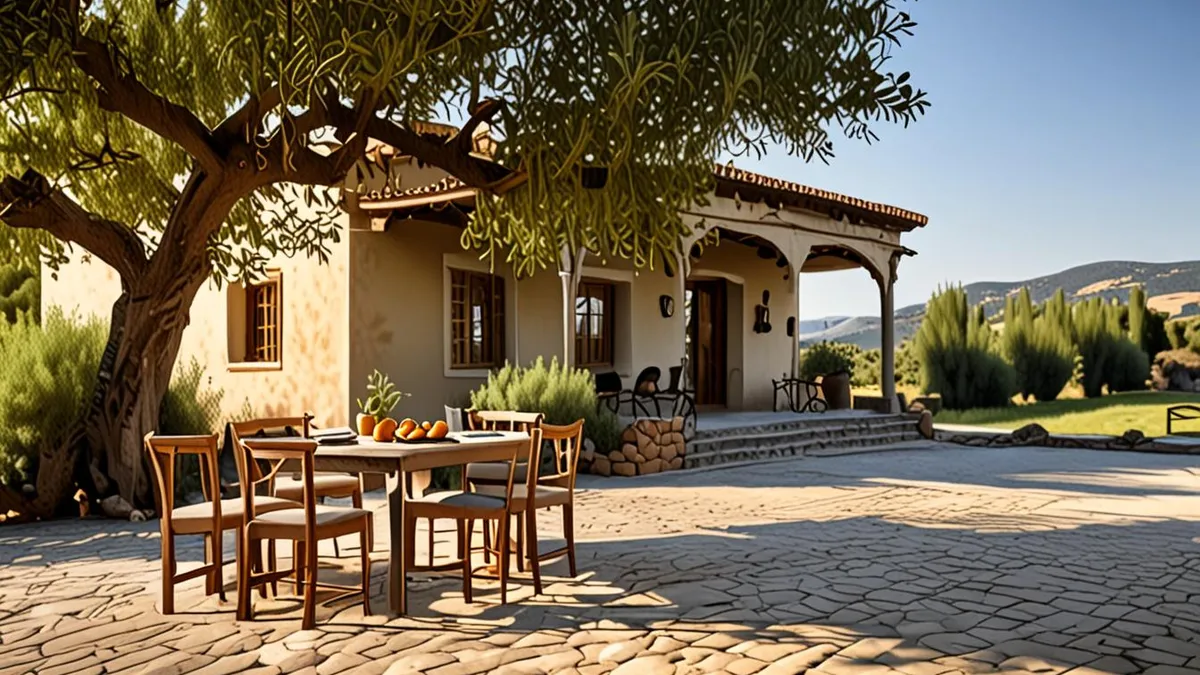
Time Your Stay Around the Season
Timing shapes both the price and the experience of a villa holiday more than almost any other factor. High season runs from June through August, bringing the warmest weather but also the highest rates and the biggest crowds at beaches, restaurants and attractions. If your dates are flexible, shifting even a few weeks can transform what your budget buys.
Shoulder season is the sweet spot for many travelers. The months of May, June, September and October typically offer milder weather and rates 20-40% lower than August. In southern Europe, September often delivers warm seas and quieter beaches, making it a favorite for families with school-age children and couples alike. For coastal inspiration, browse Algarve beach villas for sunny holidays and see what shoulder season availability looks like.
Winter trips need a different checklist entirely. Do not assume that features designed for summer apply year-round; instead, look specifically for villas with proper heating, a sauna or a fireplace, and confirm how the property is insulated before booking.
- Pool temperature: unheated pools in May or October often sit at 18-22°C, which most adults find too cold for anything beyond a quick dip. If swimming matters outside July and August, confirm pool heating exists and ask whether it is included or charged separately.
- Seasonal closures: in some resort areas, beach bars, boat trips and restaurants reduce their hours or close entirely outside the peak months, so check what will actually be open during your stay.
- Daylight and evening comfort: in May or October, evenings cool down quickly, so a villa with outdoor heating, a covered terrace or a cozy indoor living space gets far more use than one built purely for hot summer nights.
Set a Realistic Villa Budget
Villa pricing swings more than most travelers expect, so it helps to start with realistic numbers. For a typical European villa, expect roughly €100-150 per night in low season and €300-600+ per night in peak season. That means a week in August can cost three to four times what the same villa costs in November, even though the property itself has not changed.
The single best way to lower the per-person cost is to share. Splitting a large villa between two families or couples often cuts the per-person cost dramatically, since a five-bedroom house rarely costs twice as much as a three-bedroom one. Four adults splitting a €500 peak-season night pay far less each than they would for two hotel rooms, and they get a private pool and kitchen thrown in.
Don’t Forget the Extras
The nightly rate is rarely the final price. Budget for extras such as cleaning fees, pool heating and car rental, which together can add 10-20% to the total. Some owners also charge a refundable damage deposit, so keep a buffer on your card. Ask for a full price breakdown before you commit, and compare villas on the total cost rather than the headline rate. A villa that looks €50 a night cheaper can easily end up more expensive once the add-ons are counted.
Check Amenities and Photos Carefully
Listing photos are marketing, not documentation. Before you fall in love with a villa, verify the essentials in the listing itself: air conditioning, Wi-Fi speed, a washing machine, a dishwasher and blackout options in the bedrooms. If any of these matter to your stay and are not clearly stated, message the owner and get the answer in writing.
Then play detective. Cross-check the photos against the map and the reviews to spot missing views, nearby roads or construction sites. A wide-angle shot can make a terrace look oceanfront when the sea is actually a sliver between two neighboring roofs. Zoom into satellite view and look for what the photographer carefully left out of frame.
- Wi-Fi specifics: ask whether the connection reaches the pool and upper floors, since many villas only have a strong signal near the router.
- Bedroom configuration: confirm whether beds are true doubles or sofa beds and convertibles, which matters enormously for two couples traveling together.
- Kitchen equipment: a “full kitchen” photo may show a kettle and a two-burner hotplate, so ask if you plan to cook proper meals.
- Pool access: check whether the pool is steps from the terrace or down a flight of stairs, which matters with small children.
Finally, read recent reviews specifically for mentions of noise, privacy and how accurately the listing matches reality. Reviews from the last few months tell you far more than a five-star average from three years ago, especially if a new road or building went up since.
Book at the Right Time With the Right Terms
Getting the villa you want is as much about timing as it is about taste. The best properties in popular regions get snapped up early, while late bookers either pay a premium or settle for whatever is left. The good news is that a simple sequence, followed in order, removes most of the risk from what is often the biggest single expense of your trip. Here is how to approach it.
- Work backward from your dates. Book 4-6 months ahead for high season stays in June-August, when demand is at its peak and the most desirable villas go first. For shoulder season trips, 2-3 months is usually enough, and you may even find owners discounting at that point as they try to fill remaining weeks.
- Choose your rate type deliberately. A refundable or partially refundable rate typically costs 10-20% more than a strict non-refundable one, but it protects you if flights shift, someone falls ill or family plans change. For a large group booking where the deposit is substantial, that flexibility is usually worth the premium.
- Get the logistics in writing. Confirm check-in and check-out times, key collection or meet-and-greet arrangements, the damage deposit amount and how it is returned, and the exact cancellation deadlines before you pay anything.
- Pay the balance only after everything is confirmed. Keep a written summary of terms alongside your booking confirmation so there is no dispute later about what was agreed.
A little paperwork up front saves a lot of stress later. If an owner or agent hesitates to put terms in writing, treat that as useful information about who you are dealing with, and keep looking elsewhere.
Your Villa Choice in Short
Every villa listing looks flawless online, so the real trick is to stop browsing and start matching. Work out your group size, the setting you actually want and the season you will travel first, then compare prices only between villas that fit. Shoulder season months like May, June, September and October often mean milder weather and 20-40% lower rates, which stretches a realistic budget much further than chasing August.
Once you have a shortlist, verify the essentials: amenities, recent reviews and clear booking terms, including refundable rates that usually cost 10-20% more but protect your plans. For peak summer stays, book 4-6 months ahead. Do that, and you will arrive at a villa that fits your trip instead of one that merely photographed well. If this helped you plan, leave a comment or share the article with your travel group.