Plenty of resorts call themselves accessible, but a quick scroll through their websites rarely tells you what that actually means. A photo of a wide doorway is not the same as a roll-in shower, and a pool with “easy access” may turn out to be five tiled steps. For wheelchair users, booking a stay without solid details is a gamble that can ruin a vacation before it starts.
The good news is that finding genuinely wheelchair-friendly resorts is a skill you can build. It comes down to knowing which room features to verify, how to check pool, restaurant and beach access, which questions to put to the resort in writing, and how to time your booking so you actually get the adapted room you need. This guide walks through that whole vetting process, from decoding marketing labels to choosing destinations that tend to handle accessibility better, so you can book with confidence instead of crossed fingers.
What ‘Accessible’ Actually Means at a Resort
Here is the uncomfortable truth: words like “accessible” or “mobility-friendly” have no universal standard in resort marketing. One property uses the label for a fully ADA-compliant suite with a roll-in shower, lowered fixtures and wide doorways throughout. Another slaps it on a room that has nothing more than a grab bar next to the tub. Unless you dig deeper, you have no way of knowing which one you are booking.
Where claims and reality diverge
The gaps tend to show up in the same places. A grand lobby entrance might sit behind three shallow steps with no ramp. Deep-pile carpet in the bedroom can make self-propelling exhausting or impossible. Beds are often far too high for a safe side transfer, and thick thresholds between indoor and outdoor spaces, especially those leading to balconies and terraces, can block a wheelchair entirely. None of these details appear in the glossy photos.
Think in three tiers
It helps to sort rooms into three tiers. A fully wheelchair-navigable room works for independent use from door to shower. A partially adapted room covers the basics but has compromises, perhaps a roll-in shower but a bed that is too high. And then there is the “reachable” room: you can get inside, but showering comfortably is out of the question. Knowing which tier you need, and asking the resort to confirm it, is the first step toward a stay that actually works.
Room Features to Verify Before Booking a Wheelchair-Friendly Resort
The room is where accessibility succeeds or fails, and vague assurances will not cut it. Before you commit to any wheelchair-friendly resort, verify the specific features that make daily routines, showering, transferring, moving through the space, genuinely workable. Get measurements, not adjectives.
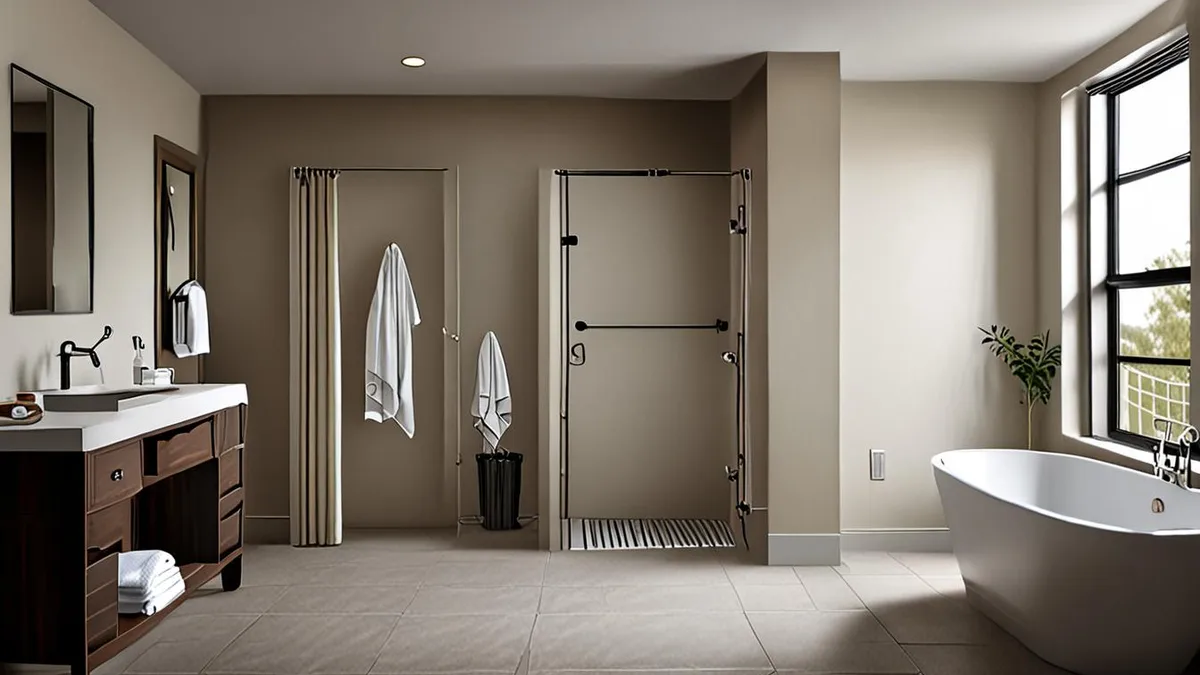
The bathroom deserves the closest look. A proper roll-in shower needs a minimum footprint of roughly 30 x 60 inches (76 x 152 cm), with a fold-down bench so you can shower seated and a handheld showerhead you can actually reach while seated. A shower with a lip at the entrance, however small, is not a roll-in shower.
Doorways come next. Anything narrower than 32 inches (81 cm) can stop a standard wheelchair cold, and this applies to every door you will pass through: the bathroom, the balcony, and any connecting doors if you are traveling with others. Bed height matters just as much. Aim for a mattress top under 24 inches (61 cm) so a side transfer is possible, with clear floor space on at least one side of the bed to position your chair.
Beyond the essentials, these smaller details separate a well-designed accessible room from a half-hearted one:
- Lowered closet rails so hanging and retrieving clothes does not require standing or reaching above shoulder height.
- Lowered light switches and peepholes, typically placed around seated reach range, so you control the room and see who is at the door without help.
- Lever handles instead of knobs on all doors, since round knobs are difficult or impossible to turn with limited grip or from a seated position.
If a resort hesitates to confirm any of these in writing, treat that as an answer in itself.
Beyond the Room: Pools, Restaurants and Beach Access
A great accessible room means little if you cannot reach the restaurant, the pool or the beach. Once the room itself checks out, shift your attention to how the rest of the property handles mobility, because this is where many resorts quietly fall short.
Pools, restaurants and shared spaces
Start with the pool. The two most common accessible designs are a pool lift and a zero-entry ramp, and the best properties offer both. If there is a lift, ask whether it is manual or powered; a manual hoist that requires staff assistance each time turns a simple swim into a scheduling negotiation. Then trace your route through the rest of the resort. Restaurants, spas and evening show venues should be reachable by ramp or lift rather than reachable only by climbing steps. A resort with one accessible restaurant and three step-only ones limits your choices every single day.
Beaches and tricky terrain
Beach access varies enormously. Some resorts have boardwalks leading to the sand, others roll out temporary matting, and a few keep amphibious beach wheelchairs on hand, but these solutions are rarely standard, so ask directly rather than assume. Terrain matters too. Hillside properties may replace a simple corridor route with long, steep ramps, while overwater accommodations typically rely on gangways and, in some cases, boat transfers to get you there. If you are weighing that kind of stay, it helps to understand how overwater bungalows compare to beach villas before deciding whether the access trade-offs suit you. Whatever the layout, map your actual daily routes, room to breakfast, room to pool, room to beach, before you book.
Questions to Ask the Resort Before You Book
A polite “yes, we’re accessible” on the phone tells you very little. Some reservations agents genuinely know their property inside out; others are reading from the same vague description you found online. The difference between a smooth trip and a frustrating one usually comes down to the specific questions you ask before you pay the deposit, so treat the call as an interview rather than a formality.
- Get measurements in writing. Ask the resort to email you the exact width of the bathroom door, the footprint of the shower, and the bed height. A “yes, it’s accessible” answer means nothing if the bathroom door is a few centimeters too narrow for your chair. Written measurements give you something concrete to compare against your own equipment before you commit.
- Request recent photos of the actual room. Photos on a resort’s website often show their best accessible suite, not the category you would actually receive. Ask for current pictures of the specific room type booked under your reservation, including the bathroom and the route from the entry door to the bed.
- Map the accessible route across the property. Confirm whether step-free access covers the whole resort or only selected areas, such as the lobby and one restaurant. It also helps to ask how quickly maintenance issues are handled, because a broken door closer or an out-of-order lift can derail a stay if repairs drag on.
- Ask what equipment is on site. Many resorts keep shower chairs, raised toilet seats, pool hoists and sometimes beach wheelchairs for guests to borrow. Availability varies and quantities are often limited, so find out what exists and reserve anything you need well in advance.
Keep the answers in one email thread so you can forward or print them if anything is disputed at check-in. If an agent promises something verbally, ask them to repeat it in the email; a spoken assurance is hard to prove later. Resorts that answer these questions promptly, specifically and without hesitation are usually the ones that take accessibility seriously on the ground, too. Vague replies, long delays or requests to “just call the front desk when you arrive” are worth treating as warning signs rather than inconveniences.
Booking Strategy: Timing, Guarantees and Documentation
Finding a wheelchair-friendly resort is only half the job; keeping that room and those features is the other half. Accessible rooms are usually the first to sell out and the first to be reassigned when a property overbooks, so timing and paperwork matter more here than with a standard reservation. A little discipline before you travel can save you from arriving to a bathtub you cannot use.
- Book early, especially for peak season. Only a small share of rooms in most resorts are accessible, often 2-5% of inventory. That means a fully booked resort can still show standard-room availability while its one or two accessible rooms are long gone. For peak season travel, aim to book 3-6 months ahead, and book the specific accessible room category rather than a generic room type.
- Get written confirmation before you travel. Around 2-4 weeks before arrival, email the resort and ask it to confirm every promised feature: the room category, the roll-in shower, door widths, pool access, anything discussed. Then bring that confirmation with you, printed or saved offline, so you can show it at the front desk if there is any confusion at check-in.
- Book direct or document your needs with an agency. Booking directly with the resort keeps your requirements in one place. If you use a travel agency or booking platform, make sure your accessibility requirements are noted in the reservation record itself, not just in a comment that may never reach the property. Either way, reconfirm the exact room category about 48 hours before check-in.
None of this is pessimism; it is simply how experienced accessible travelers protect their plans. A few emails and one reconfirmation call cost you minutes, and they are the best insurance you have against arriving to find your room given away or your shower swapped for a bathtub.
Destinations and Resort Types That Handle Accessibility Better
Where you travel matters almost as much as which resort you pick. Building codes, terrain and the age of a property all shape how easy a resort is to get around in a wheelchair, and the differences between destinations can be dramatic.
Where newer builds tend to shine
Newer large-scale resorts in Florida, the Mexican Caribbean and the Canary Islands more often offer the features that make a real difference: zero-entry pools, wide corridors, lifts to every level and purpose-built accessible rooms. These destinations have seen heavy resort construction in recent decades, and newer properties were more likely to be designed with step-free routes from the start. If easy, predictable access is your priority, a recently built large resort in one of these regions is usually the safest bet.
The charm and the catch of older properties
Older cliffside Mediterranean hotels and island properties often have the postcard-perfect layouts that draw people in the first place: terraced gardens, stone staircases, viewpoints reached by shuttle. The catch is that those same features can mean stepped access, terraced grounds and entrances you can only reach by shuttle or a long flight of stairs. Some have added ramps or lifts over the years, but retrofits are uneven, so verify every route before committing.
All-inclusive mega-resorts deserve a special mention. They tend to concentrate their accessible rooms and restaurants in one zone of the property, which simplifies planning enormously because you can learn one step-free route and rely on it. The trade-off is less spontaneity: reaching the far beach bar or the uphill steakhouse may not be realistic. Think about which style of vacation suits you, then match the destination to it.
Finding a Wheelchair-Friendly Resort: The Key Takeaways
Most resort websites tell you very little about whether a wheelchair user can actually shower, reach the pool or get onto the beach. That is why a reliable vetting process matters more than any “accessible” label. Claims vary enormously, so verify the room measurements, pool access and beach routes yourself rather than trusting marketing language.
Remember the three pillars: accessible inventory is limited, so book 3-6 months ahead and secure written confirmation of every promised feature; and favor newer large resorts, which usually deliver smoother wheelchair access than older hillside or island properties. If you have a vetting tip or a resort experience that could help other travelers, leave a comment or share this article.