Treehouse stays look effortless in photos: a cabin perched in the canopy, morning mist below, coffee on a wraparound deck. In reality, booking one raises a lot of practical questions. Is that listing a real treehouse or a cabin on stilts? Why do two similar-looking units differ by hundreds of dollars a night? And how far ahead do you actually need to reserve for a summer weekend?
This guide breaks treehouse stays into four main types, explains what you can expect to pay at each level, and shows what drives those prices up or down. You’ll also find realistic booking timelines, a checklist for vetting listings before you pay, and a rundown of what arrival day actually looks like. By the end, you’ll be able to match a treehouse to your budget, your group size and your tolerance for ladders — and book with confidence.
What Counts as a Treehouse Stay? The Main Types Explained
Not every listing that uses the word “treehouse” delivers the same experience. The term covers everything from a simple wooden cabin wrapped around a trunk to a hotel-grade suite with a spa bath. Knowing the main types helps you filter listings faster and set realistic expectations before you compare prices. It also saves you from booking something that sounds romantic in the photos but turns out to be a basic platform tent once you arrive.
The four categories below cover most of what you’ll find on booking platforms and resort websites. A few properties blend categories — a resort, for example, might offer both simple and luxury units — so read each listing carefully rather than judging by the photos alone. When you browse, match the category to your group’s comfort level first, then look at price and availability.
- Classic cabin-style treehouses are built on stilts or platforms around a living tree, and the tree often grows straight through the deck or roofline. Expect simple furnishings, wood-paneled interiors and a genuinely rustic feel rather than hotel polish. Most of these units sleep 2–4 guests, which makes them a good fit for couples or small families.
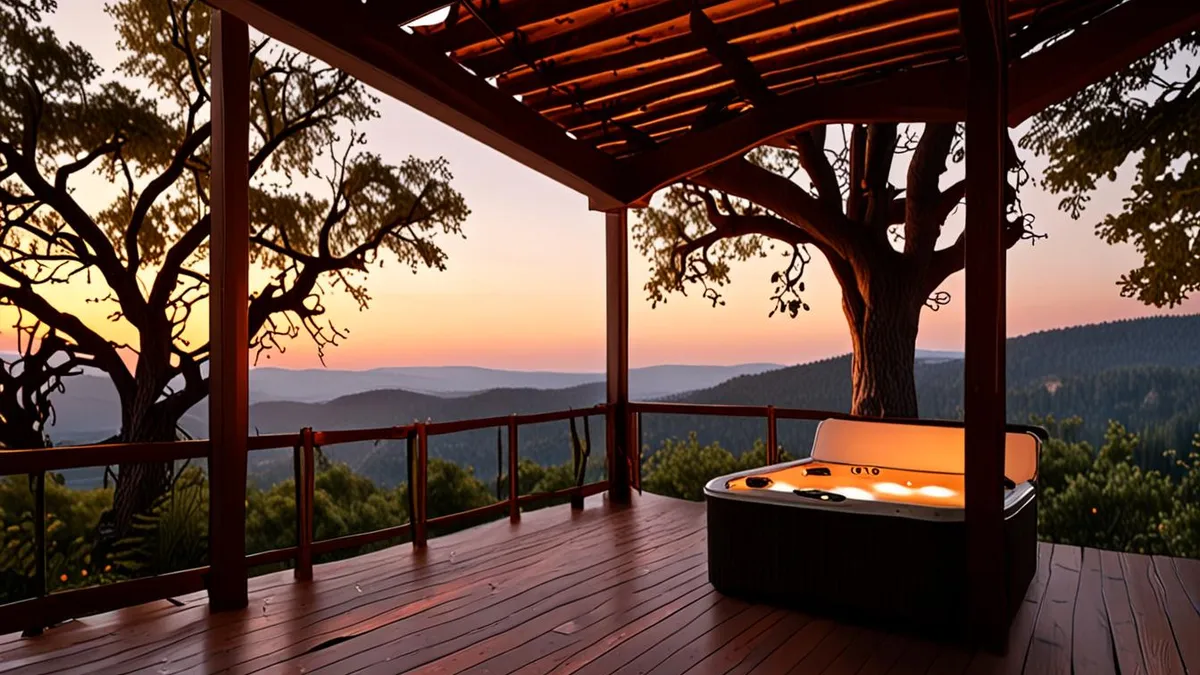
- Luxury canopy suites come with en-suite bathrooms, proper heating and, at the top end, extras like private hot tubs, floor-to-ceiling glass and curated decor. These behave more like boutique hotel rooms raised into the trees, and larger family layouts can sleep up to 6 guests.
- Suspension and hanging tent-style treehouses suspend a tent or fabric cabin from cables or frames, giving a lighter, swaying feel closer to camping. They usually weigh less, cost less and suit travelers who don’t mind a more adventurous night. Check the access route before booking, since some require a short walk or climb.
- Resort-style multi-unit treehouse lodges group several treehouse units on one property with shared facilities such as pools, lounges and on-site dining. They work well for travelers who want the treehouse experience with hotel-style services nearby, and they often have the widest range of unit types on a single property.
How Much Do Treehouse Stays Cost?
Treehouse pricing spans a wide range, but it follows the same logic as most specialty lodging: you pay for space, privacy and what’s included. Here’s how the typical bands break down, based on what travelers commonly encounter on booking platforms.
The three main price bands
Budget options at $100–$200 per night usually mean simple cabins with shared bathrooms or facilities a short walk away. Don’t expect climate control or a full kitchen at this level — you’re paying for the location and the novelty of sleeping in the trees.
Mid-range stays at $200–$400 per night typically include private bathrooms and kitchenettes. This is the sweet spot for most couples and small families: you get real plumbing, some self-catering ability and usually a deck or viewing platform of your own.
Luxury treehouse resorts at $400–$800+ per night add hot tubs, catering and guided extras such as nature walks or private dining. At this level you’re booking an experience, not just a room, and the service often rivals a full-service lodge.
When dates change the price
Weekend and holiday dates often price 20–40% higher than midweek nights at the same property. Shifting a two-night stay from Friday–Saturday to Sunday–Monday can save real money, especially in popular forest and lake regions. If you’re comparing treehouses against other unusual accommodations, the same dynamics apply across most glamping costs by stay type, so the bands here are a useful benchmark for specialty lodging in general.
What Drives the Price of a Treehouse Stay
Two treehouses on the same lake, or even on the same property, can carry very different nightly rates — and the gap usually comes down to three things: where the unit sits, when you travel and what’s bundled into the price. Knowing how each one works makes it easier to spot listings that are fairly priced and ones charging mainly for novelty.
Location and views
Within every price band, canopy-level or lake-view units command the top. A treehouse set high among the branches with an unobstructed water view will sit at the high end of its category, while a ground-adjacent unit with a partial view of neighboring cabins sits at the low end. If the view is what you’re paying for, check listing photos carefully — many properties offer several unit types at very different prices on the same site.
Season and inclusions
Season moves prices just as much as location. Peak June–August dates sit at the high end of every band, while May and September–October drop rates and open up better availability. Travelers with flexible schedules can often book a top-tier unit in shoulder season for what a basic unit costs at peak.
Inclusions are the third lever. Hot tubs, breakfast and airport or trailhead transfers can add $50–$150 per night versus bare-bones units. Before dismissing a higher-priced listing, tally what its rate already covers — a $350 night with breakfast and a hot tub can beat a $280 night where both cost extra. Compare the total value, not just the headline number.
When to Book a Treehouse Stay
Treehouse stays look small on paper, but the most photogenic units often disappear long before you think to book. Because many properties only have a handful of treehouses — sometimes just one or two — availability is far tighter than at a regular hotel. A 20-room lodge can shuffle guests between units; a two-treehouse hideaway has no fallback once its dates fill. Planning your booking window makes the difference between scoring the canopy suite you saw in photos and settling for whatever is left.
- Book 3–6 months ahead for peak season. If you want a June–August stay, reserve as early as possible. The best units — the ones with the best views and the most privacy — sell out first, and smaller properties have nothing to fall back on. If your dates are flexible, shifting into May or September–October usually means lower rates and a much easier booking process.
- Book 2–3 months ahead in shoulder and off-peak periods. Outside the summer rush, availability is much friendlier. A couple of months of lead time is usually enough to get your pick of units without paying top rates. That said, popular small properties can still fill weekends quickly, so don’t assume off-peak means unlimited choice.
- Plan around minimum stay requirements. Most properties ask for a 2-night minimum on weekends and holidays. If your dates include a Saturday night, budget for two nights or shift your trip to midweek, where single nights are easier to arrange and rates tend to be gentler.
One last tip: once you have your dates, message the host or property directly with any special requests, such as a specific unit or an early check-in. Popular treehouse hosts often accommodate guests who communicate early, and a quick note at booking time costs you nothing. It also gives you a chance to confirm practical details — parking, access to the unit and what happens if weather turns — before you arrive rather than after.
How to Choose and Vet a Treehouse Stay
Not all treehouse stays are created equal, and the gap between a dreamy canopy retreat and a disappointing night in the woods usually comes down to homework done before booking. Since many properties are small, owner-run operations rather than big chains, the details vary enormously from one listing to the next. A few focused checks will tell you almost everything you need to know before you commit your deposit.
- Match the unit to your group size. Most treehouses sleep 2–4 guests, while dedicated family units can handle up to 6. If you are traveling as a group of five, don’t assume two units can be booked side by side — many properties place them far apart for privacy, which changes the whole feel of a group trip.
- Read recent reviews for access details. Stairs, ladders, steep gravel roads and long walks from parking vary enormously between properties. A review from last month is worth far more than one from three years ago, especially if the access route matters for older travelers or anyone with limited mobility.
- Confirm the climate and bathroom setup. Budget units sometimes lack heating or air conditioning, and some simpler cabins use shared or nearby bathroom facilities. Ask directly rather than guessing — a chilly night without heat is a common regret, particularly in shoulder season when temperatures drop after dark.
- Compare photos of the actual unit. Resort-wide galleries often show the most impressive treehouse on the property, which may not be the one you are booking. Look for listings that label photos by unit name, and ask for pictures of your specific treehouse if they aren’t shown.
Finally, don’t be shy about messaging hosts with questions before you book. Owners of small treehouse properties tend to respond quickly and honestly, and their answers will tell you a lot about what your stay will actually feel like. If a host is slow or vague before you’ve paid, that pattern rarely improves once you arrive. A short exchange covering access, heating, and the exact unit you’ll sleep in takes ten minutes and can save a whole weekend.
What to Expect on Arrival and During Your Stay
Arriving at a treehouse stay is a little different from checking into a hotel. Many properties operate on a self-check-in basis, using lockboxes or a meet-up with the host within a set arrival window. Read your confirmation email carefully and note that window — if you arrive late in the evening, you may need to find your unit in the dark, which is much easier with clear instructions in hand.
Packing for the terrain
Expect uneven ground, gravel paths, wooden walkways and possibly a few stairs or a ladder between your car and your front door. Sturdy shoes are a must, and layers make a real difference in forest settings, where temperatures drop quickly once the sun goes down even in warm months. If you want a ready-made list, this glamping packing checklist covers most of what you’ll need for a night among the trees.
Living with the forest
Limited lighting is part of the charm, but it is also practical: bring a headlamp or a small flashlight for the walk back from dinner or the bathroom. Wildlife is part of the experience too, so store food properly — in the provided containers or your car rather than on an open deck — to avoid attracting raccoons, rodents or bolder visitors overnight. A pair of binoculars and a little patience on the deck at dawn often rewards you with more animal sightings than any guided tour.
Treehouse Stays at a Glance
Treehouse stays look magical in photos, but the reality comes down to three things: knowing your types, understanding what drives the price and locking in your dates early enough. The range is wide, from simple budget cabins to luxury canopy suites with hot tubs and catering, and each tier delivers a very different level of comfort.
Timing matters just as much. For June–August trips, the best units are often gone well before summer arrives, so treat early reservation as non-negotiable for those dates. In shoulder and off-peak periods you have more breathing room, but waiting until the last minute still risks losing the unit you actually wanted. Before you compare prices, match the stay type and sleeping capacity to your group first — a cheap cabin that fits two won’t help a family of five. Get those pieces right and the photos will match the experience. If this helped you plan your own treetop trip, leave a comment or share the article.