You’ve picked the resort, you’ve picked the dates, and now you’re stuck on the one decision that can double your nightly rate: overwater bungalows vs beach villas. It’s a genuinely hard call, because both promise that postcard version of a tropical trip, yet they deliver very different experiences for very different prices.
This guide breaks the choice down into what actually matters: what the overwater premium really buys you, what a beach villa gives you instead, and where each option makes sense. We’ll also cover how to book the right category, a side-by-side look at the trade-offs, and a simple way to decide which one is worth it for your trip — including a split-stay approach that lets you try both without paying for two full vacations.
What You Actually Pay for an Overwater Bungalow
Let’s start with the number that surprises most first-time bookers: overwater bungalows typically cost 30–80% more than a comparable beach villa at the same resort. That’s not a small upgrade fee — it’s often the difference between a mid-range and a top-tier budget for the entire trip.
And here’s the part that stings: you’re usually paying more for less space. Overwater bungalows typically range from about 45 to 120 square meters, and at many resorts the beach villa at a lower price point is actually the larger of the two. What you’re buying is the position over the water, not square footage.
When the premium peaks
Timing changes the math dramatically. During high season, which runs December through March in the Maldives and the Caribbean, overwater rates hit their highest, and the premium over beach categories widens with them. If your dates are fixed to that window, expect to pay top dollar and book far in advance.
Shoulder months like May, June and November can cut overwater rates by 20–40%, which is often enough to bring a bungalow within reach of a beach villa budget. If your schedule is flexible, shifting your trip by a few weeks is the single easiest way to soften the premium. Always check current rates with the resort or your operator, since pricing varies widely between properties and seasons.
What a Beach Villa Gives You Instead
Now flip the equation. For the price of an overwater bungalow, a beach villa usually gives you noticeably more room — often with a private pool or a larger garden and outdoor living area thrown in. At many resorts, the beach category is where the generous floor plans live, and you can spread out with lounge space, shade and room for kids or a couple of travel companions without feeling stacked on top of each other.
The practical advantages of being on land
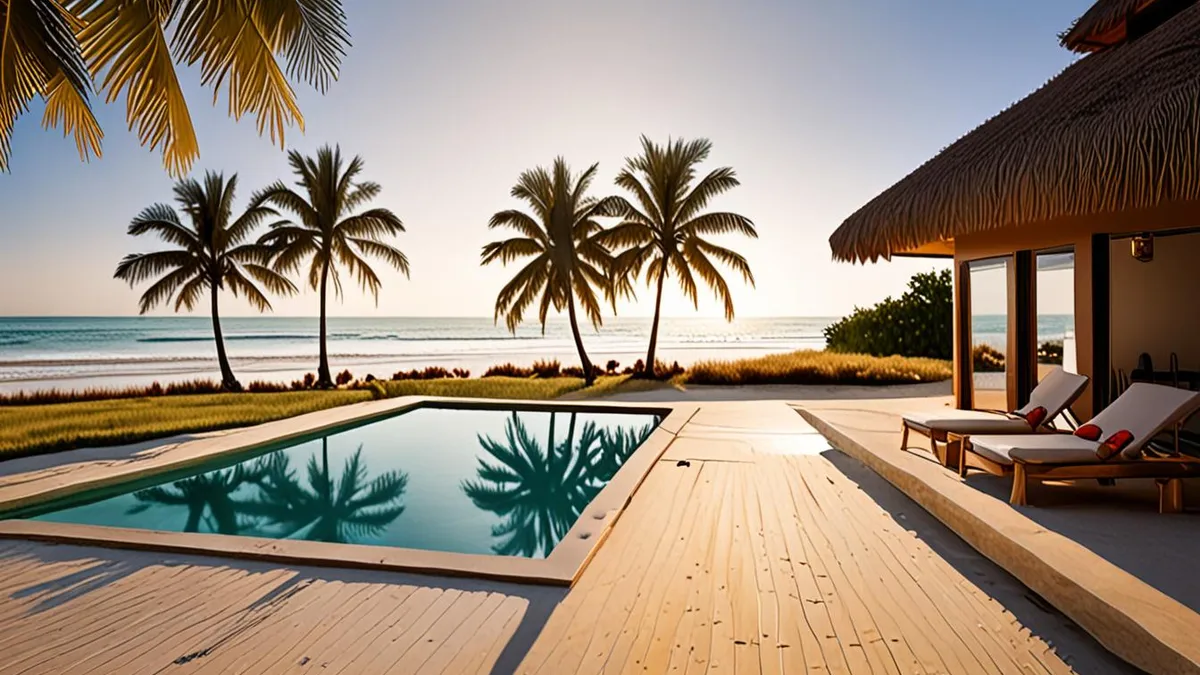
There’s also a everyday-convenience factor that’s easy to underestimate. From a beach villa, you step straight onto sand, and shade, loungers and beach service are all within a few meters of your door. No walkway back to shore when you want lunch, no waiting for a buggy, no trek back for sunscreen you forgot. When you’re swimming several times a day, that short distance adds up to a lot of comfort.
Why longer trips favor the beach side
The longer you stay, the more this matters. Beach villas suit longer stays of 7+ nights, where comfort, space and easy routines matter more than a dramatic view from the bed. After the first few days, the novelty of sleeping over the water fades, but extra square footage and a private pool keep paying dividends every single day. If your trip is a proper week-plus holiday rather than a short splurge, the beach villa is usually the smarter base.
The Overwater Experience: What You Get for the Premium
So what does the premium actually buy? The headline feature is direct lagoon access: on most overwater bungalows, ladders or steps lead straight from your deck into the water. You can roll out of bed, descend a few rungs and be snorkeling over fish before your coffee gets cold — no beach, no walk, no crowds.
The second thing you’re paying for is privacy and the view. Beachfront rooms share their stretch of sand with anyone walking by, while an overwater deck is your own. And the water views run unobstructed from sunrise to sunset, which is exactly the postcard moment you came for.
Then there’s the novelty factor. For many travelers, sleeping above a lagoon is a once-in-a-lifetime splurge, and that’s precisely why it works best kept to 2–4 nights. The magic is real, but it’s intense rather than sustainable — a few nights feels like a dream, a full week can start to feel like a very expensive room with a long walk to the pool.
- Wake-up rituals: Watching the sun rise over open water from your bed, coffee in hand, becomes the defining memory of the trip — something a garden view rarely matches.
- Marine life at your doorstep: Small reef fish, rays and other lagoon life often pass beneath or around the bungalow, so even leaning over the railing turns into a mini snorkel session.
- Photo value: The deck-over-turquoise-water shot is the reason many travelers book this category at all, and it’s essentially impossible to recreate from shore.
Where Each Stay Type Makes Sense
When travelers picture an overwater bungalow, they are usually picturing the Maldives or French Polynesia. These two regions have built their entire resort culture around overwater living, and they offer the deepest inventory by far. That matters practically: more properties means more price points, more layouts, and a better chance of finding a bungalow that fits your budget rather than settling for whatever is left.
Southeast Asia and the Caribbean also offer overwater options, but the picture is different. In both regions, beach villas dominate the market, and overwater categories tend to be limited to a handful of suites at select resorts. If an overwater stay is the main goal, the Maldives and French Polynesia give you the most choice. If you are choosing a destination first and the room category second, Southeast Asia and the Caribbean deliver excellent beach villa value.
Match the water to the room
Water conditions should influence your decision as much as geography. Overwater bungalows shine above shallow, calm lagoons, where you can swim or snorkel straight off your deck and see the bottom beneath you. A surf-pounding or strongly tidal beach, on the other hand, favors a beach villa: you get shade, sand, and easy access to the shore without depending on ladders or a walkway. Before booking anywhere, look at photos and reviews of the specific water around the room category, not just the resort in general. For travelers weighing Thai coastal options, comparing resorts in Phuket and Krabi is a good example of how much beach character can vary within a single country.
How to Book the Right Category
Booking the right room category takes a bit more planning than a standard hotel reservation, especially if overwater bungalows are involved. These categories carry the least inventory at most resorts and sell out first in high season, so timing and research both matter. Unlike a city hotel where you can often switch rooms on arrival, resort categories in remote destinations are usually fixed at booking, and moving later can be expensive or simply impossible. The steps below will help you lock in the right room at a price you can live with.
- Book early for high season. If you want an overwater bungalow for the December–March peak in the Maldives or Caribbean, reserve 6–12 months ahead. The best-positioned bungalows go first, and last-minute availability in these months is unreliable at best. If your dates are flexible, shifting to shoulder months like May, June or November can cut rates by 20–40% while the weather is often still very good.
- Consider a split stay. Instead of a full week overwater, book 2–4 overwater nights and move to a beach villa for the rest. You get the bucket-list experience where it counts and comfortable, spacious accommodation for the longer portion, at a noticeably lower total cost. Many resorts will handle the room change for you, sometimes even on the same property, so ask about it when you book.
- Inspect what sits under and around the bungalow. Not all overwater rooms are equal. Water depth, the presence of a house reef, and how close neighboring walkways pass all vary widely between categories and even between individual bungalows. A bungalow facing open water feels very different from one looking back at the resort. Ask the resort or check recent guest photos before committing to a specific room number.
A little extra diligence here pays off more than in almost any other booking decision. The difference between a well-chosen bungalow and a poorly chosen one can define an entire trip, so it pays to ask specific questions before you pay the deposit. Confirm whether your chosen bungalow has direct lagoon access, which way it faces for sunrise or sunset views, and how far it sits from the main island facilities. Resorts are generally happy to answer these questions, and the answers often make the choice between two similar-sounding categories much clearer.
Overwater Bungalows vs Beach Villas: The Trade-offs at a Glance
Put side by side, the two room types trade blows in predictable ways, and knowing where each one wins makes the decision much easier. Neither is objectively better; they simply serve different trips. The trick is being honest about which one your trip actually calls for, rather than which one looks better in the resort’s photo gallery.
Start with price. Beach villas win on space per dollar, often including private pools or larger gardens at a lower nightly rate. Overwater bungalows justify their premium with something a beach villa cannot offer at any price: unobstructed water views and direct lagoon access from your own deck. If your budget is fixed, the question becomes what you want that money to buy — square meters on land, or a setting over the water.
Then think about comfort and how you will actually use the room. Overwater categories tend to run compact, which matters if you are traveling with kids or planning long evenings in. Beach villas give you room to spread out, plus immediate access to sand and shade without walking back along a jetty. If your days will be spent snorkeling, kayaking or at the beach bar, a villa puts you closer to all of it.
Finally, weigh the experience itself. Overwater stays deliver privacy and a novelty factor that many travelers treat as a once-in-a-lifetime splurge, and they are best enjoyed that way — short, intense and view-driven. Beach villas reward longer stays where comfort accumulates day by day. If you genuinely cannot decide, splitting your trip between both categories lets you sample each without doubling your accommodation budget. Check current rates and availability with the resort before committing either way.
Which One Is Worth It for You
So which one is worth it? If you’re chasing a short, view-driven splurge and your budget stretches, the overwater bungalow justifies its premium — especially in calm lagoons where you can swim straight off your deck. Keep it to a few nights, though, because the novelty is the point and the space usually isn’t.
If you’re staying a week or more, traveling with family or friends, or you actually want to spend time on the sand, a beach villa gives you more room and more comfort for the same money. The smartest move for many travelers is the split-stay: a few overwater nights for the experience, then the rest in a beach villa — both memories, without doubling the cost. If this helped you decide, leave a comment or share the article with someone planning the same trip.