Glamping bathrooms are the detail that decides whether a trip feels like a treat or a compromise. Many travelers love the sound of a safari tent or a geodesic dome, then hesitate at the last moment, picturing a muddy campsite block with flickering lights and a queue for a lukewarm shower. The good news is that bathroom setups at glamping sites are usually far better than that, but they vary a lot from one site to the next, and the differences matter when you book.
This guide breaks down the three main options: shared bathroom blocks, private ensuites and outdoor bathrooms. You will learn how each one works in practice, what to expect from plumbing and hot water, how the price and season affect your choice, and exactly which questions to ask before you pay a deposit. By the end, you will be able to match the right bathroom setup to your trip, whether that is a budget weekend with friends or a honeymoon where a soaking tub is non-negotiable.
The Three Glamping Bathroom Types at a Glance
Almost every glamping site offers one of three bathroom arrangements, and knowing which one you are booking is the single most useful thing you can do before reserving a unit. The three types are not just variations on a theme; they change how your mornings and evenings actually feel, from the walk you take in a towel to the hot water pressure in your own shower. A quick check of the listing before you pay can save you from the most common complaint in glamping reviews: expecting a private bathroom and discovering a walk across a muddy field instead.
Here is how the three setups differ, with the practical details that matter most:
- Shared bathroom blocks: separate facilities in a central building, standard at budget and mid-range sites. They are usually cleaned several times a day, and well-run sites keep them within a short walk of the accommodation.
- Ensuite bathrooms: a private, plumbed bathroom attached to the unit itself or a few steps away in its own annex. This is the setup you will find at luxury domes, treehouses and safari lodges, often with finishes closer to a boutique hotel than a campsite.
- Outdoor bathrooms: private hot showers and composting or incinerating toilets set in open-air or screened enclosures. These are common at off-grid and eco-focused sites where mains plumbing is not an option, and they are often the most memorable part of the stay.
As a rough rule, comfort level tracks price. If a site advertises shared facilities, you are generally looking at a simpler, more back-to-nature stay; if the listing mentions an ensuite, you are usually paying for a luxury experience. Neither is better in absolute terms, but picking the wrong one for your trip is the most common source of disappointment. Match the setup to your plans: a weekend in warm weather is easy with any arrangement, while a week in cooler months calls for something indoors. The sections below break down each option in detail, so you can book with confidence.
How Shared Glamping Bathrooms Work
Shared bathrooms at a glamping site are not the same thing as a campsite amenity block, even though the basic idea is similar. At most glamping sites, the facilities sit in a purpose-built central building, typically within 20-100 meters of the units, and they include flush toilets, hot showers and often a washing-up area for dishes and cooking gear. The walk is real, but at a well-run site it is a path through grass or woodland rather than a trudge across a muddy field.
What the facilities are actually like
The biggest difference from regular camping is privacy. Expect individual lockable cubicles, each with its own toilet and shower, rather than the open, communal rooms you find at basic campsites. Many glamping operators also clean the blocks more frequently than campsites do, and some provide towels or bathrobes so you can make the walk in comfort. That said, standards vary, so it is worth scanning reviews for specifics before you book.
The trade-off: cost versus convenience
Money is the main reason travelers choose shared facilities. Shared setups typically cost 20-40% less than ensuite equivalents at the same site, which adds up to a meaningful saving over a multi-night stay. The price you pay is the walk, especially at night or in the rain. If you want to see how that trade-off plays out more broadly, this comparison of glamping and camping costs and comfort levels breaks it down in detail.
One practical tip: peak-season queues are common at breakfast and evening times, when everyone is getting ready at once. Plan your showers around meal hours, early morning or late evening, and you will rarely wait at all.
Ensuite Glamping: What a Private Bathroom Includes
An ensuite bathroom is what turns a glamping unit from a stylish tent into something closer to a small hotel room. The typical spec includes a flush toilet, hot running water and a walk-in or power shower, and some high-end units add a small bath, often a freestanding tub positioned to make the most of a view. Towels, toiletries and a hairdryer are common at this end of the market, so pack lighter than you would for a campsite stay.
Inside the unit or a few steps away?
Ensuites come in two forms. In domes and lodges, the bathroom is usually built inside the unit itself, with proper walls, flooring and ventilation hidden behind the canvas or timber. In safari tents, treehouses and some cabins, you may instead get an attached annex a few steps from the main sleeping area, sometimes connected by a covered walkway. Both count as ensuite, but the annex version means stepping outside, which matters on a rainy night, so check which layout the listing describes.
What the privacy costs
The premium for a private bathroom is real. Budget an extra £30-£80 or $40-£100 per night over shared-facility units, depending on the site and the level of finish. If you want to see how that fits into the total price of a stay, a full cost breakdown by stay type makes the comparison easier to plan around. For a two- or three-night trip, the upgrade is often the difference between a good trip and a great one.
Availability is the other constraint. Ensuite units for June-August often need booking 3-6 months ahead, because the private-bathroom domes and lodges are usually the first to sell out at any site. If your dates are fixed and your trip falls in high summer, reserve early rather than hoping for a late cancellation.
Outdoor Bathrooms and Off-Grid Plumbing
Some of the most memorable glamping bathrooms are the ones with the least building around them. Off-grid sites that have no mains plumbing rely on composting or incinerating toilets instead of flush systems, paired with water tanks that are filled on site. Done well, these setups feel surprisingly civilized rather than rustic.
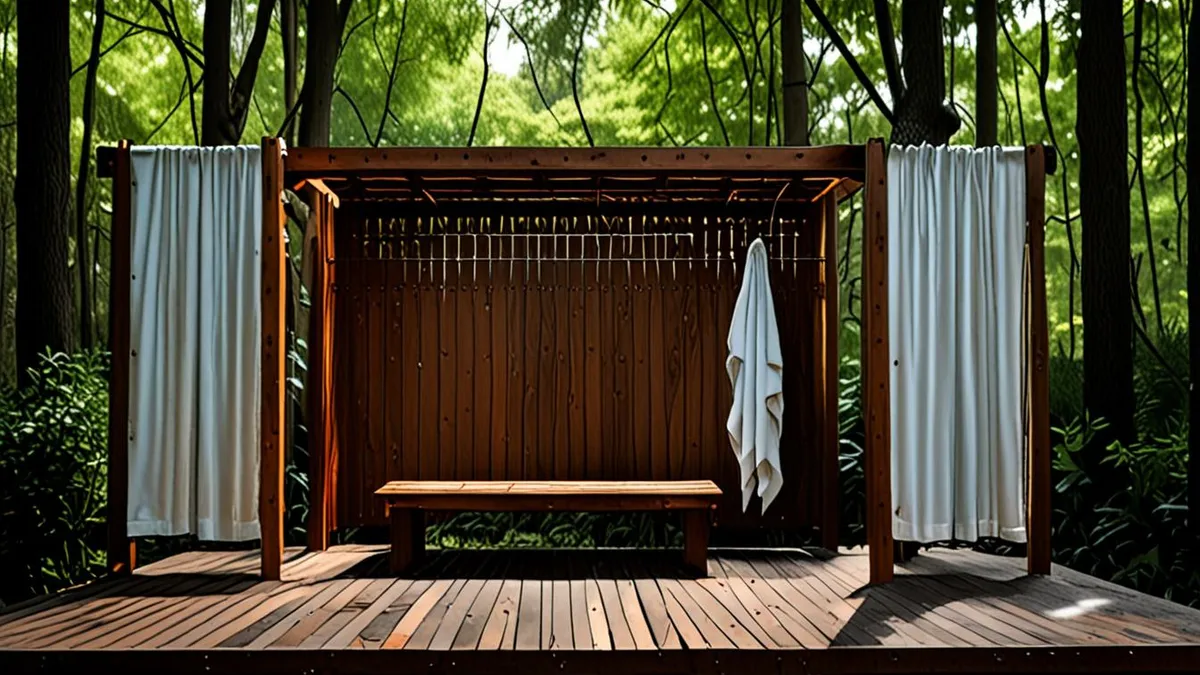
The biggest misconception is about the showers. Outdoor showers at glamping sites are usually hot, plumbed and fully screened with timber panels or canvas walls. You are not standing in the open with a cold bucket. Think a proper shower head, a door or curtain, and a view of trees instead of tiles.
Because water and heating work differently off-grid, it pays to ask a few questions before you book:
- Water heating method: gas, solar or wood-fired systems each behave differently, and wood-fired showers may need time to heat up before use.
- Water supply limits: in dry periods some sites ration tank water, so ask whether showers are metered or unlimited.
- Toilet type: composting toilets need a handful of sawdust after use and no toilet paper in the bowl, while incinerating toilets burn waste to ash and can have a short wait between uses.
- Screening and privacy: check whether the enclosure is fully enclosed or open above head height, which matters more than you would think.
Finally, timing matters. Outdoor bathrooms suit warm-season stays, but plumbing that freezes rules them out in winter. If you are considering a cold-weather trip, it helps to understand how cold-weather glamping stays work before committing to an open-air shower.
How to Check Bathroom Details Before You Book
A few minutes of checking before you book saves most of the bathroom disappointments glampers report. Listings are not always as clear as they should be, and photos rarely show the things that matter most: how far you will walk at midnight, whether the hot water holds up when the site is full, and what kind of toilet you are actually getting. It helps to work through a simple routine rather than relying on gallery images, which tend to show the best unit on a sunny day.
- Read the listing wording closely. Look for the exact phrases ‘ensuite’, ‘private facilities’ or ‘shared block’. ‘Private facilities’ can mean an ensuite or a private bathroom in a separate building, so never assume the toilet is inside your unit. If the description is vague, that vagueness is itself a clue.
- Scan recent reviews. Search reviews for mentions of shower temperature, toilet type and walking distance to facilities. Reviews from the last few months tell you whether the hot water is reliable today, not how it was years ago. Pay attention to how the site responds to complaints, too.
- Message the site directly. Ask two practical questions: how reliable the hot water is at busy times, and whether the facilities are exclusive to glampers or shared with campsite guests. A shared block serving a whole campground behaves very differently from one serving six tents.
- Match the setup to your trip. Families and honeymoons usually justify the ensuite upgrade, while a short summer trip can handle shared facilities without much inconvenience. If you are booking a popular summer date, ask early, since the best-appointed units tend to go first.
Doing this routine takes maybe ten minutes, and it answers the questions that photos rarely show. The wording of the listing and the freshest reviews are far better predictors of your bathroom experience than the price alone, and a short message to the site often settles any remaining doubt before you commit.
Choosing the Right Bathroom Setup for Your Trip
The right bathroom setup depends less on the site and more on your trip. The same open-air shower that feels magical on a warm July night can be a genuine hardship on a wet October weekend, so start with your dates and who is traveling before you look at anything else. A couple on a two-night summer break can tolerate a short walk to the facilities far more easily than a family of five on a rainy week away.
As a broad rule, comfort level tracks price: shared facilities signal a simpler stay and ensuite signals a luxury one. But that rule bends depending on your circumstances. Here is how the decision usually breaks down:
- Cold-weather and shoulder-season trips: prioritize indoor or ensuite bathrooms over outdoor showers, since most winter sites switch to indoor facilities anyway because outdoor plumbing freezes.
- Family trips with young children: an ensuite, or shared blocks very close to your unit, make evening routines far easier when you are managing bedtime, baths and a half-asleep toddler. Middle-of-the-night toilet runs are the real test.
- Romantic or remote stays: an outdoor bathroom can be a feature rather than a compromise in warm months, especially a screened hot shower under the trees.
- Budget stays: shared blocks are the easiest place to save money without losing the glamping experience itself, since the tent, the bed and the setting stay the same.
If you are torn, weigh the walk against your daily rhythm. If you shower once a day and the block is a short stroll away, shared facilities are an easy win. If hot water on demand at 6 a.m. matters to your trip, the ensuite premium is usually money well spent. Match the setup to the trip rather than chasing the fanciest option on the listing page.
Wrapping Up Glamping Bathroom Basics
So, will a glamping trip mean a muddy campsite toilet block? Usually not. Glamping bathrooms come in three main forms: shared blocks, private ensuites and outdoor setups, and each one works quite differently from a basic campsite facility. Shared blocks are the budget-friendly option, typically costing 20-40% less than ensuite units, while ensuites add comfort at a premium and outdoor bathrooms trade walls for a view.
The right choice depends on your budget, the season and the kind of trip you’re planning. Before booking, check the listing wording carefully and skim recent reviews, because that simple step prevents most bathroom surprises. If this breakdown helped you plan your trip, leave a comment or share the article with a fellow glamper.