The photos look irresistible: an infinity pool spilling toward the horizon, a terrace hovering above the coastline, sunsets that seem painted just for you. But somewhere between booking and packing, a quiet worry creeps in. If the villa sits that high up a hill, how do you actually get to it? And how many times a day will you climb stairs just to fetch a swimsuit or a bottle of water?
Those concerns are valid, and they deserve honest answers before you commit. A hillside villa can be the highlight of a trip or a daily workout you never signed up for, depending on the property and the people in your group. This guide walks through the real trade-offs: why those panoramic views come with steep roads and long staircases, what arrival day actually looks like, how the steps affect different travelers, and which questions to ask a host before paying. By the end, you will know whether the view is worth the climb for you.
Why Hillside Villa Views Come With a Trade-Off
Hillside villas typically sit somewhere between 50 and 300 meters above the coast or valley floor, and that elevation is precisely why the views are so spectacular. You are looking down over the sea, the rooftops or the olive groves instead of across a flat stretch of beach road. The same height, however, is what makes access challenging. Roads wind up the slope in switchbacks, driveways climb steeply, and every path around the property tends to follow the terrain rather than fight it.
The rewards go beyond the view. Elevated plots are usually more private, since neighbors are rarely close enough to see over the terrace wall. Evenings also tend to be cooler and breezier up on the hill, which is a genuine pleasure in the height of summer when sea-level towns feel stifling.
The costs hiding behind the panorama
The flip side is daily effort. Expect stairs, narrow approach roads and longer drives to shops, restaurants and beaches. A simple errand that would take two minutes at a seaside villa becomes a drive down winding roads. Carrying groceries, luggage or a sleepy toddler up an exterior staircase gets old quickly if it happens five times a day.
None of this means hillside villas are a bad choice. It means the decision depends on your group. An active couple may barely notice the climbs, while a family with a grandparent and two small children may find them exhausting. Understanding this trade-off before you book, rather than on arrival day, is what separates a great stay from a frustrating one.
Access: Roads, Parking and Arrival Day
The last stretch of the drive is where most surprises happen. For many hillside villas, the final 1 to 3 kilometers of road are narrow, single-lane or unpaved, sometimes with sharp bends and drop-offs at the edge. What looks like a quick hop from the main road on a map can turn into a slow, careful crawl in a rented sedan. This is exactly why you should ask the host before booking whether a compact car or an SUV handles the route better, and whether any section is impassable after heavy rain.
Parking is the next thing to pin down. Hillside properties often offer only 1 or 2 spaces on a sloped driveway, and turning space for larger vehicles is not guaranteed. If your group arrives in two cars, or you are considering a van, confirm both points in writing.
- Arrive in daylight. Unlit rural lanes and steep driveways are far harder to judge after dark, and in winter the sun can set before 6 pm, so a late ferry or flight can turn arrival into a stressful ordeal.
- Time your day trips realistically. The drive to the nearest town or beach road typically takes 10 to 25 minutes each way, so a “quick” lunch in town or a spontaneous beach morning costs more time than it would at a sea-level property.
- Ask about the driveway surface. A steep gravel drive can be slippery in wet weather and awkward for low-clearance cars, so it is worth knowing before you commit to a vehicle.
If you want a structured way to gather all of this before paying, work through a complete villa rental checklist and send the relevant questions to the host in one message. A host who answers quickly and specifically is usually a good sign for the whole stay.
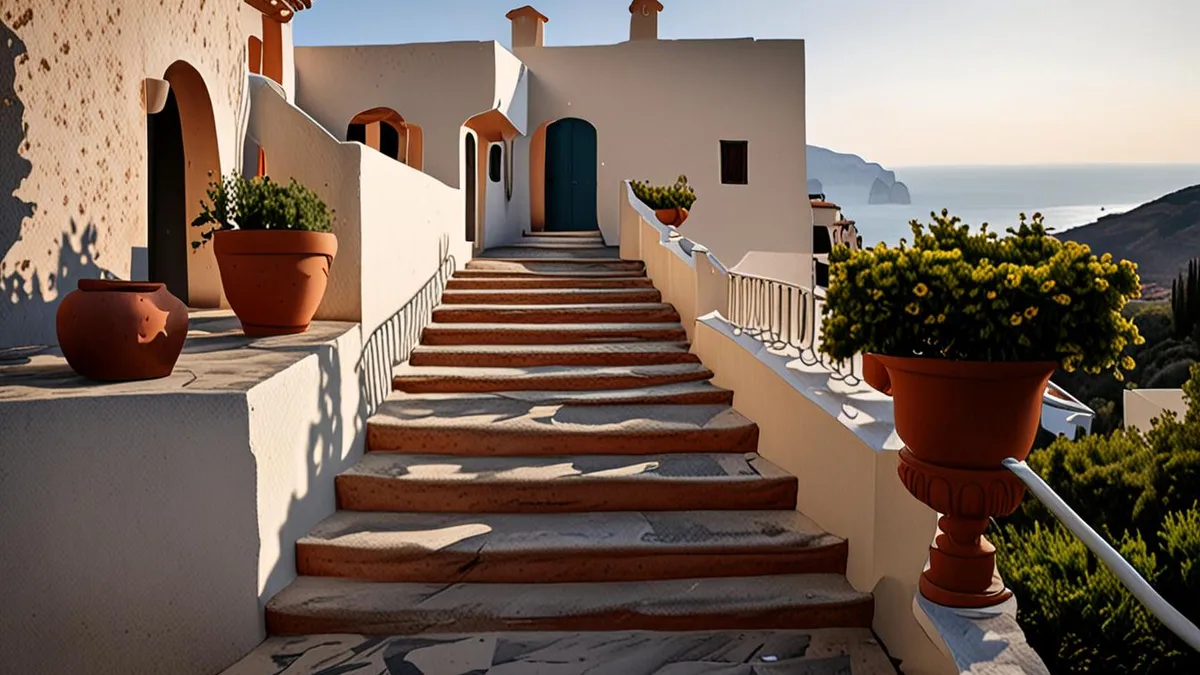
Steps: How Many and Who They Affect
Stairs are the defining feature of most hillside villas, and it helps to have a realistic number in mind. A typical property has somewhere between 40 and 120 exterior steps connecting the parking area, the main entrance, the pool and the bedrooms, usually split across several flights rather than one daunting staircase. Forty steps sounds manageable on a listing page; carrying beach bags and grocery runs up and down them three or four times a day is a different experience.
Terraced layouts mean nobody escapes the stairs
Many hillside homes are built on terraces cut into the slope, which means the bedrooms, kitchen and pool may each sit on a different level. Even a simple trip to make coffee can involve a flight of steps, and a swim means descending and climbing again. Interior staircases often add to the count, so the total daily effort is easy to underestimate from photos alone.
When to prioritize step-free access
If anyone in your group has limited mobility, if you are traveling with toddlers, or if you simply dread hauling heavy luggage up flights of steps, look for villas that advertise genuine step-free access, meaning parking, entrance, at least one bedroom and a bathroom all on the same level. These properties are in shorter supply and usually cost 15 to 30% more than equivalent stepped villas, but for the right group that premium buys a far more relaxing stay.
Finally, ask hosts for photos of the actual route from parking to the front door, not just the beautifully styled terrace. A short video of the approach tells you more about the daily reality of the property than any floor plan, and hosts who provide one without hesitation are usually the ones whose listings match reality.
What the Views Really Deliver
The whole reason you climb that switchback road is waiting for you on the terrace. Elevated villas are usually positioned to face west or southwest, which puts the sunset over the sea or the valley front and center every evening. That said, orientation is not guaranteed, and a villa facing east gives you glorious mornings but leaves you watching the light fade behind your own roofline. Ask the host to confirm which way the main terrace faces before you book.
Water is where hillside plots really show off. Infinity pools are common at these properties precisely because the steep drop-off makes the edge disappear into the horizon, and the effect is far more dramatic at elevation than on a flat coastal plot. If a pool is a priority for your stay, it helps to understand the differences between pool styles before you compare listings — this guide to private, shared and infinity pool options breaks down what each type actually offers.
One detail that surprises many travelers: height changes the temperature. Higher elevations bring noticeably cooler evenings, even in summer, and in shoulder months the difference can mean needing a sweater outdoors. Safety matters too, since a significant drop-off changes how relaxed you can be with little ones in tow.
- Pool heating: unheated infinity pools can sit in the low twenties (Celsius) in May and October, so ask whether pool heating and outdoor heaters are available if you want to actually swim and dine outside.
- Terrace barriers: railings and glass safety barriers are standard at villas with serious drops, but confirm their height and condition in photos if you are traveling with toddlers.
- Furniture placement: loungers and dining tables are often set back from the edge on sloped terraces — check photos to see whether the seating area feels usable rather than squeezed against the railing.
Booking a Hillside Villa: Timing and Questions to Ask
Booking a hillside villa well comes down to timing and asking the right questions before money changes hands. The view you fall for in the photos is easy to verify; the road, the steps and the layout are not, unless you make the host spell them out. A hillside property hides more potential surprises than a sea-level one, simply because so much depends on the terrain the photos never show. Here is a simple sequence to follow.
- Time your booking to the season. For a June–August stay, aim to book 6–9 months ahead, because the best-oriented hillside villas with sunset terraces go first. For May or September–October, booking 2–4 months ahead is usually enough, and you will often find better availability.
- Put your questions in writing. Ask the host directly: how many exterior steps are there, is the access road paved, and is there step-free access to at least one bedroom and bathroom? Written answers give you something to fall back on if the property does not match the description.
- Get the exact location before paying. Request the address or a map pin, then trace the drive from the airport or ferry port yourself. This shows you how much of the route is narrow rural lane and how long the daily trip to town will realistically take.
This process overlaps with general villa vetting, so it is worth reading up on how to verify a villa rental and avoid common scams before you send any deposit. That guide covers payment protection and listing verification in more detail, which matters even more on hillside bookings where a wrong assumption about access can ruin a holiday.
When you receive the host’s answers, compare them against the listing photos and any reviews from previous guests. Reviewers often mention the climb, the parking situation or the drive to town unprompted, and those comments are hard for a host to edit away. A host who answers the step and road questions promptly and precisely is usually a good sign; vague replies about “some stairs” deserve a follow-up. Ask them to describe the route from parking to the front door in their own words — someone who knows their property well can do this easily. If answers stay vague after that, treat that as information too and keep looking. There are plenty of hillside villas with honest, forthcoming owners, and your group will thank you for finding one of them rather than settling for the first impressive view.
Who a Hillside Villa Suits Best
Not every traveler gets equal value from a hillside plot, and being honest about your group matters more than any photo of the sunset. The stairs, the drive and the cooler evenings are all part of the package, so the question is simply who will enjoy the trade.
Travelers who get the most out of the climb
Active couples and groups of friends tend to be the best fit. For them, the privacy of a plot set 50–300 meters above the coast, the panoramic terrace and the evening breeze easily outweigh the daily climbs. If your group enjoys walking, doesn’t mind carrying groceries up a flight or two and plans to spend evenings in rather than dashing out, a hillside villa delivers more per night than a comparable sea-level property.
Groups who should think twice
Families with toddlers or older relatives face a different calculation. With 40–120 exterior steps between the parking spot, the entrance and the pool, every trip to the car becomes a logistics exercise, and a grandparent who stays in a lower-level bedroom may still face several flights to reach the kitchen or terrace. In that case, a villa at sea level with the pool and bedrooms on one level is usually the more relaxing choice, even if the view is less dramatic.
Length of stay changes the math as well. On a weekend break, the stairs can feel like a constant tax on every forgotten sunglasses run. Over a week or more, most guests settle into a rhythm: the view becomes part of daily life, the climbs feel routine, and the privacy starts to feel like the real luxury. If you are torn, lean toward the longer stay — it is the version of hillside living that the photos promise.
Wrapping Up: Is a Hillside Villa Right for You?
So, is the dream photo worth the daily climb? A hillside villa trades easy access for 50–300 meters of elevation, panoramic views and, in most cases, 40–120 exterior steps. If your group is mobile and you prize privacy and sunsets, that trade usually feels like a bargain. If you are traveling with toddlers, older relatives or anyone with limited mobility, a sea-level villa may be the kinder choice.
Before booking, confirm the road condition, the step count, the terrace orientation and whether the pool sits at the same level as the living areas — ideally straight from the host. For June–August stays, book 6–9 months ahead, or choose May or September for the same views with far less competition. Have you stayed on a hillside? Share your experience in the comments below.