Many guests pay full price for a standard room while free or discounted upgrades quietly go to travelers who simply know when and how to ask. Resort room upgrades are rarely handed out at random. They follow patterns: how you booked, when you arrive, and what you say at the front desk all play a part.
This guide walks through the whole process. We start with why upgrades are more available than most people assume, then cover the best timing for both booking and asking, and the exact way to phrase your request. From there, we look at booking choices that improve your odds, when a paid upgrade is actually worth the money, and the common mistakes that shut the conversation down before it starts. A short game plan at the end pulls it all together.
Why Resort Room Upgrades Are Easier Than You Think
Here is the simple economics behind upgrades: resorts price standard rooms to fill them, not to make money on every category. The garden-view room at the bottom of the rate sheet is the volume seller, while suites and premium categories are built for a smaller share of guests. In shoulder season, those higher categories often sit empty.
That emptiness matters more than you might think. An unsold suite earns the resort nothing for the night, so filling it at a discount beats leaving the key in a drawer. This is why last-minute paid offers at the desk can come in 20-40% below the advance rate you would see online.
Why the front desk can say yes
Front desk teams usually have real discretion to move guests up when occupancy is low, especially for direct bookings they can adjust freely. A friendly request costs them nothing if the room would otherwise go unsold. The staff member checking you in often does not need approval from a manager to make it happen.
The takeaway is that upgrades are not favors reserved for VIPs. They are a rational response to empty rooms, and knowing that should give you the confidence to ask.
Timing Your Booking and Your Ask
Getting an upgrade starts long before you reach the front desk. The choices you make when booking and the hour you arrive shape what the staff can realistically offer you once you are standing in front of them. None of this involves luck or charm offensives; it is simply about positioning your reservation so that moving you up a category is easy and appealing for the resort. Work through these steps in order, and you will arrive with far better odds than most guests.
- Book the lowest category you are genuinely happy with. Skip the mid tier. If you book a mid-level room, an upgrade is a small step; if you book the entry category, the same upgrade becomes a real jump and the resort has more incentive to fill the space above you. You should still be content with the room you paid for, because an upgrade is a possibility, not a promise.
- Travel in shoulder season. Months like May-June or September-October see occupancy drop in most beach destinations, which means more empty higher-category rooms and more willingness to fill them. Check your destination’s calendar, as school holidays and local events can shift the quiet weeks around.
- Plan a stay of 5+ nights. Longer bookings give staff more reason to upgrade you than one- or two-night stays, since the move benefits you across the whole trip and is easier to justify internally.
- Time your ask for check-in between 3pm and 5pm. By then, housekeeping has released rooms freed up by early departures, so the desk knows exactly what is actually available and can act on your request on the spot.
None of these steps costs you anything, and together they stack the odds quietly in your favor before you have said a single word about wanting a better room. Treat them as preparation rather than persuasion: you are simply making it convenient for the resort to say yes when the moment comes.
How to Ask for a Resort Room Upgrade
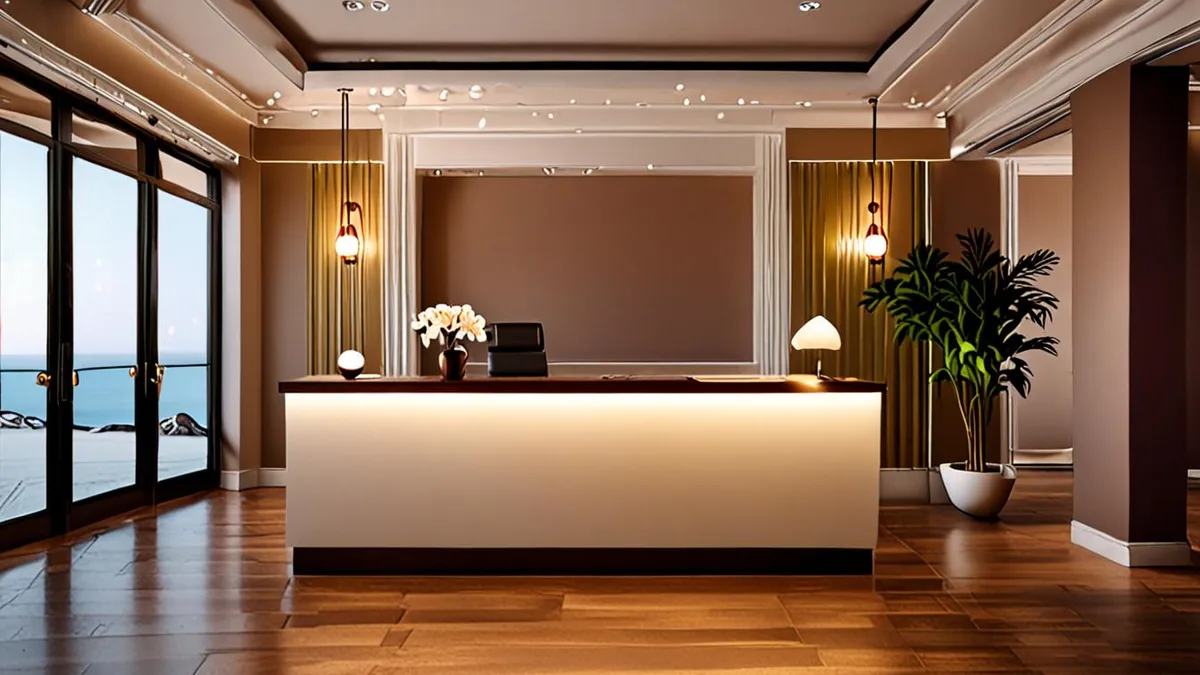
When the moment comes, how you ask matters as much as anything else. The goal is to make saying yes easy and pleasant for the agent, not to pressure anyone. Start by greeting the check-in agent warmly and asking politely whether any complimentary upgrades happen to be available. A friendly, specific question like that invites a helpful answer instead of a flat no.
Special occasions are your strongest card. A honeymoon or anniversary gives the desk a clear reason to act, and it works best when the resort already knows about it before you arrive. Emailing the resort 3-7 days ahead to note the occasion is a common and effective tactic, because staff can then plan for it rather than scramble. If you are planning a trip around a celebration, planning a resort honeymoon with upgrades in mind covers how timing and extras fit together.
Flexibility is the other half of the formula. The broader the range of rooms you would genuinely be happy with, the more options the desk has to say yes to something.
- Frame your request around what you would enjoy, such as more space, a better view, a higher floor, or a quieter wing. These smaller moves are far easier for staff to approve and often deliver most of the benefit.
- If a complimentary upgrade is declined, the conversation does not have to end. Ask politely what a paid upgrade would cost at the desk, since walk-up offers can be cheaper than booking the higher category in advance.
- Whatever the answer, thank the agent by name. Courtesy costs nothing, and front desk teams remember guests who were easy to help.
Booking Choices That Improve Your Odds
Where you book matters almost as much as when you ask. The single biggest difference you can make before you even arrive is to book direct with the resort. When the reservation sits in the hotel’s own system, the front desk can adjust your room category, move you to another wing or add a perk without jumping through hoops. With an opaque third-party rate, staff often cannot touch the booking at all, no matter how empty the resort is. Before paying anything, compare the direct rate with what the big booking platforms are charging — sometimes the gap is small, and the extra flexibility on a direct booking is easily worth it. If you do find a lower price elsewhere, it never hurts to call the resort and ask whether they will match it.
Loyalty is the other quiet winner. Resorts track repeat guests and program members closely, and membership is the most common trigger for a complimentary upgrade. It usually costs nothing to join, so sign up before you book rather than at the desk. Even at resorts without a formal scheme, a note on your reservation that you are returning can prompt staff to look after you.
A few booking choices are worth thinking through in advance:
- Skip the rock-bottom non-refundable rate. These fares are locked in accounting-wise, which leaves the front desk very little flexibility to move you up a category, even when suites are sitting empty.
- Check what your rate already guarantees. Some packages include a guaranteed room category or a “run of house” allocation, so read the terms before you ask for something you may already be entitled to.
- Book the lowest category you would genuinely be happy with. A base room gives the resort room to upgrade you; a mid-tier booking leaves nowhere to go.
Paid Upgrades: When They Are Worth It
A paid upgrade at the desk can be excellent value, but only if you check the math before saying yes. Start by comparing the offer against the online price for the same category. Because an unsold suite earns nothing that night, the resort has an incentive to fill it on the spot, which is why the desk quote is frequently cheaper than booking that room category in advance. If the quote does not beat the online rate, open your phone and book it online instead.
Then divide the difference by the nights of your stay. Paying an extra $30-50 per night for a full week can be money well spent; the same premium on a two-night trip is harder to justify unless the room genuinely changes your experience.
Know what you are actually paying for
Always ask exactly what the upgrade includes. Club-level and all-inclusive tiers add meals, drinks and lounge access, not just square meters, which changes the value calculation completely. If you are weighing meal plans against room-only rates, it helps to read up on whether all-inclusive or half-board saves you more money before you commit at the desk.
Finally, be honest about how you travel. If you plan to spend most of the day at the pool or the beach, an upgrade that mainly adds a better view is money spent on a room you will barely see. Save the splurge for when the extra space or inclusions will actually get used.
Mistakes That Kill Your Upgrade Chances
Most upgrade requests fail for predictable reasons, and almost all of them are avoidable. The front desk team wants to say yes when they can, but certain approaches close the door on the discussion instantly. A little awareness of how check-in works from the staff side will keep you on the right side of that line, and it costs you nothing to learn.
Tone comes first. An agent who feels pressured or compared against another property’s rates has every reason to end the discussion politely and move on to the next guest. Remember that the person behind the desk deals with hundreds of arrivals, and the guests who get upgraded are usually the ones who make saying yes easy rather than awkward.
The most common missteps to avoid:
- Booking through an opaque third-party site. These reservations are often locked to a specific room type and payment flow, so the front desk literally cannot modify your room even if they want to. Direct bookings simply give staff more freedom to help you.
- Arriving at peak check-in hours. When the queue is long and housekeeping is still turning over rooms, agents are processing departures, not granting favors, and there may not be a clean upgraded room to give anyway.
- Asking for a named suite. Requesting one specific suite by name boxes staff in; if it is taken or reserved, the answer is simply no. Leave room for them to offer whatever is actually free, whether that is a better view or a higher floor.
- Quoting competitor prices as leverage. It reads as a complaint about rates rather than a request, and it usually ends the conversation immediately.
Your Upgrade Game Plan in Brief
So here is the short version of everything above. Reserve the most basic room category that still meets your needs, book it straight with the resort, travel in shoulder season, and stay five or more nights. That combination alone puts you in the small group of guests the front desk can actually move.
Then do the simple things: flag a special occasion by email 3-7 days before arrival, ask politely at check-in between 3pm and 5pm, and stay flexible about what an upgrade means. If a paid offer comes up, weigh it against the online rate for the same category and check what it actually includes before saying yes. The travelers who land suites for standard-room money are rarely lucky; they just know when and how to ask. If these tips worked for you, or you have a trick of your own, share it in the comments or pass this article along.