New Zealand is a dream destination for sleeping under canvas, but planning glamping in New Zealand comes with two hurdles that catch many travelers off guard. The regions are long and spread out, so picking the wrong corner of the country can eat days of your trip in driving time. And the seasons are reversed: summer runs December to February, which trips up Northern Hemisphere visitors who assume July means warm weather.
This guide breaks the decision down into manageable parts. We’ll look at why glamping here works differently than elsewhere, then compare North Island regions like the Bay of Islands and Rotorua against South Island standouts such as Queenstown, Nelson and Te Anau. You’ll find advice on when to go and what you’ll pay in each season, plus practical booking tips covering timing, minimum stays and money. Finally, we’ll show you how to vet a site before you pay, and wrap everything into a simple plan you can act on.
Why Glamping in New Zealand Is Different
The first thing to understand about glamping in New Zealand is that the calendar works backwards if you’re coming from Europe or North America. December to February is summer here, when the weather is warmest and schools are on holiday. Many Northern Hemisphere travelers instinctively plan trips for their own summer months, which lands them in the middle of a New Zealand winter — fine for some stays, but a surprise if you booked expecting beach weather.
Distance is the second factor that shapes everything. This is a long, narrow country, and driving between regions takes real time: the trip from Auckland to Rotorua, for example, takes about 3 hours. That sounds manageable, but chain a few of those drives together and you’ve spent whole days on the road. Your region choice effectively decides your whole itinerary, so it’s worth deciding what you want — coast, geothermal landscapes, wine country or alpine lakes — before you book anything.
What the stays actually look like
Glamping here skews toward domes, safari tents and treehouse-style setups, often placed on private farmland or vineyard land rather than commercial campgrounds. That means seclusion and views, but also gravel access roads and self-service arrivals. Because locations are remote, public transport is limited — most sites assume you’ll arrive by rental car or campervan, and you should plan around that from the start.
North Island Regions: Coast, Geothermal and Wine Country
The North Island packs a remarkable variety into a relatively drivable area, from subtropical beaches to geothermal valleys and established wine country. If you want the warmest climate in the country, the Bay of Islands delivers it, with beachside safari tents that suit a December to March stay. Rotorua and Taupō sit further south and work year-round: you get steaming geothermal landscapes and lakeside domes, and the thermal activity is just as atmospheric on a cool evening. Hawke’s Bay and the Wairarapa appeal to a different kind of traveler — vineyard glamping here pairs naturally with cellar-door visits and a slower wine-region itinerary.
The Coromandel Peninsula is the compact option: coastal escapes close enough to Auckland that the sites fill fast with weekenders. Book early for summer, and keep in mind that many of these farm-based sites have their own house rules. If you’re bringing a dog or traveling with kids, it’s smart to check pet and family policies before you commit — this guide to whether glamping sites are pet-friendly explains how to find out before you pay.
- Bay of Islands extras: the warm water makes swimming and beach time a genuine part of the stay, not just a backdrop — pack swim gear even for a short trip.
- Rotorua and Taupō extras: the region’s geothermal parks and lake activities give you rainy-day options, which matters when weather turns.
- Hawke’s Bay and Wairarapa extras: many vineyard sites are working farms or estates, so expect quiet evenings and hosts who can point you to nearby cellar doors.
- Coromandel extras: the peninsula’s beaches and coastal walks are the draw; a site near the water saves you driving on winding roads.
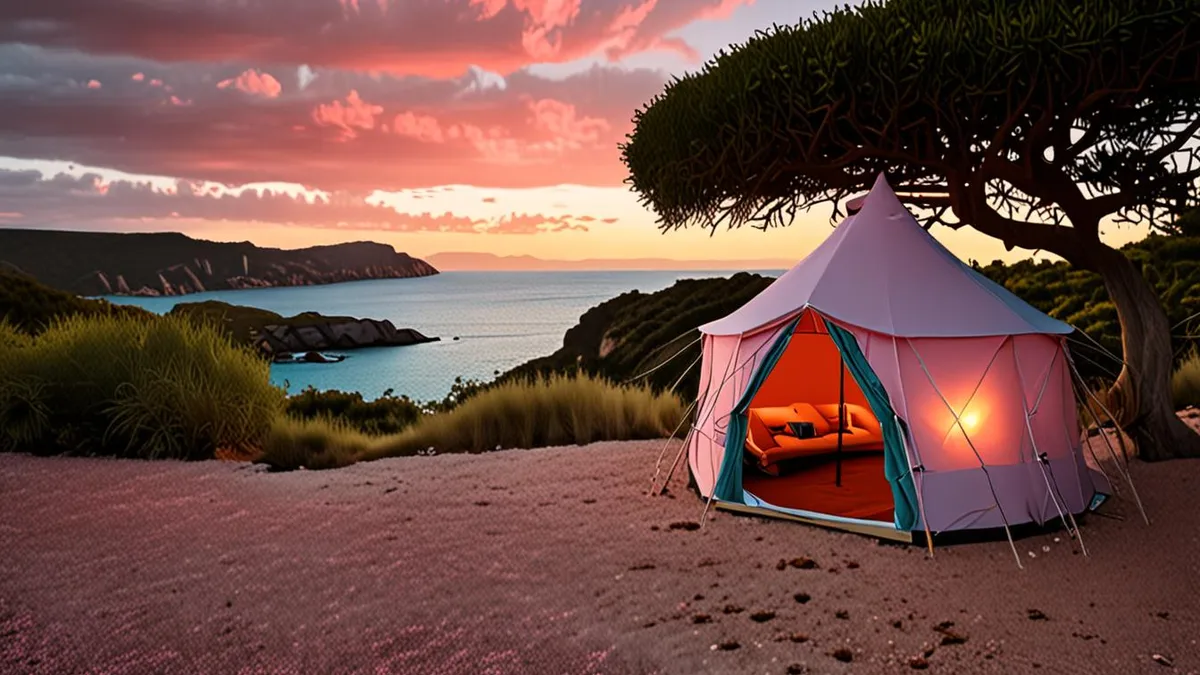
South Island Regions: Alps, Lakes and Fiordland Edges
The South Island is where the scenery turns dramatic: alpine lakes, glacier-carved valleys and a coastline rich in marine life. Queenstown and Wanaka are the headline acts, with alpine domes framed by mountain views — and pricing to match. These sites are at their best from October to April, and demand is fierce in summer. Nelson and Tasman offer a softer alternative: the sunny Abel Tasman coastline, with some of the strongest shoulder-season value in the country.
Further south, Fiordland and Te Anau serve as gateway stays for Milford Sound, but the weather is changeable outside summer, so build flexibility into your plans. On the east coast, Kaikōura combines coastal tent sites with the chance to see whales, seals and seabirds offshore. Since several of these regions sit near protected landscapes, it helps to think about your base carefully — this guide to choosing a glamping base near national parks covers the trade-offs.
- Queenstown and Wanaka extras: the two towns are only about an hour apart by car, so you can pair a stay in one with day trips to the other.
- Nelson and Tasman extras: the region’s sunshine hours make it a reliable pick for kayaking and coastal walks along the Abel Tasman shoreline.
- Fiordland extras: Milford Sound day trips involve long drives or coach connections, so a Te Anau base keeps you close to departure points.
- Kaikōura extras: wildlife boat tours run from the town itself, so a coastal tent site here doubles as a base for whale and dolphin watching.
When to Go: Seasons and Prices
Timing is where most New Zealand glamping trips are won or lost. Because the seasons are reversed, December to February is the Southern Hemisphere summer — the warmest, busiest and most expensive window. Quality sites in peak season typically charge NZ$250–600 per night, and the best domes and safari tents can sell out months ahead, so locking in dates early matters.
If you want a better balance of weather and price, aim for the shoulder seasons of March–April or September–November. Days stay mild in most regions, crowds thin out, and rates drop noticeably from summer highs. These windows are especially good for wine regions and coastal areas that don’t depend on hot beach weather for a good stay.
Winter stays and what to expect
June to August is genuine winter, and it changes the picture. North Island coastal sites remain workable and often drop to NZ$150–350 per night, while South Island alpine locations largely close or quiet down outside October–April. If you’ve never slept in a tent or dome in cold weather, it helps to know how heating, insulation and condensation are handled before you commit to a July booking — how cold-weather glamping actually works explains the practical details.
A few winter-specific checks pay off. Ask the host whether heating runs all night or only in the evening, whether extra blankets and firewood are included, and how the access road copes after rain. Sites that seem like a bargain at NZ$150 a night can feel very different if you arrive to a cold dome and a muddy track.
The simplest rule: chase summer for the South Island mountains, and consider winter or shoulder months for the North Island coast if budget matters more than swimming weather.
How to Book: Timing, Minimums and Money
Booking a glamping site in New Zealand rewards early planning more than most trips. The best sites are small — often just a handful of tents or domes on one property — so a single busy weekend can wipe out availability. Unlike a city hotel with dozens of rooms, there is no second tent to move you to if yours is taken. Here’s how to approach it step by step.
- Work backwards from your dates. For December to February stays, reserve 3–6 months ahead. In Queenstown, Wanaka and the Bay of Islands, book even earlier — these are the most competitive spots in the country and summer weekends go first.
- Plan around minimum stays. Most sites have a 2-night minimum on weekends and in high season. If your dates are flexible, shift to midweek: availability opens up and you’ll often find shorter stays accepted.
- Budget realistically by season. Expect the highest rates in December–February and noticeably gentler pricing in the shoulder seasons of March–April and September–November, when demand drops but weather is often still pleasant. Winter on the North Island coast is the cheapest window of all. Check current rates per site rather than assuming a single standard, as pricing varies widely by property and setup.
- Read the cancellation terms before paying. Remote sites often have stricter policies than city hotels — some are effectively non-refundable because a cancelled booking is hard to refill. Confirm the deadline and any weather-related exceptions in writing before you pay the deposit.
One last practical note: once you’ve found a site that fits your dates and budget, don’t wait long to confirm. Small operators rarely hold unbooked requests, and the difference between “available this morning” and “gone” is usually just a few hours in peak season. Set up alerts or check back the same day if a site shows space for your dates, and have a second-choice property in the same region ready as a backup.
Vetting a Site Before You Pay
Glamping photos can make any tent look perfect, so the real work happens before you pay. Reviews are your best tool — skip the five-star praise and search for the three-star write-ups, which tend to mention the things that actually matter on a farm property an hour from the nearest town.
Heating and insulation are the first things to check. A dome that’s magical on a dry summer night can be miserable in a southerly rain if the reviews mention cold floors, condensation on the canvas or a heater that “struggled.” The same reviews often reveal whether the access road turns to mud after rain — a genuine concern at remote sites, and one that determines whether a rental car will cope.
It’s equally important to know exactly what your rate covers, because glamping inclusions vary enormously between properties. Before booking, confirm:
- Kitchen facilities: some sites offer a full shared kitchen, others just a barbecue and a cooler, and a few expect you to bring everything.
- Ensuite bathroom: many premium domes include one, but at tent sites a shared ablution block may be a short walk away.
- Linen and firewood: these are sometimes included and sometimes an extra charge — worth confirming if you’re arriving late in the day.
- Self-check-in and mobile coverage: remote sites often have no on-site host, so ask how you collect keys and whether your phone network works there.
Finally, if you’re traveling with family or a dog, check the policies directly. Many farm-stay sites restrict children to certain ages or exclude pets entirely because of livestock, and these rules are usually firm rather than negotiable.
Your New Zealand Glamping Plan at a Glance
New Zealand is a dream glamping destination, but its long, spread-out regions and reversed seasons make it hard to know where and when to book. The simple fix: match your region to the season. Choose the North Island for year-round coastal comfort, or the South Island for alpine scenery between October and April.
For the best value, target the shoulder seasons, and if you want summer dates, book 3–6 months out and expect NZ$250–600 per night. Before paying, vet the heating, inclusions and access, then lock in your dates around the 2-night minimums most sites apply. If this helped you plan your trip, leave a comment or share the article.