Dreaming of sleeping in canvas while elephants wander past at dusk? Safari tent glamping promises exactly that, but many travelers book a tented camp without knowing what the experience actually involves, from escorted walks after dark to cold showers on some mornings and plunge pools at others. The gap between a $100 tent and a $1,000 one can be enormous, and it is not always obvious what justifies the difference.
This guide walks you through what a tented safari is really like day to day, where the best regions are and how they compare, what safari tent glamping costs per night at each comfort level, and which seasons offer the best balance of wildlife and price. You will also find practical advice on booking lead times, what to check before paying, and how to pack for a tented stay. By the end, you will know whether a night under canvas in Africa suits your budget, your travel style and your expectations.
What Safari Tent Glamping in Africa Is Really Like
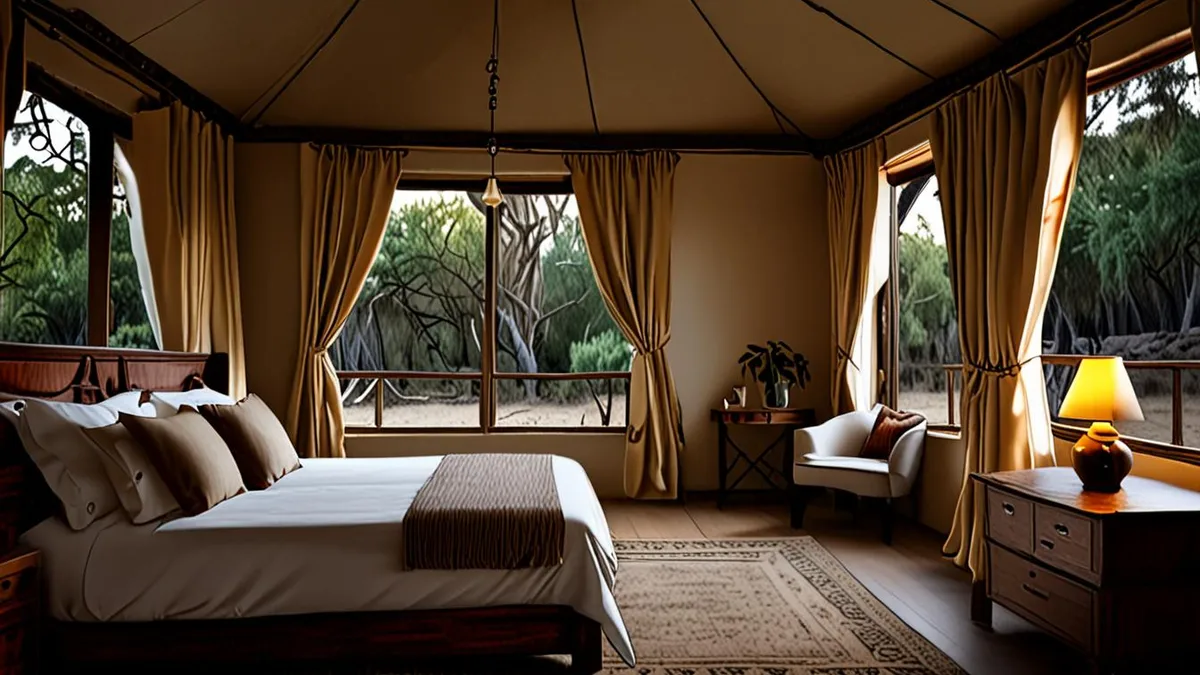
Forget the pop-up tents you may have pitched at a campground. A safari tent sits on a fixed wooden or concrete platform, has a proper door, real beds with linens, and usually an en-suite bathroom with a flush toilet and hot shower. Most tents also open onto a private deck, where you can sit with coffee and watch the plain come alive at sunrise.
One thing that surprises first-time visitors: most camps are unfenced. Animals can and do walk through camp, which is part of the magic and part of the risk. For that reason, staff escort guests to and from their tents after dark, and you should never wander alone at night. This is standard practice at nearly every tented camp, from budget to luxury.
A day at a tented camp
The rhythm follows the wildlife. Days typically start before dawn with tea or coffee delivered to your tent, followed by an early morning game drive when animals are most active. You return to camp for a big brunch, then have midday downtime, napping, reading or watching the waterhole, because heat keeps most animals hidden anyway.
In the afternoon there is usually a second activity, such as another game drive, a bush walk or a sundowner stop, before dinner in the shared mess tent. Evenings end around a campfire, and dinner is often a communal affair where guides and fellow guests swap stories from the day.
Comfort levels vary widely. At the budget end, tents are simple and facilities may be shared. At the top, camps offer outdoor showers, plunge pools, private guides and butler service, all under the same canvas roof.
Where to Go: Regions and Stay Types Compared
Where you go shapes everything about your safari tent glamping trip: the wildlife you see, the crowds you share it with, and how much you pay. East Africa’s famous reserves deliver the classic savannah experience, while southern Africa offers easier logistics and different styles of safari. Here is how the main regions compare.
Kenya’s Masai Mara and Tanzania’s Serengeti are the big names for a reason. Both offer outstanding big-game viewing, and the Serengeti-Masai Mara ecosystem hosts the Great Migration, with river crossings peaking roughly July-September. These reserves have the widest range of tented camps at every price point.
South Africa’s private reserves around Kruger National Park suit travelers who want family-friendly logistics, good roads and a lower malaria risk than much of East Africa. Guided standards are high, and many camps welcome children.
- Botswana’s Okavango Delta offers small, high-end water-based camps where game drives are mixed with boat trips and mokoro (dugout canoe) excursions. Camps are often reachable only by light aircraft, which keeps visitor numbers low but pushes prices up.
- Namibia suits travelers drawn to desert scenery rather than dense big-game viewing, with dramatic landscapes around Sossusvlei and Damaraland and some of the continent’s most striking tented settings.
- Zambia is a strong pick for walking safaris, particularly in South Luangwa, and generally sees fewer visitors than the Mara or Serengeti, giving you a wilder feel.
Whichever region you choose, check camp policies carefully if you travel with children or pets, since rules vary widely; this guide on whether glamping sites are pet-friendly and how to find out shows the questions worth asking before you book any tented stay.
What Safari Tent Glamping Costs per Night
Safari tent glamping prices in Africa span an enormous range, and the sticker price alone tells you little. A night under canvas can cost less than a city hotel or more than a five-star resort. Here is what each tier typically delivers.
Budget tented camps start around $80-$150 per night. At this level you usually get a comfortable tent with real beds, but bathrooms may be shared, and game drives are sometimes booked as extras rather than included. These camps suit self-driving travelers and backpackers who want the tented atmosphere without the full-service package.
Mid-range lodges and camps run about $150-$600 per night. This is the sweet spot for most travelers: the rate usually covers all meals and two daily game drives with a professional guide, and tents typically have en-suite bathrooms and private decks.
At the top end, luxury tented camps in prime locations can run $800-$1,500+ per night. These rates buy exclusivity, private guides and vehicles, gourmet dining and often extras such as bush walks, spa treatments or helicopter transfers.
- Check what the rate bundles. Most safari tent stays include meals and two daily game drives, but drinks, transfers and laundry may be billed separately, and these extras add up quickly.
- Budget for park and conservancy fees. Most reserves charge a daily conservation or entrance fee, and some camps collect it on arrival. The amounts change regularly, so ask your camp or operator for the current rate before you travel rather than relying on older figures.
- Compare inclusions, not just totals. An all-inclusive camp can work out cheaper than a slightly lower-priced one that charges separately for drives, park fees and drinks.
- Watch for single supplements and child rates. Solo travelers often pay a significant surcharge, while family tents and child pricing policies vary widely between camps.
For a broader comparison of how tented camps stack up against other stay types, this breakdown of how much glamping costs by stay type puts safari pricing in context.
Best Seasons and When Prices Drop
Timing shapes both your wildlife experience and your bill more than almost anything else on an African safari. The dry season, roughly June through October in East Africa, delivers the classic safari conditions: sparse vegetation, animals clustered around water sources and dusty golden light that photographers love. It is also when camps charge their highest rates and fill up months in advance, so expect busy sightings around popular sightings and full dining tables back at camp.
The green season, from November into March or April, flips the equation. Rain transforms the plains into lush green country, many animals give birth, and birdlife swells with migrants. Rates often drop 20-40% compared to peak months, and camps feel noticeably quieter. The trade-off is unpredictable weather, thicker bush that can make animals harder to spot and some camps in certain regions closing entirely.
The Migration window and the shoulder months
If watching the Great Migration river crossings is your goal, aim for July through September in the Serengeti-Masai Mara area. This is the most expensive and earliest-to-sell-out window of the year, and even luxury budgets can feel stretched. Book far ahead or consider camps just outside the busiest hotspots.
For a smart middle path, look at shoulder months like June and late October. You often get solid game viewing, cooler conditions and rates below the deep peak, with far more availability than the July-September crush.
How to Book and What to Check Before You Pay
Booking a tented safari is less like reserving a hotel and more like planning a small expedition. You are often dealing directly with small camps, sometimes in remote areas with limited communication, and the quoted rate may cover very different things from one property to the next. Rates vary enormously in what they include, and a few minutes of checking before you pay can save you hundreds of dollars and a lot of frustration on the ground. The four habits below cover the mistakes travelers most commonly make.
- Reserve early for peak season. For stays in July through September in the Masai Mara and Serengeti, book 6-12 months ahead. The best-positioned camps are small, often with a dozen tents or fewer, and they sell out long before the season starts. If you are flexible on dates, shifting by even a week or two can open up availability at camps that are already full in the busiest weeks.
- Break down the quoted rate. Ask specifically whether park or conservancy fees, airstrip transfers, drinks and laundry are included. These extras can add a meaningful amount per person per night, and two similarly priced camps can differ sharply once you add them up.
- Read recent reviews with a critical eye. Look for comments on the quality of wildlife sightings, the condition of the tents and how the camp staff treated guests. Our guide on how to evaluate glamping reviews properly walks through what to look for and what to ignore.
- Check malaria risk before you choose. Risk varies widely by region and season. Some destinations are far lower-risk than others, which matters for families with young children. Talk to a travel health professional and confirm current advice for your exact dates and area.
One last habit worth adopting: get every inclusion and exclusion in writing before paying a deposit. Ask the camp or booking agent to confirm exactly what your rate covers, from meals and game drives to drinks and transfers, in a single email. A clear confirmation is your best protection if anything differs from what was promised once you arrive at camp, and it also gives you something concrete to reference if you need to change dates or cancel later.
Packing and Practical Prep for a Tented Safari
Packing for a tented safari is a lesson in contrast. Dawn game drives in an open vehicle can be genuinely cold, with wind chill making it feel sharper still, while midday sun sends temperatures soaring. The trick is dressing in thin layers you can peel off as the day warms, all in neutral colors like khaki, olive and beige that blend into the bush and attract less attention from wildlife. A light fleece or softshell jacket that folds down small is worth its weight in your duffel, and a wide-brimmed hat and sunglasses will earn their place by the second morning.
Luggage is the other big constraint. Many camps are reached by small light aircraft with short, rough airstrips, and these flights are strict about both bag type and weight. Check your exact limit with your operator, but a soft duffel is the universal requirement, since hard-sided suitcases simply will not fit in the hold of a Cessna-style bush plane.
- Head torch with a red-light mode — camps are unfenced and paths between tents are unlit after dark, so you need hands-free light for walking to dinner.
- Binoculars — one pair per person rather than per couple, since sharing means missing fleeting sightings like a leopard in a tree.
- High-SPF sunscreen and lip balm — open vehicles offer no shade, and the African sun at altitude burns faster than most visitors expect.
- Insect repellent with DEET — apply it at dusk when mosquitoes are most active, especially around ankles and wrists.
- A small daypack — for cameras, water and layers on drives, keeping the main duffel stowed at camp.
Finally, leave the good jewelry, watches and extra electronics at home. Tents are canvas and camps are open to wildlife and weather, so anything valuable or fragile is simply safer in your wardrobe at home. Pack light, pack soft, and you will move through bush flights and camp transfers far more easily.
Is Safari Tent Glamping in Africa Worth It?
So, is it worth it? A safari tent gives you the classic safari experience—real beds, en-suite bathrooms, meals and two daily game drives, all wrapped in canvas that lets you hear the night outside your door. It differs from a standard lodge mainly in atmosphere: thinner walls, closer to nature, and often a more intimate camp feel. Rates run from around $80-$150 for budget camps, $150-$600 for mid-range, and $800-$1,500+ for luxury, with green-season savings of 20-40%.
The biggest lesson from this guide is that timing matters more here than on almost any other glamping trip. Peak-season camps in the most popular reserves sell out early, so booking 6-12 months ahead can make or break your plans—while shifting to the green season can halve your costs without cutting the magic. Compare what each rate includes, pick the season that fits your budget, and the canvas-and-savannah dream is usually worth every dollar. Have you slept in a safari tent, or are you planning one? Share your thoughts in the comments.