Yurt stays look charming in photos — a round canvas tent glowing under string lights, mountains in the background. But most first-timers have no idea what’s actually inside one, how the heating and plumbing work, or whether they’ll sleep comfortably at all. Will you be cold? Will you have to trudge to a shared bathroom at midnight? Is that wood stove just decoration?
This guide walks you through the whole picture. We’ll explain what a yurt is and how it’s built, show you what a typical glamping yurt contains, and cover the practical realities of heating, plumbing and noise. You’ll also find realistic price expectations, the best times to book, and an honest rundown of who yurt stays suit — and who they don’t. By the end, you’ll know exactly what you’re signing up for before you hand over your deposit.
What Is a Yurt and How Is It Built?
A yurt is a round tent with roots in Central Asia, where nomadic herders have used portable versions for centuries on the steppes of Mongolia and neighboring countries. The traditional design is brilliantly simple: a collapsible wooden lattice wall forms the circle, bent roof poles radiate inward from the top of that wall, and a tensioned fabric cover stretches over the whole frame to keep out wind and rain.
At the very center of the roof sits a crown — a ring-shaped skylight that does two jobs at once. It lets smoke escape from a central fire, and it floods the interior with natural light. Modern glamping yurts often swap the open crown for clear panels or add windows around the walls, so you get the light without the drafts.
From nomad home to glamping structure
Here’s the key difference for travelers: the nomadic originals were built to be packed up and moved with the seasons. Glamping yurts, by contrast, are usually permanent structures fixed on wooden platforms. The frame and canvas stay put year-round (or for the season), which is why sites can outfit them with real beds, furniture and heating. You get the round, tent-like feel of the traditional design with far more comfort than any herder’s family would have recognized.
What’s Inside a Glamping Yurt?
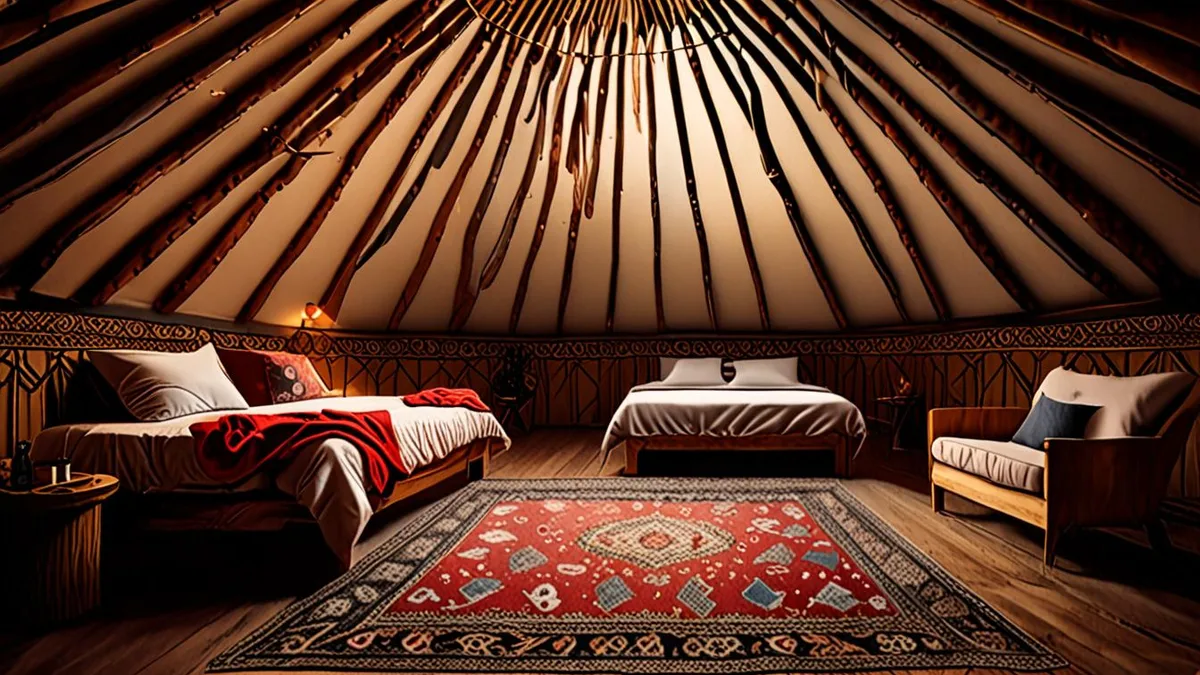
Step inside a glamping yurt and you’ll usually find something much closer to a cozy studio room than a camping tent. The typical setup includes a proper bed — often a queen, or two doubles for families — with real linens, plus rugs on the platform floor, small furniture like a table and chairs, and lighting that ranges from lanterns to electric fixtures. Many yurts also come with a wood stove or an electric heater, so you’re not relying on sleeping bags to stay warm.
How many people fit?
Most modern yurts measure 4 to 7 meters (13-23 ft) in diameter and comfortably sleep 2-6 people. That range makes them a sweet spot for couples who want space to spread out, and for small families who’d otherwise need to book two hotel rooms. Bigger diameters can fit several beds plus a small seating area without feeling cramped.
Bathrooms: the detail that matters most
Here’s the part many first-timers miss: at most sites, yurts don’t have their own bathrooms. You should expect a shared bathroom block, usually a short walk from your unit. En-suite yurts with private plumbing exist, but they’re the premium tier — a minority of luxury units — and they cost noticeably more. If a private bathroom is non-negotiable for you, filter for it specifically when booking. If you’re weighing yurts against other glamping options, our comparison of glamping domes, safari tents and yurts breaks down how they differ on comfort and price.
How Yurt Stays Work in Practice: Heating, Plumbing and Comfort
The practical side of a yurt stay comes down to three things: heat, water and noise. None of them are dealbreakers, but knowing what to expect makes the difference between a cozy night and a shivery one.
Staying warm
Most yurts heat with a wood-burning stove, and insulated yurts can be genuinely comfortable even in winter — sites that offer cold-weather stays usually limit them to a handful of well-insulated units for exactly that reason. The catch: in freezing conditions, the fire burns down overnight, so you may need to get up and stoke it once or twice. If you’ve never tended a stove before, ask the host for a quick walkthrough at check-in. For a fuller picture of what cold-weather glamping involves, see our guide to how winter glamping stays work.
Water and toilets
At most yurt sites, water and toilets live in a shared facilities block rather than in your unit — typically a short walk away, so bring a headlamp or keep your phone handy for nighttime trips. Luxury yurts change the equation by adding real plumbing and private bathrooms, but those units are the exception, not the rule.
The noise factor
One honest trade-off: canvas walls are thin. You’ll hear wind, rain and your neighbors more than you would in a wooden cabin. Most people find it part of the charm, but if you’re a light sleeper, pack earplugs — it’s the single most common piece of advice from repeat yurt guests.
How Much Do Yurt Stays Cost?
For most travelers, a night in a yurt costs roughly USD 100-250 per night, with the exact figure depending on the season, the size of the yurt and the amenities on offer. A small unit with a shared bathroom block in the shoulder season will sit near the bottom of that range, while a large en-suite model with a wood stove and a prime view will sit near the top.
One of the main reasons yurts have become so popular is value. They usually undercut two of the most expensive glamping options — geodesic domes and safari tents — while offering very similar sleeping comfort. You still get a proper bed, linens, heating and a memorable round space; you simply pay less for the canvas walls and the more rustic setup.
What pushes a yurt to the top of the price range
Two features reliably move a yurt toward the higher end of that USD 100-250 spread. The first is a private bathroom, since only a minority of luxury yurts include plumbing and an en-suite toilet and shower. The second is winter insulation, which lets a site keep the yurt open in cold months and justifies a premium over summer-only canvas units.
If you want a broader comparison of yurts against domes, cabins, safari tents and other stay types, the article how much glamping costs by accommodation type breaks the numbers down in detail.
When and Where to Book a Yurt Stay
Yurt glamping follows the same seasonal rhythm as most outdoor accommodation. In most temperate regions, peak season runs roughly May to September, when the weather is warm, the canvas is dry and demand is at its highest. If your dates are flexible, aim for the shoulder months at either end of that window — you’ll typically find fewer crowds, quieter sites and lower rates, with weather that’s often still pleasant.
How far ahead to book
For summer weekends, book 2-4 months ahead. That’s especially true for two-night stays over holiday weekends, when the best yurts at popular sites can disappear early. If you’re targeting a yurt near a popular national park, push that to 6 or more months — these locations combine limited inventory with heavy visitor demand, and the handful of units at each site go quickly.
Winter is a different story. Because cold-weather stays rely on a wood-burning stove, most sites limit winter availability to a handful of insulated units. That small inventory means winter yurts can sell out faster than summer ones, so reserve as early as you can if a snowy, stove-warmed night is what you’re after. Whenever you book, confirm directly with the operator whether your chosen yurt is open in winter and what heating it has.
Are Yurt Stays Right for You?
Yurt stays suit a fairly specific kind of traveler. If you’re a couple or a small family who wants a real bed, linens and heating in a scenic setting — without paying cabin prices — a yurt hits the sweet spot. Most units sleep 2-6 people, so parents with one or two kids fit comfortably, and the novelty of sleeping in a round canvas room is often a highlight for children.
On the other hand, some travelers will find the trade-offs harder to accept. If you need a private bathroom attached to your room, near-total silence at night or hotel-level climate control, a standard yurt will likely frustrate you. Canvas walls let in sound, shared facilities mean a walk in the dark, and temperatures inside follow the stove rather than a thermostat.
Before booking, read reviews with three specific things in mind:
- Stove reliability: look for comments on whether the wood stove holds heat through the night or needs refueling every few hours in cold weather.
- Canvas condition: older covers can leak in heavy rain or let in drafts, so check recent reviews for mentions of drips, mold or worn fabric.
- Bathroom distance: some sites place the facilities block a short stroll away, others several minutes down a slope — reviewers often mention the actual walk, which matters if you’re traveling with kids or staying in winter.
If those three checks come back positive and the trade-offs don’t bother you, a yurt stay is one of the most rewarding ways to spend a night outdoors without giving up a proper bed.
The Bottom Line on Yurt Stays
So, what is a yurt stay really like? It’s a round, lattice-framed tent with real beds, heating and plenty of rustic charm, typically running about USD 100-250 per night. Inside, you’ll usually find proper sleeping arrangements, furniture and a wood stove, though most sites rely on shared bathroom blocks rather than private plumbing.
The main trade-offs versus a cabin or a glamping dome are the canvas walls, which let in more noise from weather and neighbors, and the walk to the facilities. If you’re happy with that, book 2-4 months ahead for the May-September season and you’ll know exactly what you’re getting. If you’ve stayed in a yurt before, share your experience in the comments or pass this article along to a friend who’s tempted to try one.