You dream of a summer stay in the South of France, but the search quickly gets confusing. Provence villas come in every shape, from tiny stone cottages to sprawling farmhouses with pools, and they’re scattered across regions that feel completely different from one another. Add questions about booking windows, weekly rates and which area suits your group, and it’s easy to stall before you’ve even picked a date.
This guide sorts it out for you. We’ll explain why a villa beats a hotel room in the July heat, compare the best areas from the Luberon to the lavender plateaus, and cover what summer weeks actually cost and when to reserve. You’ll also find advice on matching a villa layout to your group, building days around markets and pool time, keeping children happy through the midday heat, and a simple wrap-up plan to pull it all together.
Why Provence Villas Are Ideal for a Summer Trip
Provence in July and August is hot, dry and bright, with days that regularly push past 30°C. A hotel room gives you a bed and maybe a shared pool, while a villa gives you a private pool to dip into whenever the heat peaks and a shaded terrace where lunch can stretch into the late afternoon. That outdoor living space is the whole point of a Provençal summer: you spend the day in and around the house rather than escaping an airless room.
Space that works for families and groups
Most summer villas rent by the week, which changes the rhythm of a trip completely. Families get separate bedrooms instead of booking two or three hotel rooms, and groups of friends share a house that often costs less per person than a hotel. The kitchen matters more than you might expect: morning trips to a village market for bread, tomatoes, melon and local cheese turn into long, easy dinners at home, with wine from a nearby cellar and no need to drive back at night.
You stay inside the landscape, not beside it
A resort sits apart from its surroundings; a Provençal villa sits in the middle of them. You wake up to vineyards or lavender fields at the edge of the garden, drive ten minutes to a stone village for coffee on the square, and come home to cicadas and a sunset over the hills. The house itself, with its thick walls, shutters and plane-shaded courtyard, is part of the experience rather than a place to sleep between excursions.
Best Areas to Find Provence Villas
Provence is a large region, and the right area depends on what you want from your summer. Scenery seekers, market lovers and beach day-trippers all end up in different corners, so it pays to choose your base before you fall in love with a particular house. A villa that looks idyllic in photos can feel isolated if the nearest boulangerie is a half-hour drive away, while a house on the edge of a busy village can lose the quiet you came for. Here are the four areas that work best for villa stays, followed by a few details worth knowing about each.
- The Luberon: hilltop villages like Gordes and Ménerbes sit roughly 45-60 minutes by car from Avignon, so plan on renting a car from arrival day and stocking up on groceries before the final climb up narrow village roads. Parking near some of these villages is limited, so ask the owner where to unload luggage.
- Around Avignon and the Alpilles: this central belt puts you close to Saint-Rémy-de-Provence’s Wednesday market and the papal palace in Avignon, with olive groves and Van Gogh country on your doorstep. It is a good pick if your group wants a mix of sightseeing and pool time, since distances between towns stay short.
- Valensole plateau and Drôme provençale: lavender country means larger plots and generally lower weekly prices than the famous villages, though restaurants and shops are thinner on the ground, so check driving times to the nearest town. This is the corner for travelers who want wide-open skies and quiet evenings more than sightseeing.
- The Var and the Sainte-Victoire side: villas here trade some postcard drama for easier access to the Mediterranean coast, with vineyards and pine woods around the house instead of lavender rows. It suits groups who plan several beach days from one base.
A practical note: whichever area you pick, check the drive from the nearest airport. Marseille and Nice are the main gateways, and both sit around 1-2 hours from most villa areas, so factor that transfer into your arrival day. If you land in the afternoon, aim to arrive at the villa before dark; country lanes in Provence are unlit and easy to overshoot, and owners rarely appreciate a late-night arrival call. Confirm the exact meeting point with your host in advance, since many rural houses have no street number and GPS pins can land a field or two away from the gate.
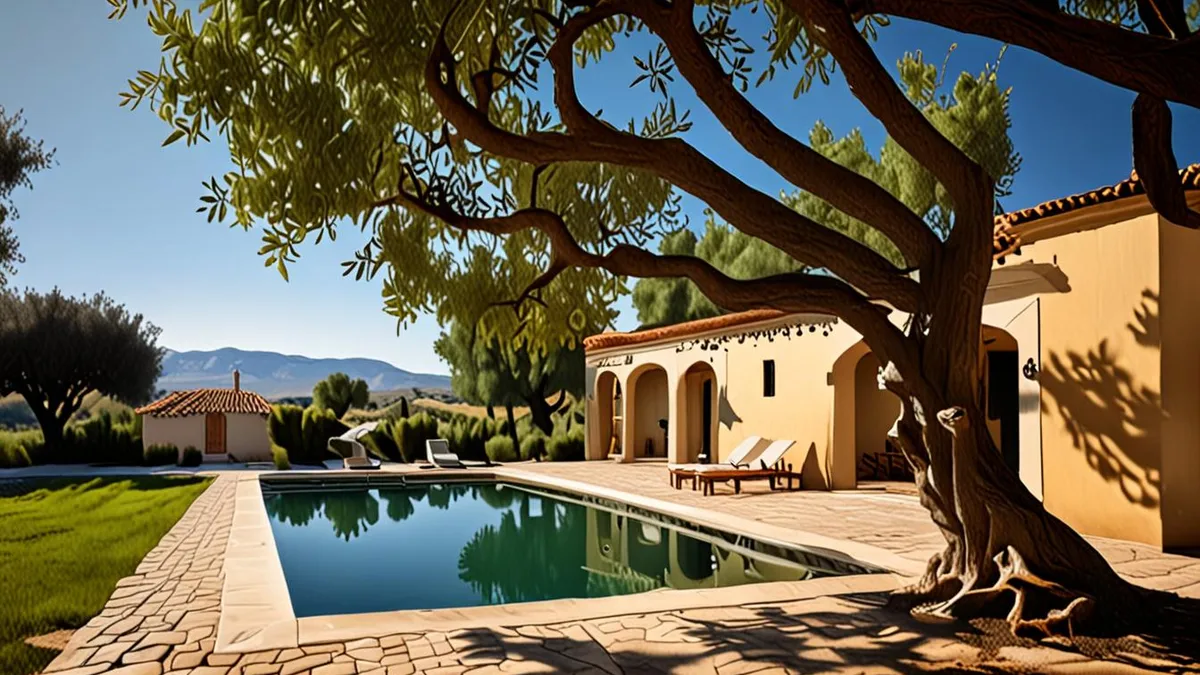
When to Book and What Villas Cost in Summer
Good Provence villas are a scarce commodity in summer, and the calendar fills from the top down. The most charming renovated farmhouses in the Luberon, the ones with pools, views and walkable villages, are typically reserved by early spring. If you want real choice rather than what’s left over, treat your villa search as the first step of trip planning, not the last.
How far ahead to book
Reserve 6-9 months ahead for the best selection. That means starting your search in the autumn or right after the holidays for the following summer. Booking this early also gives you time to negotiate arrival logistics, arrange a car and plan the week around markets and day trips. If you’re reading this in spring for a summer trip, don’t panic: options narrow, but late cancellations do appear, especially for smaller houses.
What a summer week costs
Weekly rates in high season range from about €1,500 for a simple farmhouse to €10,000 and more for a large luxury estate, with size, pool and location driving the spread. Peak season runs late June to early September, and most peak-week rentals run Saturday to Saturday, so build your flights around that rhythm rather than fighting it. One easy way to save: aim for the edges of the season. Late June and early September offer lower rates with nearly the same weather, warmer sea for coast trips and villages that feel a little calmer than the August rush.
How to Choose the Right Villa for Your Group
The right villa depends less on square meters and more on who is traveling with you. A romantic stone cottage that works beautifully for two people can feel cramped for a family of five, while a big farmhouse designed for ten can feel cavernous and impersonal for a couple. Start by matching the layout to your group, then refine by location and comfort.
For couples, the sweet spot is a small mas or stone cottage with a plunge pool, ideally within walking distance of village cafés. You get the privacy of your own outdoor space without needing to drive everywhere, and a compact property usually costs far less than a large estate in high season. Look for a shaded terrace for breakfast and a decent kitchen if you like cooking with market produce.
Families need different priorities. A fenced pool is the single most important safety feature if you have young children, so ask specifically about pool security rather than assuming it. Shaded garden space matters too, since kids need somewhere to play outside without baking in the midday sun. Bedrooms on one floor make naps and bedtimes far easier to manage than a house split across three levels.
Large groups of eight or more should focus on how the house functions when everyone is together. Separate annexes or independent wings give people breathing room, and a long shared table under a plane tree or pergola is what those memorable dinners are made of. Check the number of bathrooms as carefully as the number of bedrooms.
- Pool safety: many French rentals are legally required to have pool fencing or alarms, but confirm which system your villa has before booking, especially with toddlers in the group.
- Cooling: July and August days regularly exceed 30°C, so check whether bedrooms have air conditioning or whether the house relies on thick stone walls and shutters, which keep interiors naturally cool but can feel stuffy at night.
- Annex independence: if grandparents or teenagers get their own annex with a small kitchenette, the whole stay runs more smoothly than everyone sharing one main house.
- Table capacity: a dining table that seats twelve is a genuine feature in group villas; some properties only seat six indoors and expect guests to improvise outdoors.
- Laundry and parking: for groups, a washing machine, dryer and parking for two or three cars are practical details that separate a comfortable week from a stressful one.
Planning Summer Days Around Your Villa
One of the great pleasures of a Provence villa is that the house itself sets the rhythm of your day. Mornings belong to the markets: villages across the region hold weekly markets where you can pick up peaches, olives, cheese and flowers before the heat sets in. Get there early, bring a canvas bag, and plan lunch around whatever looked best on the stalls. Vendors often sell out of the best produce by mid-morning, so an early start pays off twice.
Afternoons are quiet time by local custom, and the golden hour before dinner is the moment for a second outing or a slow stroll. Evenings are for village dinners, and booking ahead for weekend tables is wise in high season.
Timing your stay for lavender
If lavender is on your list, aim for mid-June to mid-July, when the Valensole and Sault plateaus are at their most fragrant and photogenic. By late July most fields have been harvested, so a visit in early August will find the famous purple rows already cut. Photographers should go early in the morning, when the light is soft and the crowds are thin.
Day trips worth the drive
A central villa makes an excellent base for exploring. Avignon, with its papal palace and lively streets, sits within easy reach of most villa areas, and the hilltop villages of the Luberon make an easy loop from there. The Calanques coast offers dramatic white limestone coves for a swim day, and the Verdon Gorge delivers some of the most striking scenery in France. All three work as day trips, though each involves a solid drive, so leave early and keep the return relaxed.
One practical note: rent a car. Most villas sit well away from rail lines, so without wheels you will be dependent on taxis for every bakery run and dinner. Book the car at the same time as the villa in summer, as availability tightens in July and August.
Family-Friendly Tips for a Provence Villa Stay
Traveling to a Provence villa with children can be wonderfully easy, provided you choose the property and the pace with kids in mind. The region is full of family-friendly pleasures, from morning pastries to evening strolls through car-free village streets, but the summer heat and long drives can wear small children down if you overschedule.
Location matters most. A villa within 15 minutes of a village gives you easy access to bakeries, ice cream shops and shaded squares, which turns an ordinary evening into something the whole family looks forward to. A remote farmhouse may be more romantic, but with children it means a car trip for every croissant and gelato, and that adds up over a week.
Think about how the house handles the midday heat, too. Shaded outdoor eating areas let you have long lunches outside without anyone wilting, and a games room or covered terrace gives kids somewhere to burn energy when the sun is at its strongest. These spaces become the heart of the day between the morning outing and the late-afternoon swim.
- Pool equipment: ask whether the villa provides pool inflatables, floaties or a shallow entry, since a pool that suits a five-year-old is a very different thing from one built for adults.
- Bunk rooms: some family villas offer children’s rooms with bunk beds or twin beds, which frees the parents’ room and makes bedtime routines simpler for siblings sharing.
- High chairs and cots: many rentals supply a cot and high chair on request, but confirm when booking rather than packing your own across two airports.
- Village events: in summer, villages often host evening festivals, fireworks or outdoor cinema nights; ask your host what is on during your week, since these are often the highlights of a family trip.
- Backup entertainment: a villa with books, board games and reliable Wi-Fi saves rainy or overly hot afternoons far better than streaming alone.
Above all, keep the rhythm simple. Plan one big outing per day, whether that is a market, a gorge swim or a village festival, and keep afternoons poolside. Children who have swum, napped and eaten well in the cool of the house are far more pleasant at dinner, and so are their parents. Overtired kids are the fastest way to turn a dreamy Provençal week into a series of meltdowns, so resist the urge to pack in too much.
Wrapping Up Your Provence Villa Plan
Finding the right Provence villa comes down to three decisions: where, when, and for whom. Pick your area first — the Luberon for hilltop scenery, the Avignon side for a central base, or Valensole for lavender country. Then book 6-9 months out and budget roughly €1,500 to €10,000+ per summer week, depending on size and pool. Match the layout to your group, whether that’s a small stone cottage for two or a farmhouse with annexes for eight or more.
Once you’re in, build your days around the rhythm that makes a villa stay work: morning markets, long pool afternoons and village dinners, with a car for day trips. Get those pieces lined up and your South of France summer tends to fall into place on its own. If this helped you plan, leave a comment or share the article with your travel companions.