You’ve probably heard the word glamping thrown around by friends, on booking sites and in travel photos of Immaculate-looking tents with fairy lights. But if you’re not sure what is glamping in practice, or whether sleeping in one of those structures sounds like a treat or a compromise, you’re not alone. The label covers everything from a simple canvas tent with a shared toilet block to a glass-walled dome with a hot tub, and the gap between the two matters a lot.
This guide walks through the whole picture. We’ll define what glamping actually is, break down the main types of accommodation you can book, and sort the comfort levels from rustic to resort-grade. You’ll also find typical nightly costs, an honest comparison with traditional camping, and a rundown of who each style of glamping suits best, so you can tell quickly whether it’s the right choice for your next trip.
What Is Glamping, Exactly?
Glamping is short for glamorous camping, and the definition is simpler than you might expect. It means overnight stays in pre-set structures that remove the hardest parts of camping. You don’t carry a tent, roll out a sleeping pad or fumble with guy lines in the dark. You arrive, get shown to your accommodation, and it’s ready to sleep in.
What the operator provides
In nearly every case, the operator supplies the shelter, the beds and usually lighting and heating before you check in. That means guests arrive with luggage only, much like a hotel stay. Many sites add extras such as a deck, a fire pit or a barbecue, and some offer breakfast or a small shop on site, though these vary by property.
Where it sits between hotel and campsite
The easiest way to picture glamping is as a middle ground between a hotel and a campsite. It places you closer to nature than a hotel room, often with a meadow, lake or forest at your doorstep, but it’s far more comfortable than pitching a tent. You get a real bed with a mattress, not a sleeping bag on the ground.
It’s worth knowing that the comfort gap within glamping itself can be wide. One site’s tent might have a shared bathroom block and a wood stove, while another’s dome has a full private bathroom and heated floors. That’s why it helps to understand the types of structures available and how comfort levels are usually tiered, which the sections below cover in detail.
The Main Types of Glamping Accommodation
Glamping isn’t one single type of accommodation. The term covers several very different structures, and the one you choose shapes the whole experience, from how warm you’ll be at night to whether you get panoramic views. Knowing the differences before you book saves a lot of disappointment.
The four main categories cover most of what you’ll find on booking platforms. Each has its own feel, its own typical setting and its own sweet spot in terms of season and comfort. For a detailed side-by-side breakdown, this comparison of glamping domes, safari tents and yurts walks through how they differ in practice.
- Safari tents are canvas structures on fixed frames, often with decks, and they’re common in meadow and savannah-style settings. Many are spacious enough to include a seating area inside, and the deck becomes an outdoor living room in warm weather.
- Yurts and bell tents are round canvas dwellings that typically sleep 2–6 guests, making them popular at countryside sites. The circular shape gives a cozy, enclosed feeling, and yurts in particular often have more headroom than you’d expect.
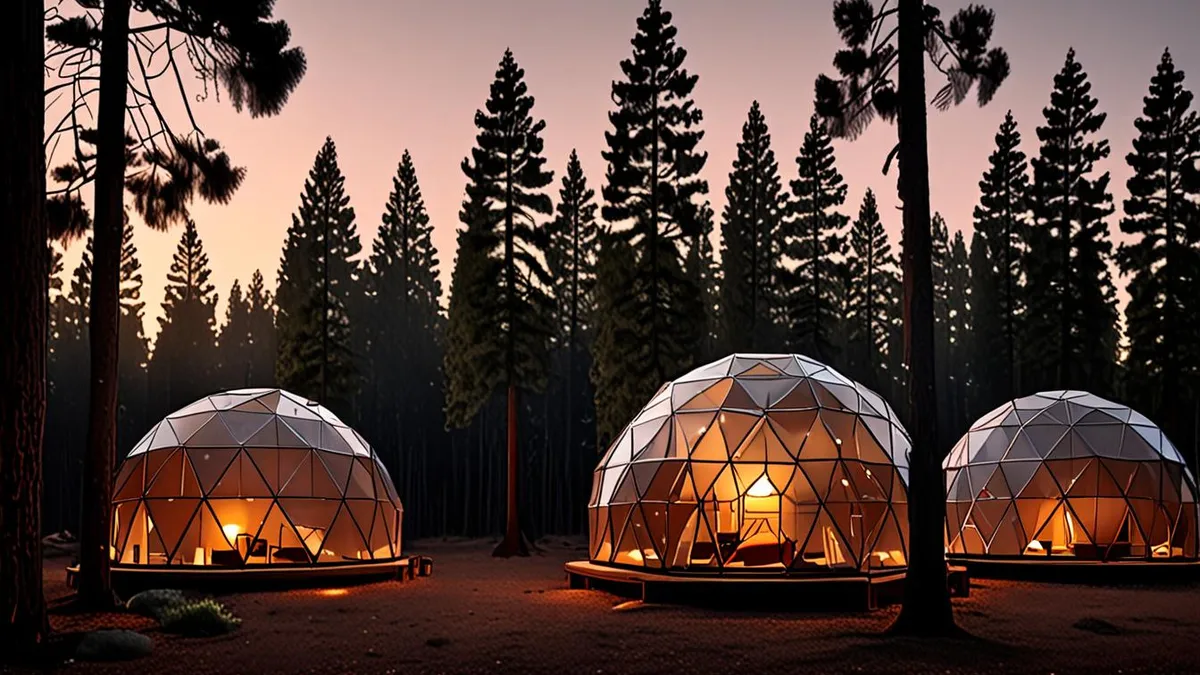
- Glamping domes are geodesic structures, often with panoramic windows, and dome sites often run year-round rather than closing in the cooler months. The transparent panels make stargazing from bed possible, and the rigid frame handles wind and cold better than soft canvas.
- Treehouses, cabins and A-frames are the solid-walled options that feel closest to a small hotel room. Expect real walls, better soundproofing and a more predictable indoor climate than canvas offers.
A practical way to narrow your choice: pick a canvas option like a bell tent if you want the classic under-canvas atmosphere in mild weather, a dome if year-round use and views matter most, and a cabin or treehouse if you want the experience to feel as close to a boutique hotel as possible. Whichever structure you lean toward, check what’s included before booking, since most sites provide a real bed, heating or cooling, and either en-suite or shared bathrooms, but the specifics vary from one operator to the next.
Glamping Comfort Levels: From Rustic to Resort-Grade
Glamping is not a single comfort standard. Two listings can use the same word while offering completely different levels of convenience, so it pays to look past the photos and check the practical details of each tier before you book. Sites often use the same labels for very different setups, and a quick amenity check can save you from an unwelcome surprise on arrival.
The industry typically sorts stays into three broad levels, and the differences come down to three questions: is the bathroom private, how reliable is the heating, and can you cook? Keep those in mind as you read through the tiers below.
- Entry level: you get real beds and shelter, but bathrooms are shared blocks a short walk away, there’s no kitchen, and heating is usually limited to a wood stove you light yourself. It’s still a big step up from a sleeping bag, but it’s the closest glamping gets to camping.
- Mid level: a private en-suite bathroom attached to your structure, a small kitchenette or a breakfast service, and reliable heating and cooling. This tier suits most first-time glampers because the day-to-day logistics feel simple and predictable.
- Luxury level: full bathrooms, hot tubs or fire pits, daily housekeeping and hotel-style bedding. Think crisp linens, blackout curtains and a morning coffee delivered to your deck, closer to a boutique hotel than any kind of camping.
One important note: comfort depends less on price than on whether bathrooms, heating and cooking are private or shared. A modestly priced yurt with its own en-suite can feel more comfortable than a pricier tent that shares a bathroom block. Always check the amenities list, not just the nightly rate. If you want to see how these tiers translate into real nightly figures, this breakdown of glamping costs by stay type maps each level to its typical price range.
What Glamping Typically Costs
Glamping prices vary a lot depending on the structure, but the general pattern is easy to remember: the softer the walls, the lower the price. Canvas-based stays like safari tents, yurts and bell tents typically fall in the $100–$200 per night range. At that level you usually get a real bed, lighting and some form of heating, with bathrooms either private or shared depending on the site.
Once you move into domes and solid-walled cabins, the numbers climb. These options usually run $250–$500+ per night, and in peak season rates can push toward the top of that range or beyond. The higher price reflects more substantial construction, better insulation and extras like panoramic windows, private hot tubs or full kitchens.
When to book
Timing matters more in glamping than in most hotel bookings, simply because good sites have a limited number of units. For peak-season dates, especially summer weekends and holiday periods, plan to book 2–6 months ahead. Popular countryside and coastal sites can sell out their best units early, and late bookers are often left with the least private or least equipped spots.
It also pays to compare what is actually included at each price point. Two sites charging similar rates can differ sharply if one includes breakfast, firewood and towels while the other charges for all three. Check the listing details carefully before you commit, and confirm current rates directly with the operator, since prices shift with season and demand.
Glamping vs Traditional Camping
The core difference comes down to what happens when you arrive. Traditional camping requires you to transport, pitch and eventually pack up all your gear, and a single late arrival in the rain can turn setup into the least fun part of the trip. With glamping, the shelter is already standing, made up and ready, so your arrival task is limited to carrying in your luggage.
The second big difference is exposure. Glamping removes the two discomforts that put many people off camping in the first place: weather exposure and sleeping on the ground. A solid floor, a real mattress and reliable heating mean you wake up rested instead of stiff and cold, which for many travelers is the deciding factor between the two.
Where camping still wins
That said, camping holds real advantages. It wins clearly on cost: even the most affordable tent-style glamping stay costs noticeably more per night than a standard campsite pitch, and gear bought once can serve years of trips. Camping also wins on flexibility of location. You can pitch wherever regulations allow, while glamping pins you to wherever an operator has built a structure, which usually means popular countryside, coastal or national park areas.
Glamping wins on comfort and predictable sleep quality, which matters most for trips where you want to be active during the day rather than recovering at night. It also removes the gear barrier entirely: no tent, sleeping bags, stove or cooler to buy, store or test before you go. For a one-off weekend, that convenience often justifies the higher price; for frequent outdoor stays, camping usually makes more financial sense. If you are weighing the two for an upcoming trip, it helps to see the trade-offs laid out side by side — this comparison of glamping versus camping costs and comfort breaks down which option fits different kinds of travelers.
Who Glamping Suits Best
Glamping is not for everyone, but it is close to ideal for a few very specific types of travelers. The common thread is a desire for nature without the friction of traditional camping: no gear to buy, no tent to pitch and no sleeping bag to test at home before trusting it. If you have ever liked the idea of an outdoor stay but balked at the logistics, this is the category built for you.
Couples are another natural fit. A private structure with a real bed, soft lighting and often a fire pit or hot tub creates a romantic base that a tent simply cannot match. And because most structures are designed for two, the whole setup feels made for the occasion rather than improvised.
Beyond those two groups, shoulder-season travelers deserve a special mention. Most glamping sites in temperate climates operate roughly April–October, and the edges of that window — April–June and September–October — tend to be quieter and cheaper than the summer core, while the weather is still pleasant enough for canvas accommodation.
A quick fit check
- First-time outdoor stayers: you get to try the outdoors without investing in gear, and if you decide camping is not for you, you have lost nothing but the booking.
- Couples: private bathrooms and hotel-style bedding turn an outdoor setting into a genuine romantic getaway rather than an endurance test.
- Families with young children: fixed structures with typical 2–6 guest capacities mean one booking covers the whole family, and bedtime happens in a proper bed instead of on a thin mat.
- Shoulder-season travelers: trips in April–June or September–October often mean lower rates, emptier sites and a calmer atmosphere, with the added bonus that dome sites frequently stay open year-round.
If you tick any one of these boxes, glamping will likely feel like a good deal. If you tick none of them — say, you already own quality gear and enjoy wild, off-grid locations — traditional camping will probably serve you better.
The Bottom Line on Glamping
Glamping is simply pre-set accommodation in the outdoors: you arrive with your luggage, and the shelter, real beds, heating and bathrooms are already waiting. Prices typically run from around $100 per night for a basic canvas safari tent or yurt up to $500+ for a luxury dome or cabin. The real measure of comfort is not the price tag but whether the bathroom and heating are private or shared.
It suits travelers who want fresh air, dark skies and nature walks without buying gear, pitching a tent or sleeping on the ground. If that sounds like you, book peak-season dates 2–6 months ahead and start with a mid-level stay to see how it fits. Have you tried glamping yet? Share your experience or questions in the comments, or pass this article along to a friend who needs a nudge outdoors.