Choosing your ski resort accommodation is one of the biggest decisions you’ll make for a winter trip, and it’s easy to get wrong. A hotel, a catered chalet and a self-catering apartment don’t just differ in price — they shape your daily routine, your budget and how much energy you have left for the slopes.
This guide compares all three options side by side. We’ll look at what hotels, chalets and apartments actually include, how prices shift across the ski season, and how to match the right option to your group size and budget. We’ll also touch on winter stays beyond the Alps, from Nordic lodges to aurora-friendly resorts, before summing up which type suits which traveler. By the end, you should know exactly where to book — and when.
Hotels: Full Service on the Slopes
Hotels are the low-effort option at a ski resort. Daily housekeeping means your room is reset while you’re on the mountain, a front desk handles any problem that arises, and most properties add extras like a spa or pool for tired legs, plus secure ski storage so you’re not hauling equipment through the lobby.
The biggest draw for many skiers is the half-board package. Breakfast and dinner are covered, which matters more than you might think after a full day in cold air. Walking from the lifts straight to dinner, with no shopping, cooking or dishes, is exactly what many people pay for.
Who hotels suit best
Hotels work best for couples and travelers who want zero self-catering work. If your idea of a ski holiday excludes supermarkets entirely, a hotel removes that friction completely.
The trade-off is price. Hotels carry the highest per-person cost of the three options, and location pushes it higher still: ski-in/ski-out properties typically cost 20-50% more than comparable hotels a shuttle ride from the slopes. Decide whether stepping out the door onto snow is worth that premium to you, or whether a short morning shuttle is a fair saving.
Chalets: Catered Comfort for Groups
A catered chalet sits between a hotel and a rental: you get hotel-style service in a shared house. A typical catered package includes breakfast, afternoon tea when you come off the slopes, and 4-6 dinners per week, with staff usually taking one or two evenings off so you can eat out.
The shared living spaces are the real appeal. A big lounge, a long dining table and a log fire turn evenings into a social event, which makes chalets ideal for groups of 6-12 or family gatherings. Two families can book separate rooms under one roof and still share the week together.
The economics of filling the chalet
Price is where chalets can surprise you. If your group fills every bed in a whole-chalet booking, the per-person cost can undercut comparable hotels — you’re essentially splitting one property’s price across a full house.
The compromise is flexibility. A chalet host handles the cooking and logistics, but meal times are fixed and house rules apply. If you want dinner at nine or a quiet lie-in that delays breakfast for everyone, a chalet’s rhythm may feel restrictive. Groups who adapt to the schedule get the best of both worlds: catered comfort at a group price.
Apartments: Flexibility and Lower Costs
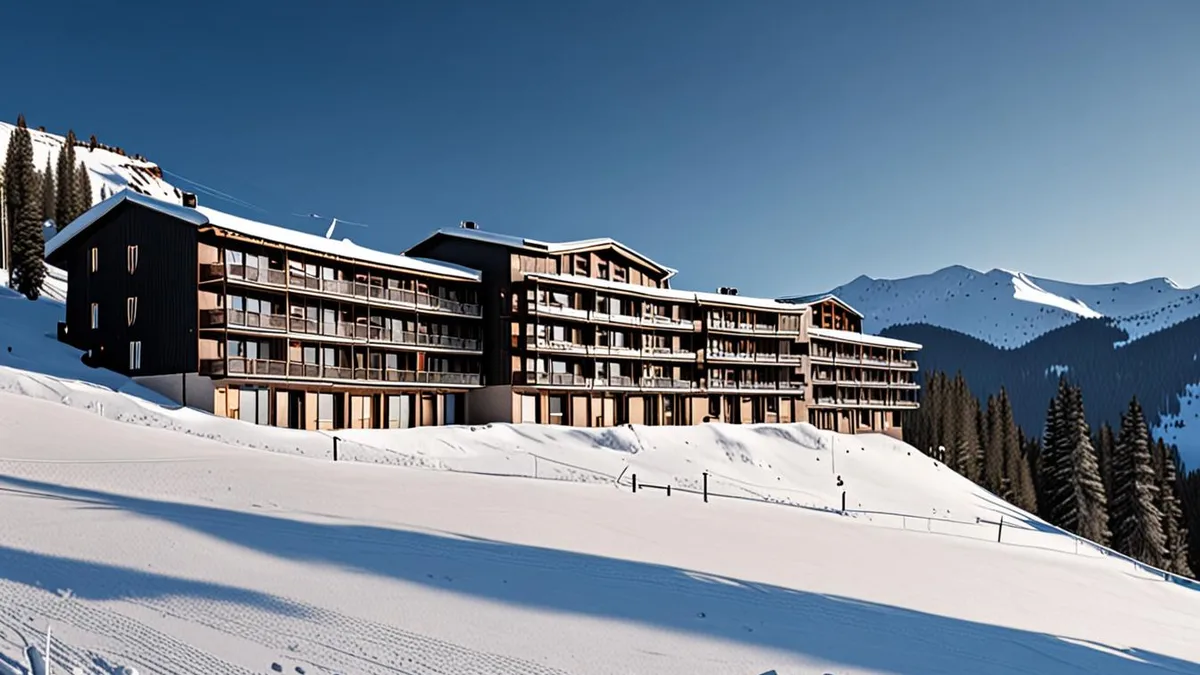
Apartment accommodation is the budget workhorse of ski trips, especially for groups of 4-6. Sharing a apartment with a kitchen typically cuts per-person costs by 20-40% versus hotels, and the savings grow once you stop eating out every night.
Self-catering cuts both ways. You get full control over meal times and diet — great for fussy eaters, allergies or anyone training for a race week — but you also buy, cook and clean everything yourself. Factor in a supermarket trip on arrival day, because mountain village shops charge a premium and close early.
Before booking, check what many budget apartments leave out. Boot dryers, ski lockers and a location within walking distance of the lifts make a huge difference to daily comfort, and their absence turns a bargain into a hassle. Cleaning deposits and minimum-stay rules are also common — expect required stays of around 5-7 nights in peak weeks, plus a refundable deposit against the final clean. The same “check what’s actually included” logic applies to beach resorts too, as we explain in our guide to choosing between Thai coastal resorts.
Price Comparison Across the Ski Season
Timing your trip matters as much as choosing where to sleep. The same chalet, hotel or apartment can vary dramatically in price depending on the week you book, and the differences are large enough to reshape your whole budget.
Peak weeks at Christmas, New Year and February half-term typically run 40-60% above January rates. Demand from school holidays and festive travelers is predictable, and resort operators price accordingly. If your dates are flexible, January and mid-March offer the best value window across all three accommodation types — the snow is usually still good, the crowds thinner and the rates noticeably kinder.
Location premiums and the real cost of convenience
Waking up at the foot of the slopes comes at a price: properties with direct ski access generally command a hefty premium over comparable places a short shuttle ride away. Whether that premium is worth it depends on your group. Families with young children often find the convenience pays for itself, while groups of confident skiers with a car may happily trade a ten-minute shuttle for a bigger apartment or a lower nightly rate. Factor in the shuttle’s frequency and cost, not just its existence — a bus that runs twice an hour is a different proposition from one that stops at 5 pm.
Finally, remember that lift passes in major Alpine resorts commonly cost €60-75 per day for adults. Over a week, that adds up fast for a family of four, which is exactly why accommodation savings matter most. Cutting your nightly rate is often the single biggest lever you have on the total cost of a ski trip.
How to Choose the Right Ski Resort Accommodation for Your Trip
Once you understand the three accommodation types, the decision usually comes down to a handful of practical questions. Work through them in order and the right answer tends to reveal itself. None of these steps takes more than a few minutes, yet together they filter out options that look appealing online but fail on the snow. Grab a notepad or a shared group chat, run through the list below, and you will quickly see which type of base actually fits your trip.
- Count your group size first. Couples who want service and zero chores are best served by a hotel. Larger groups get the most out of a catered chalet, where shared living space and included meals create the sociable atmosphere chalets are known for. Families watching their budget should look at apartments, which tend to be the most economical option for groups of four to six.
- Calculate the total trip cost, not just the nightly rate. Add up accommodation, lift passes, airport transfers and food. A cheap apartment with a costly transfer and a long shuttle can end up more expensive than a pricier hotel closer to the lifts.
- Match location to skill level. Beginners benefit from village-center stays near nursery slopes, where they can walk to lessons and retreat for lunch without navigating shuttle schedules. Confident skiers can prioritize proximity to the main lift hub instead.
- Book according to the season. Peak-season stays should be secured 6-9 months ahead to get the best pick of properties and prices. January trips are more forgiving — they can often be booked 2-3 months out, sometimes with late deals attached.
Whichever type you settle on, the goal is the same: a base that fits how your group actually skis, eats and relaxes. A hotel that frees a tired couple from cooking, a chalet that turns a group trip into a shared feast, or an apartment that keeps a family budget intact — each is the right choice for the right traveler. Take an hour to compare two or three specific properties against these questions before you commit, and you are far less likely to regret the booking when you are standing in ski boots at 8 a.m. wondering why the lifts are a shuttle ride away.
Winter Stays Beyond the Alps
The Alps dominate the ski accommodation conversation, but they are far from the whole story. Nordic destinations offer a different rhythm of winter travel, where skiing shares the stage with aurora hunting, husky safaris and long evenings in the sauna. The places you stay are often as memorable as the slopes themselves.
In Lapland and across Finland, resorts are built for travelers mixing skiing with Arctic experiences. Glass igloos let you watch the northern lights from bed, while wilderness lodges put you deep in the forest, a snowmobile ride from anywhere. For a closer look at what the region offers, see this guide to Swedish Lapland resorts for Arctic travel, which covers the accommodation styles and experiences that set the area apart.
How the accommodation mix differs
Resort style in the Nordics differs from Alpine villages in ways that affect your booking. Catered chalets, a staple of French and Austrian resorts, are far less common here. Instead you will find a higher proportion of hotels, self-catering cabins and purpose-built lodges, often spread more loosely across the landscape rather than clustered around a single lift hub.
That layout matters practically. You may rely more on shuttle buses or scheduled transfers between your accommodation and the slopes, and self-catering facilities in cabins are usually excellent — expect proper kitchens rather than a token hotplate. If your priority is skiing hard from first lift to last, the Alps remain the more efficient choice. If you want skiing to be one ingredient in a broader Arctic adventure, the Nordic resorts are hard to beat.
Hotels, Chalets or Apartments: The Bottom Line
So, which one wins? There is no single answer, but the logic is simple: hotels buy you convenience, chalets buy you sociability and catering, and apartments buy you space and savings. A couple who wants zero cooking and daily housekeeping will happily pay more for a hotel. A group of eight filling every bed in a catered chalet often gets better value per person than two hotel rooms. A family of five self-catering in an apartment can cut costs by 20-40% versus a hotel — money that stretches further when lift passes alone commonly run €60-75 per day.
Remember that timing shapes price as much as accommodation type. Peak weeks at Christmas, New Year and February half-term can run 40-60% above January rates, and booking 6-9 months ahead matters most for those dates. Match the choice to your group size, your budget and how much self-catering you genuinely accept, and the right option usually becomes obvious. Which one do you pick for your ski trips? Tell us in the comments or share this article with your crew.