Glamping photos are masters of the flattering angle. A clawfoot tub by a window, a lantern-lit path, a smiling couple in robes — but none of them answer the question that actually decides whether your trip feels luxurious or rustic: what exactly is the bathroom situation? You might be booking a private en-suite with a hot shower, or you might be walking across a muddy field at midnight to a composting loo in a hut.
Glamping bathrooms vary enormously between sites, and the difference is often the single biggest gap between what you imagined and what you get. This guide walks through the toilet types you’ll encounter, the shower options from en-suite to wood-fired outdoor, and what glamping hot tubs are really like to use. We’ll also cover how bathroom setups differ by accommodation type, what private facilities add to the price, and how to confirm the details before you book — so the only surprise on arrival is a good one.
What Kind of Toilets Glamping Sites Have
The good news is that most glamping sites have moved well beyond the long-drop toilet of a decade ago. Flush toilets are now the most common setup, either built into your accommodation as an en-suite or集中ed in a shared washblock a short walk away. If you’re booking a luxury safari tent or a glamping dome, chances are good you’ll have a proper flushing toilet just steps from your bed.
Composting toilets: the eco-friendly option
Composting toilets are the second most common type, and they show up mainly at eco-focused and off-grid sites. You’ll find them especially in remote areas where mains drainage and water supply simply don’t exist. Modern versions are cleaner and less intimidating than their reputation suggests — most use a separate urine diversion system, sit in a well-ventilated hut or cabin, and come stocked with sawdust or wood shavings you add after use. There’s no smell if they’re managed properly, which good sites do diligently.
That said, they’re not for everyone. If you’re squeamish about anything other than a flush, check the listing carefully or message the site before booking.
Loo huts at tent and yurt sites
Some bell tent and yurt sites still use separate loo huts — small, private toilet buildings positioned a short walk from the tents. These usually contain a flush toilet connected to a septic tank, so you get the familiar experience with a bit of a stroll attached. Pack a torch for nighttime trips and a pair of waterproof shoes if the grass is likely to be dewy. It’s a small trade-off for sleeping in a field, and many guests find the walk part of the charm.
Showers: En-Suite, Shared and Outdoor Options
Shower arrangements follow the same spectrum as everything else in glamping: from genuinely hotel-like to delightfully rustic. Knowing which end of the scale you’re booking makes a real difference, especially on a longer stay or a chilly morning in the shoulder season.
En-suite showers
En-suite showers are standard in luxury safari tents and glamping domes, and they’re usually proper affairs — a walk-in or over-bath shower with decent water pressure and, at the better sites, genuinely hot water on demand. These tend to sit at the top price tier, which is exactly what you’re paying the premium for: stepping out of bed onto a warm floor and into your own bathroom, no shoes or torch required.
Shared shower blocks
Shared shower blocks with private cubicles are the norm at many yurt and bell tent sites in the UK. Don’t let the word “shared” put you off — each cubicle is an individual locked room with its own shower, so privacy isn’t the issue. The real considerations are distance and timing. If your tent is a few minutes’ walk away, you’ll be carrying towels and toiletries back and forth, and at busy times you may queue in the morning. Bring flip-flops and a wash bag that can hang up inside the cubicle.
Outdoor and wood-fired showers
Outdoor and wood-fired showers are the romantic end of the spectrum — hot water heated by a log burner, sometimes under open sky or behind a wooden screen. They’re a seasonal extra, typically running April to October in the UK, since they depend on warm weather and sites being fully open. If a listing mentions one, treat it as a bonus rather than a guarantee of your only washing option, and ask whether there’s a backup indoors.
One practical note: if you’re bringing a dog along, muddy paws and shared washblocks are a common combination, so it’s worth reading up on how to find out whether a glamping site is pet-friendly before you commit — some sites even have outdoor dog showers alongside the human ones.
Glamping Hot Tubs: Types and What to Expect
A hot tub under the stars is the image that sells half the glamping trips in the UK, but not all tubs work the same way. The two main types behave very differently, and knowing which one you’ve booked changes how you plan your evening.
Wood-fired hot tubs are the classic glamping option: a wooden or metal tub heated by a log burner built into its side. They have real charm — the crackle of the fire, the smell of woodsmoke — but they usually need 2-3 hours to heat before use. That means you can’t decide at 9 pm that you fancy a soak; you need to light the fire in the late afternoon and plan your evening around it. Sites typically provide the logs, but confirm this when booking.
Electric hot tubs heat faster and hold their temperature with almost no effort from you, which makes them far more convenient. The trade-off is availability: they’re less common at off-grid sites, where limited power supply simply can’t support one. If a reliable, always-ready tub matters to you, prioritize sites with mains power and an electric model.
Be aware that many tubs only operate during the warmer months of the year, and some sites charge a private-use fee on top of your stay. This matters most for couples and special occasions — a private tub is a very different experience from a shared one, and it’s one of the key things to weigh up when choosing a glamping site for a honeymoon.
- Who services the tub: at some sites staff drain, clean and refill between guests; at others you’re expected to scoop out leaves and check the water yourself before your first dip.
- Opening hours: shared tubs at larger sites often have bookable time slots, so ask how long you get and whether you can reserve an evening slot in advance.
- Child policies: many sites restrict hot tub use to adults, or require direct supervision, which reshapes the plan if you’re traveling with kids.
- Towels and robes: some sites provide dedicated hot tub towels separately from bath towels — worth knowing before you use your only dry one to climb out.
How Bathroom Setup Varies by Accommodation Type
The type of accommodation you book is usually the best clue to what bathroom setup awaits. If a proper toilet and hot shower matter to you, match the structure to the facilities rather than hoping for the best.
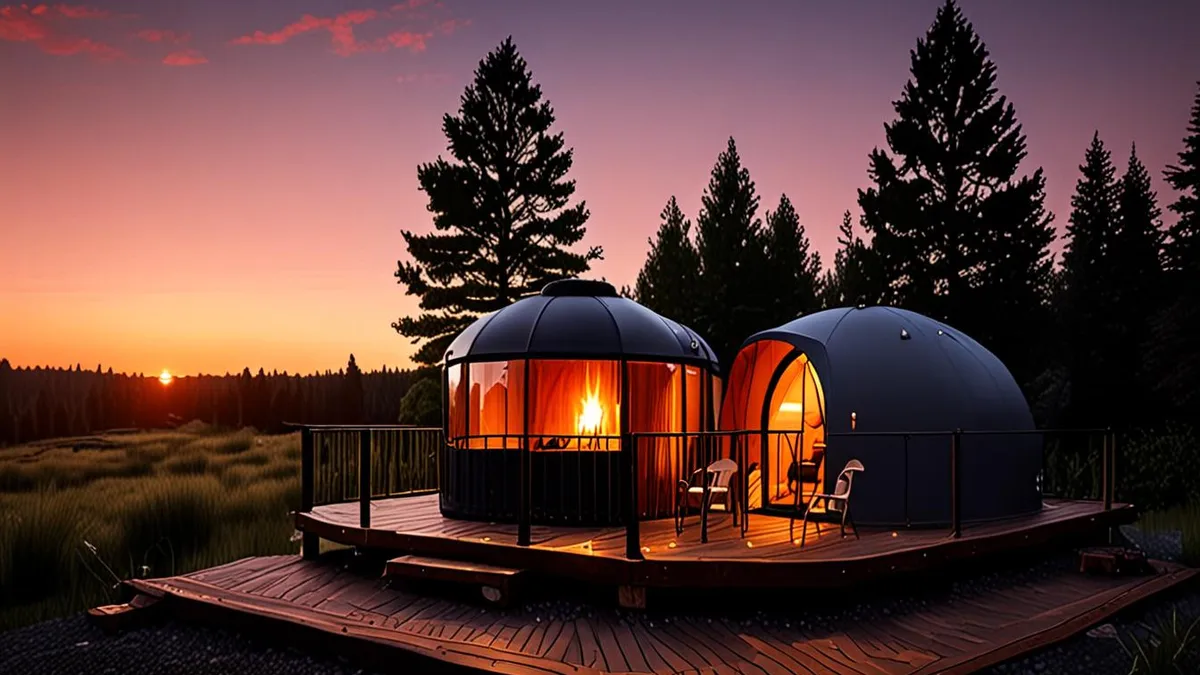
Luxury safari tents and glamping domes most often come with en-suite bathrooms built into the unit itself. Because these structures sit on fixed platforms with room for plumbing, they can support a proper flush toilet and a warm, enclosed shower just steps from your bed. This is a big part of why they sit at the top price tier.
Yurts and bell tents are a different story. Their canvas walls and round shapes make internal plumbing difficult, so these sites more commonly rely on a shared washblock somewhere on the property. The block is often perfectly clean and modern, but you will be walking to it, possibly in the dark and possibly in the rain, so pack a headtorch and waterproof sandals.
Treehouses and cabins usually have full plumbing and sit closest to a hotel standard. Many include a proper bathroom with a flush toilet, a good shower and sometimes even a small bath, since solid walls make installation straightforward.
- Safari tents sometimes split the en-suite into two rooms, with the toilet separate from the shower, which helps when you are traveling as a group.
- Domes often tuck the bathroom behind a curved partition wall, so check photos if privacy within the unit matters to you.
- Yurts occasionally get a private “wet room” in a nearby outbuilding reserved for one unit, a middle ground worth asking about.
- Bell tents at smaller sites may share a single toilet hut between just two or three tents, which feels very different from a busy campsite washblock.
If you are still weighing structures against each other, the trade-offs are laid out clearly in a comparison of glamping domes, safari tents and yurts, including how facilities differ between them.
What Private Bathrooms Cost
So what does a private bathroom actually cost you? On UK glamping sites, an en-suite option typically adds roughly £20 to £60 per night compared with a similar unit that relies on shared facilities. The exact premium depends on the region, the season and how luxurious the bathroom itself is.
That range matters most when you compare two sites side by side. A safari tent with its own shower and flush toilet will usually cost more than a bell tent with a washblock a short walk away, even on the same farm or estate. If your trip is only a night or two, the difference can be noticeable; over a full week, it can add up to a meaningful chunk of your budget.
Where shared facilities fit in
Sites with shared washblocks generally sit at the lower end of the price range for their region. That is the trade: you accept a walk to the shower block, and in return you pay less for the same location and views. For many travelers, especially on shorter trips, that trade is an easy one to make.
Hot tub pricing works differently. Some sites bundle hot tub access into the nightly rate, while others treat it as an add-on with a separate fee, sometimes charged per stay or per session. Wood-fired tubs, which usually need two to three hours to heat, are the ones most often offered as a bookable extra. Always check whether the tub is private to your unit or shared with other guests, and confirm any extra charge before you book rather than discovering it at check-in.
How to Check Bathroom Facilities Before You Book
Bathroom surprises are easily avoided with ten minutes of checking before you pay. The trick is knowing where to look and what questions to ask, because listings vary widely in how clearly they describe toilets, showers and hot tubs. Some sites spell out every detail, while others hide behind vague marketing phrases that could mean almost anything. A little detective work now saves you from a cold walk across a muddy field later.
- Read the facilities section word by word. Look for exact phrases like “en-suite”, “shared washblock” or “composting loo” rather than vague terms such as “modern facilities”. If the listing says “toilets nearby” without specifying the type or distance, treat that as a prompt to dig deeper. Most sites do state bathroom arrangements on their listing pages, so a missing description is worth chasing up rather than guessing.
- Message the site directly. Ask two specific questions: how far the nearest toilet and shower are from your unit, and whether the hot tub is private to your booking or shared with other guests. If a wood-fired tub is mentioned, ask how long it takes to heat so you can plan your evening. A site that answers clearly and quickly is usually a good sign for the stay itself.
- Scan recent reviews. Filter or search reviews for mentions of cleanliness, hot water and showers. Older reviews may describe facilities that have since been upgraded or replaced, so prioritize the last few months of feedback over a glowing write-up from years ago. Pay attention to comments about queues at peak times too, since a shared washblock can feel very different when the site is full.
If a site cannot tell you how far you will walk to the loo at midnight, or whether the tub is yours alone, that hesitation tells you something too. Confirm the details in writing before you book, and you will arrive knowing exactly what to expect when nature calls or when you fancy a soak under the stars.
Choosing the Right Bathroom Setup for Your Trip
That photo of a canvas tent tells you nothing about the 6 a.m. walk to the loo. The real difference between glamping trips often comes down to the bathroom: a private en-suite, a shared washblock down the path, or a composting toilet in a hut. Knowing which one you’re booking tells you what comfort you’re actually paying for.
As a rule of thumb, en-suite bathrooms and a private hot tub suit honeymoons, anniversaries and colder-month stays, when you want everything under one roof. Shared washblocks work perfectly well for shorter trips and tighter budgets, especially at yurt and bell tent sites. The main thing is to confirm the toilet type, shower setup and hot tub arrangement before you book, because that single check avoids the biggest surprise in glamping. If this helped you plan your trip, leave a comment or share the article with a fellow traveler.