You paid a premium for “ski-in ski-out” — and then found yourself lugging boots to a shuttle stop each morning. If that sounds familiar, you already know the label doesn’t always mean what it promises. True ski-in ski-out lodges let you clip into your skis at the door and reach a piste or lift in under two minutes, but plenty of listings stretch that definition until it snaps.
This guide explains what the label actually guarantees, how to verify access before you book, and what the slope-side premium really buys you. We’ll also cover how snow reliability affects door-to-piste access through the season, when to book for peak weeks, and how to decide whether a nearby lodge might suit your group better. By the end, you’ll know exactly what to check before paying for the view — and the convenience — of a slope-side stay.
What Ski-In Ski-Out Actually Means
At its strictest, ski-in ski-out means exactly what it says: you step outside the lodge already wearing your boots, click your bindings together, and reach a piste or lift in under 2 minutes. No road crossings, no carrying skis down a lane, no shuttle bus. On the return, you ski more or less to the door and step out of your bindings within sight of your room.
Marketing versus reality
In practice, the label gets stretched. Some listings apply it to lodges 300-800 m from the nearest lift, which means a short walk in stiff boots — or worse, a shuttle ride that eats 20 minutes of every morning. Others count a lodge “ski-out” because you can slide across a car park to a nursery slope, even though getting back means an uphill walk or a hike from the lift station.
The softer terms are the tell. “Ski-in” on its own often means only the return leg works. “Ski nearby” usually signals a walk of a few hundred meters. “Ski shuttle” means exactly that: a bus, on a timetable, that may not run late or often. None of these are the same as true ski-in ski-out lodges, and none justify the same premium. If a listing leans on vague phrasing instead of naming its nearest lift and piste, treat that as a question to ask rather than a fact to assume.
How to Verify Access Before You Book
Verifying slope-side access takes about ten minutes, and it’s the best-spent ten minutes of your booking research. Listings love the phrase “ski-in ski-out,” but the label gets stretched to lodges that are actually 300-800 m from the nearest lift, requiring a walk in boots, a shuttle ride or a trudge across a car park before you reach snow. True ski-in ski-out means you can clip in at the door and reach a piste or lift in under 2 minutes. Here’s how to check whether a lodge genuinely delivers that.
- Find the lodge on the resort’s official piste map. Ignore the listing photos, which can be cropped, angled or years old. Most resorts publish interactive piste maps online; locate the actual building and measure its position against the nearest marked run and lift station.
- Ask specifically about the return route. A genuine ski-in ends at or beside the door. If the agent’s answer involves an uphill walk, a road crossing or “a short stroll from the bottom lift station,” you’re looking at a nearby lodge, not a slope-side one.
- Confirm lift operating hours and the home run’s season. Ask whether the lift serving your lodge runs as late as you’ll want to ski, and whether that home piste stays open late in the season, when snow cover retreats to higher ground.
- Look for genuine slope-side design features. Ski storage at the entrance, boot dryers and direct piste access are the three features that define a real slope-side stay. A lodge 500 m or more from the slopes rarely invests in all three, so their absence is a useful tell.
If the owner or agent answers these questions promptly and precisely, that’s a good sign. Vague or evasive answers about the return route are the most common red flag, so press on that one hardest before you commit. Given that slope-side lodges typically cost 20-50% more than comparable lodges further out, you’re paying a real premium for that under-2-minute access — it’s entirely reasonable to make the property prove it. A quick screenshot of the piste map with the lodge marked, plus written confirmation of the return route, gives you something to fall back on if the reality doesn’t match the listing when you arrive with skis on your shoulder.
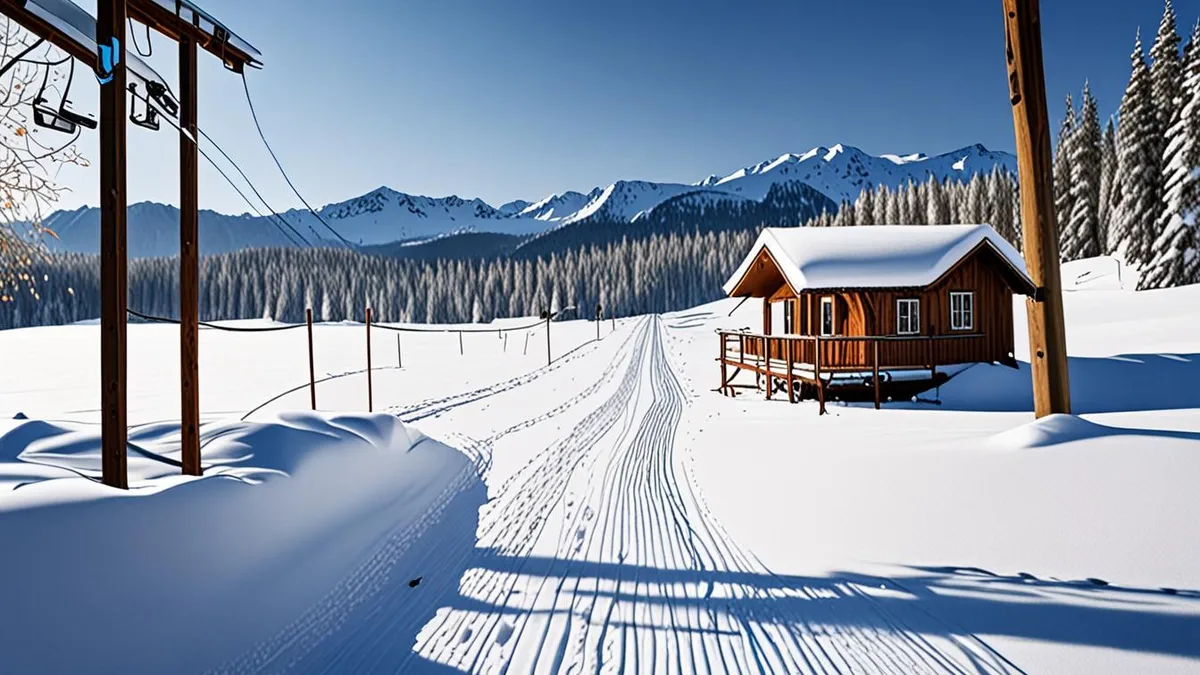
What the Premium Buys You
Slope-side lodges typically cost 20-50% more than comparable lodges 500 m or more from the slopes. That’s a significant premium, so it’s fair to ask what you actually get for it.
The time you get back
The biggest return is hours. There’s no daily boot-and-carry walk, which sounds minor until you’ve done it twice a day for a week with children in tow. Lunch becomes an easy step inside rather than a planned expedition, and families can bring tired children back for a midday rest without writing off the afternoon. Over a week, those saved minutes compound into real extra time on the snow — or real extra sleep.
The trade-offs to weigh
Slope-side convenience has a price beyond the room rate. Locations right on the piste can be noisier, since you’re close to lifts, groomers and evening skier traffic. On-mountain dining tends to run pricier than village restaurants, and some slope-side lodges sit far from village shops, so a forgotten pair of gloves means a trip down the mountain. If your group eats out often or wants atmosphere after the lifts close, check how lively — and how far — the nearest village is before you book. For many skiers the premium is still worth it; for others, a well-placed lodge near a lift hits most of the benefit at a lower cost.
Season and Snow Reliability
The Alpine ski season generally runs from December to April, but that window hides a lot of variation. In early December, many lower slopes are still being made, and by mid-April the snowline can retreat well above some villages. If you want dependable skiing at the edges of the season, glacier resorts and resorts with a base at 1,800 m or higher are your safest bets — their snow holds up when valley resorts are grassy.
This matters just as much for the ski-in ski-out label as for the skiing itself. A door-to-piste route is only a ski-in route when there is actually snow on it. At lower-altitude lodges, a warm week in March can turn that gentle home run into a muddy track, leaving you walking the last stretch or taking a shuttle instead. Ask the lodge what happens to the access route in thin-snow conditions; a good operator will answer honestly.
Timing also affects availability. Peak weeks — Christmas-New Year and February half-term — sell out slope-side beds first, because there are relatively few true ski-in ski-out properties and everyone wants them for exactly those weeks. If your dates are fixed, treat those weeks as long-lead purchases rather than last-minute finds.
- Glacier skiing extends both ends of the season: resorts with glacier terrain often open earlier in autumn and keep runs open into late spring, which is why they anchor many early-December and late-April trips.
- North-facing slopes hold snow longer: a slope-side lodge above a shaded north-facing home run is more likely to keep its ski-in route late in the season than one facing the sun.
- Snowmaking can rescue low-altitude access routes: some resorts can make snow on key return pistes, but this depends on cold nights — check whether the home run itself is covered, not just the main slopes.
- Spring skiing shifts the daily rhythm: in April, snow often softens by late morning and turns heavy by mid-afternoon, so slope-side lodges let you ski the best hours and retreat quickly when conditions decline.
The same seasonal logic applies outside the Alps, too. If you are considering North America, it helps to read up on what Rocky Mountain lodge stays are like by season, since snow reliability there follows its own pattern.
When and How to Book
True slope-side lodges for the busiest holiday dates typically need to be booked 6-12 months ahead. The genuinely ski-in ski-out inventory in any resort is small, and families who have found a lodge that works tend to rebook the same weeks year after year. Waiting until autumn to look usually means choosing between leftover dates and compromised locations.
If your dates are flexible, the calculus changes. January and March sit outside the peak calendar, and 2-4 months of lead time can be enough to secure a good slope-side lodge, often at softer rates. Shoulder-season weeks also tend to come with better availability on the exact dates you want, rather than whatever fragments remain.
Compare the all-in cost, not the nightly rate
Slope-side lodges carry a noticeable premium over comparable lodges 500 m or more from the slopes, but the headline rate is not the whole story. Many slope-side properties bundle in things that nearby lodges charge for separately: ski storage at the door, boot dryers, spa access, and sometimes shuttle-free access to ski school meeting points. Add up what you would otherwise spend on lockers, transport and time, and the gap often narrows more than it first appears.
Read the cancellation terms before you commit
Peak-season slope-side rates usually come with stricter cancellation conditions than off-peak bookings, precisely because demand is so reliable. Before paying a deposit, check how far in advance you can cancel, what portion is refundable, and whether the operator offers any date-change option. If your plans depend on school schedules or work that might shift, a slightly pricier lodge with flexible terms can beat a cheaper one with none. For a broader picture of how timing affects lodge prices across the year, see this guide to when to book lodge stays and how seasons shape prices.
Choosing Between Ski-In Ski-Out and Nearby Lodges
The right answer depends less on the label and more on who is in your group and how they actually ski. Door-to-piste access earns its premium in specific situations, and it can be wasted money in others. Think through a typical day for your group before paying the slope-side rate.
Families with young children benefit most from genuine ski-in ski-out access. Little skiers tire quickly, and being able to return to the lodge for a midday rest — no boots to carry, no shuttle to wait for — often decides whether the trip is fun or exhausting. It also makes the lunch-and-nap routine practical, which keeps everyone skiing happily all week.
Strong skiers are a different case. If you are on the first lift and skiing until the pistes close, you barely see your lodge in daylight hours. A comfortable, cheaper lodge a short walk or shuttle from the lifts can fund an extra day of skiing, better dinners, or simply a nicer room, with almost no practical downside for your style of trip.
Non-skiers should weight things differently again. For someone spending the day in the village — cafés, shops, spas, walks — piste access is irrelevant, while village atmosphere and walkability matter enormously. A slope-side lodge 500 m from the nearest restaurant can feel isolating; a village-center lodge puts everything outside the door.
- Mixed groups can split the difference: lodges at the edge of the village near a lift base sometimes offer both a short ski commute and reasonable access to shops, which suits groups where only some members ski.
- Check where ski school meets: families should confirm the meeting point is reachable without a bus ride, since early-morning logistics with children are where a distant lodge hurts most.
- Consider the afternoon return, not just the morning: a lodge that is easy to reach in the morning but sits below a long, flat home run can make tired end-of-day returns harder than expected.
- Factor in luggage and arrival day: slope-side lodges often let you reach the door without hauling bags through snow or relying on resort transfers, which matters more than it sounds after a travel day.
The Takeaway on Ski-In Ski-Out Lodges
So what does “ski-in ski-out” actually guarantee? In its strict sense, it means you can step outside, put your skis on and be on a piste or at a lift in under 2 minutes. Anything else — a shuttle ride, a 300-800 m walk, a car park crossing — is marketing stretching the label. Before you book, verify the location on a resort piste map rather than trusting listing photos, and ask whether the return route is a true ski-in.
Then decide if the premium is worth it. Slope-side lodges typically cost 20-50% more than comparable lodges 500 m or more from the slopes, and true slope-side beds for peak weeks need 6-12 months’ lead time. Weigh that convenience against village access and how your group actually skis before paying the rate. If this helped you decode a listing, leave a comment or share the article.