You’ve booked a glamping stay and the photos look perfect — but now a practical question hits you: will you be cooking for yourself, ordering meals on site, or driving half an hour for groceries? Glamping food options vary enormously from one site to the next, and assuming wrong can turn a relaxing break into a logistical headache.
This guide walks through the four main ways to eat well on a glamping trip. We’ll start with a quick overview of the options, then look at what glamping kitchens actually include, how on-site meals, hampers and chef services work, and how far the nearest shop usually is. From there, we’ll match food options to your trip type, show you how to confirm arrangements before booking, and help you plan meals that suit your setup. By the end, you’ll know exactly what to expect — and what to ask — before you arrive.
Types of Glamping Food Options at a Glance
Most glamping sites offer some combination of four food arrangements, and knowing which ones apply to your chosen site helps you plan both your budget and your packing. The good news is that you rarely have to pick just one — many travelers mix self-catering with the occasional on-site meal or a trip to a nearby pub.
The first thing to understand is that self-catering is the default at most sites and is included in the base price. Everything beyond that — hampers, meal packages, chef services — is an optional extra that usually needs to be booked ahead. Here’s how the main options break down:
- Self-catering: You use the unit’s own kitchen or a camp stove to cook your own meals, with no extra cost beyond your groceries. This gives you full control over timing, portions and dietary needs, but it means planning menus and shopping before or during your stay.
- On-site dining: Ranges from a simple breakfast hamper left at your door to full meal packages covering dinner every night, typically adding £15–£30 per person per meal. It removes the cooking entirely but requires advance booking and less flexibility on menu choices.
- Hire-a-chef services: Some upscale sites offer a chef who cooks in your unit or at a communal kitchen, at roughly £40–£80 per person. This is a premium option aimed at special occasions rather than everyday meals.
- Nearby pubs, cafés and restaurants: When a site has no food service at all, local eateries often fill the gap. This works well if you have a car, but rural opening hours can be limited, so it’s worth checking before you rely on it.
As a rough rule, the more remote the site, the more you’ll depend on the first two options. A site on the edge of a village gives you flexibility; a site deep in the countryside may leave self-catering and pre-booked meals as your only realistic choices.
Self-Catering: What Glamping Kitchens Actually Include
If you’re planning to cook on your glamping trip, it helps to know what you’re actually working with. Glamping kitchens are convenient but compact, and they’re rarely equipped like a full holiday cottage kitchen. The typical setup includes a two-ring hob, a small fridge and basic cookware — and, importantly, most glamping kitchens have no oven. That single detail changes how you should plan every meal of your trip.
Before you write your shopping list, check exactly what the site provides. Some units come fully stocked with cutlery, plates, a kettle, a cutting board and cleaning supplies like washing-up liquid and sponges. Others offer only the bare minimum, leaving you to bring your own sharp knife, tea towels or a favorite pan. A quick message to the host saves you from arriving to discover there’s no way to boil water or wash up afterwards.
Outdoor cooking: fire pits and BBQs
Many glamping units come with a fire pit or BBQ, which is one of the real pleasures of the experience. Just remember that these often require you to bring or buy charcoal and firewood — some sites sell it on site, others expect you to come prepared. Ask in advance so you’re not hunting for fuel at dusk.
Planning meals around a two-ring hob
The smartest approach is to plan one-pot and grill-based meals rather than recipes that need an oven. Think pasta dishes, stir-fries, soups, chilli, grilled meats and vegetables, and foil-packet meals on the BBQ. A slow-cooked roast or a tray bake is off the table, so save those recipes for home. If you want a full rundown of what else to bring, our complete glamping packing checklist covers kitchen extras alongside everything else.
One more practical tip: the small fridge limits how much fresh food you can store, so plan to shop little and often, or prioritize ingredients that keep well, like root vegetables, hard cheeses and cured meats.
On-Site Meals, Hampers and Chef Services
If cooking isn’t your idea of a holiday, many glamping sites offer food services that range from a simple breakfast delivery to a full restaurant-style experience in your own unit. These options cost more than self-catering, but they take the planning, shopping and washing-up off your plate entirely — which is exactly the point for many travelers.
Meal packages are the most common option, and most sites price them per person per meal, with dinner as the standard offering and breakfast or lunch available as add-ons. They must be booked 2–4 weeks ahead. Sites need this lead time to order ingredients and schedule their kitchen staff, so a last-minute decision on arrival rarely works. Check the listing or ask the host for the current per-meal rate before you book.
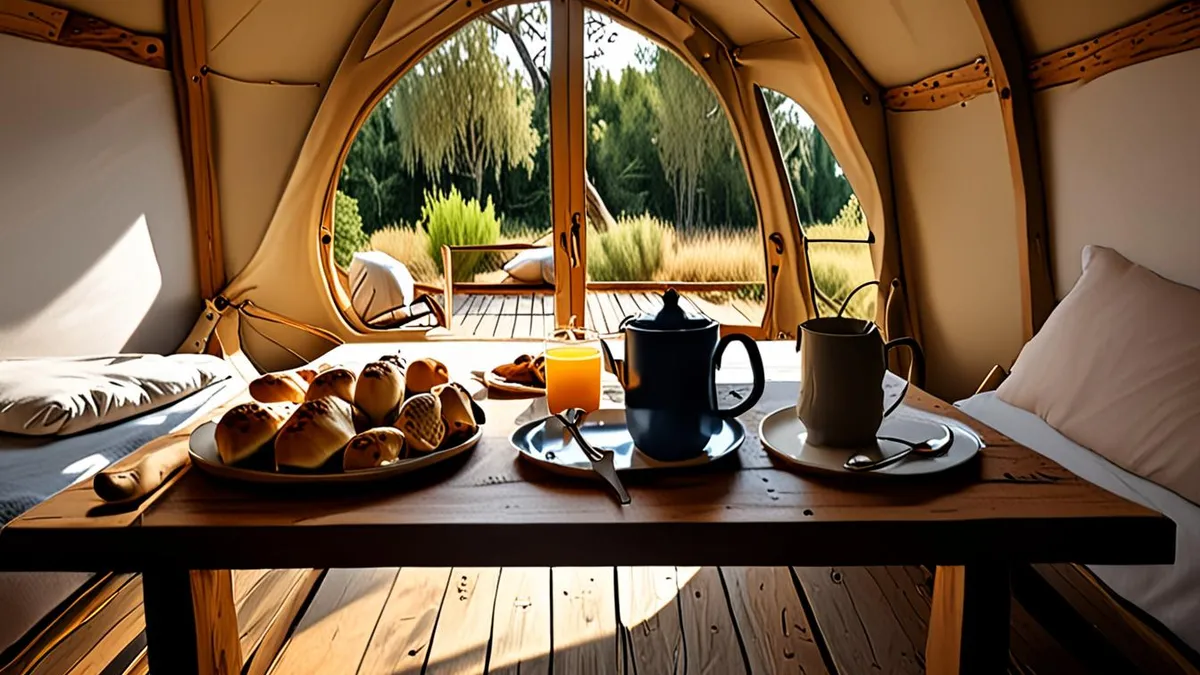
Breakfast hampers are a lighter-touch alternative. These can often be pre-ordered about 1 week before arrival and typically include items like bread, pastries, eggs, local jam and juice, delivered to your unit for you to prepare or simply eat as you are.
At the top end, hire-a-chef services at upscale sites cost roughly £40–£80 per person. A chef comes to your unit and cooks a multi-course meal, which makes these services best suited to special occasions. They’re a natural fit for honeymoons or group celebrations — if that’s the kind of trip you’re planning, our guide to what to look for in a honeymoon glamping site covers food services alongside the other details that matter.
Whichever option you choose, ask about dietary requirements when booking. On-site kitchens can usually accommodate vegetarian, vegan, gluten-free and allergy needs, but only with advance notice. Mentioning a dairy allergy at dinner time, rather than at booking, is a gamble not worth taking on a remote site.
- Confirm what “per meal” includes: Some packages cover just the main course, while others include two or three courses. Asking upfront avoids surprises when you see the final price per head.
- Check delivery times and setup: Hampers and meal deliveries usually arrive at a set time window, so find out when — and whether staff serve the food or leave it for you to handle.
- Ask about group minimums for chef services: Some chefs only take bookings above a certain group size, so couples may need to check availability before assuming the service applies to them.
- Get cancellation terms in writing: Pre-booked meals are often paid in advance, so it’s worth knowing what happens if your plans change or the weather disrupts your stay.
Shopping and Nearby Shops: How Far Is the Nearest Store?
The first thing to check is how far you’ll actually have to travel for food. Small village shops usually stock the basics — bread, milk, eggs, maybe some local cheese — but full supermarkets are often 15–45 minutes away by car. That distance matters more than you might think when you’re cooking most of your own meals.
If your glamping site sits more than 30 minutes from the nearest supermarket, do a full food shop before you arrive. There’s nothing fun about driving 40 minutes each way for a forgotten bag of pasta, especially on a short stay. Plan your meals in advance and shop once. If you’re still choosing a destination, it’s worth comparing the best glamping regions in the UK with shop access in mind.
Opening hours catch people out
Rural stores often close early in the evening and may shut entirely on Sundays, so ask your host for the nearest shop’s opening hours before you travel. Arriving at 7 pm to find everything closed is a common first-night mistake. One short message before your trip is all it takes to avoid that disappointment.
Finally, think about your fridge. Most glamping units only have a small under-counter fridge, so bring a cooler bag for fresh food like meat, dairy and salad. You can restock it with ice from the village shop if you’re staying several nights, keeping the good stuff cold without endless trips to the supermarket.
Matching Food Options to Your Trip Type
The right food setup depends entirely on who’s traveling and where. A food plan that works brilliantly for a couple on a summer break can fall apart for a family of five in February. Before you book, match the options — self-catering, on-site meals, nearby shops — to your trip.
Families get the most out of self-catering, but cooking every meal from scratch on a two-ring hob gets tiring fast. A good middle ground is self-catering plus one pre-booked on-site meal, which gives everyone a night off and cuts your washing-up pile in half. Budget trips, on the other hand, work best leaning fully on self-catering, since cooking your own food keeps costs predictable and low.
- Winter stays: cold weather makes fire pits and BBQs far less appealing, so favour sites with a proper indoor kitchen or add a meal package so you’re not cooking in the dark at 5 pm.
- Remote destinations: somewhere like Patagonia has few or no nearby shops, which makes pre-arranged meals essential rather than optional — book them well ahead.
- Romantic stays: a hire-a-chef dinner or a breakfast hamper delivered to your door turns an ordinary morning into the highlight of the trip, without you lifting a pan.
- Group celebrations: sharing a chef-prepared meal often works out more relaxed than eight people queuing for one hob.
Whichever trip type you’re planning, decide your food approach before you book rather than after. It’s much easier to pick a site that fits your plan than to bend your plan around a site that doesn’t.
How to Confirm Food Arrangements Before Booking
Most glamping food problems — no oven, no shop nearby, a missed booking deadline — are easy to avoid with ten minutes of checking before you pay your deposit. Treat it as part of the booking process, not an afterthought. The goal is simple: know exactly what food setup you’re getting before money changes hands, so nothing about meals comes as a surprise when you arrive tired and hungry after a long drive.
- Read the listing’s equipment list, then ask the host what’s missing. Listings don’t always mention whether there’s cutlery for four, a kettle or washing-up liquid. A direct message asking “what exactly is in the kitchen?” gets you a straight answer, and hosts who reply quickly and clearly are usually just as responsive once you’re on site.
- Scan reviews for food-related comments. Past guests often mention whether on-site meals were worth the money, how generous the portions were, and how far the nearest shop really is — details the listing won’t tell you. Three reviews saying the same thing tells you more than any marketing copy.
- Confirm booking deadlines in writing. Meal packages and chef services typically need advance notice, while breakfast hampers can usually be pre-orderd about a week before arrival. Missing the window can mean no food service at all during your stay, so get the cutoff dates in an email you can refer back to.
- Map your backups. Pin the nearest supermarket and the nearest pub on your phone before you travel. If a meal falls through or you run out of milk, you’ll know exactly where to go without hunting for signal — and rural phone coverage can be patchy at the best of times.
Doing this before booking also gives you leverage: if a site can’t answer basic questions about its kitchen or meal options, that tells you something about how the rest of your stay will be handled. Five minutes of emails now beats an hour of hungry improvisation later, and it costs nothing but a couple of messages.
Planning Meals for Your Glamping Stay
The answer to the “will I be cooking, ordering or driving?” question usually turns out to be a mix of all three. Most glamping stays include self-catering in the base price, with optional on-site meals like packages or hampers available if you book ahead, and nearby shops or pubs filling any gaps. Knowing which combination applies to your site is what turns food from a stressful unknown into a simple plan.
The practical steps are straightforward: confirm the kitchen setup and any meal booking deadlines before you pay, arrange a pre-arrival food shop if the nearest supermarket is a long drive away, and add a meal package or chef service if you want a night off. Do that, and you’ll arrive knowing exactly where your next meal is coming from. If this helped you plan your trip, leave a comment or share the article with a fellow traveler.