You’ve found a glamping listing that looks perfect — a real bed, a wood stove, a view — but the description says “off-grid” and you’re not entirely sure what that means for your stay. Will your phone charge? Is there hot water? Can you check in with family, or will you be completely unreachable? Many first-time glampers book without knowing the answers, and arrive surprised by lantern light and short showers.
This guide to off-grid glamping walks you through exactly what to expect. We’ll cover what off-grid actually means, how power and lighting work in these units, what happens with water, showers and toilets, how to pack and prepare, how to choose and book the right site, and whether this style of stay suits you at all. By the end, no power and no Wi-Fi will feel like a clear, manageable trade-off rather than a mystery.
What Off-Grid Glamping Actually Means
Off-grid glamping simply means the unit is not connected to mains electricity or piped utilities. Power typically comes from solar panels, battery packs or gas, and water arrives from tanks or wells rather than a public supply. The practical result is that electricity is limited to the essentials — usually LED lights and USB charging — while everything else runs on gas, wood or solar heat.
“No Wi-Fi” usually means there is none on site at all. Mobile signal is often patchy or absent, and at some locations you may need a 5-15 minute drive to reach reliable coverage. That’s worth knowing before you arrive, not after, especially if you rely on your phone for navigation or work.
It’s not camping
The key point: off-grid does not mean roughing it. You still get a real bed, proper heating and solid shelter — a yurt, cabin, safari tent or dome. The difference is that utilities are self-managed by the host rather than supplied by the grid, so some comforts work differently than at home.
Also note that some sites are only partially off-grid. Lights and USB charging may work fine while kitchen appliances, which draw far more power, do not. Before booking, ask the host specifically which systems are available and which are off-limits, so there are no surprises when you try to boil a kettle.
Power, Light and Charging in an Off-Grid Glamping Unit
The realistic picture of power in an off-grid glamping unit is modest: LED lanterns, solar or battery lighting, and enough electricity for phone USB charging. That’s it. Hairdryers, kettles and laptops draw far more power than a small solar setup can deliver, so plan around them rather than hoping for an exception.
Before booking, ask the host two questions: how is the power generated, and what happens after two or three cloudy days in a row? Solar systems can run low during extended overcast weather, and a good host will have a clear answer — a backup generator, a gas alternative or honest advice about conserving charge.
The single most useful item you can bring is a fully charged power bank. A 20,000 mAh unit covers a weekend of phone use without needing any on-site charging at all. Don’t assume the unit will have spare outlets or that a charging point will be free when you want it.
For lighting backups, gas lanterns and fire pits are common, but rules vary. Confirm what the host provides, and just as importantly, what is off-limits indoors — open flames inside a canvas tent or small cabin are a genuine fire risk. If you’re bringing a pet along, check the site’s rules on flames and lanterns too; how to find out whether a glamping site is pet-friendly covers the questions worth asking hosts before arrival.
- Headlamps beat handheld torches: they leave both hands free for cooking, finding things in a dark unit or walking to a shared bathroom after dark.
- Charge devices on driving days: if you’re arriving by car, top up phones and power banks using the vehicle’s USB port on the way, so you start your stay at full capacity.
- Ask about shared charging: some sites offer a small charging station in a common area — useful to know about, but don’t build your plans around it.
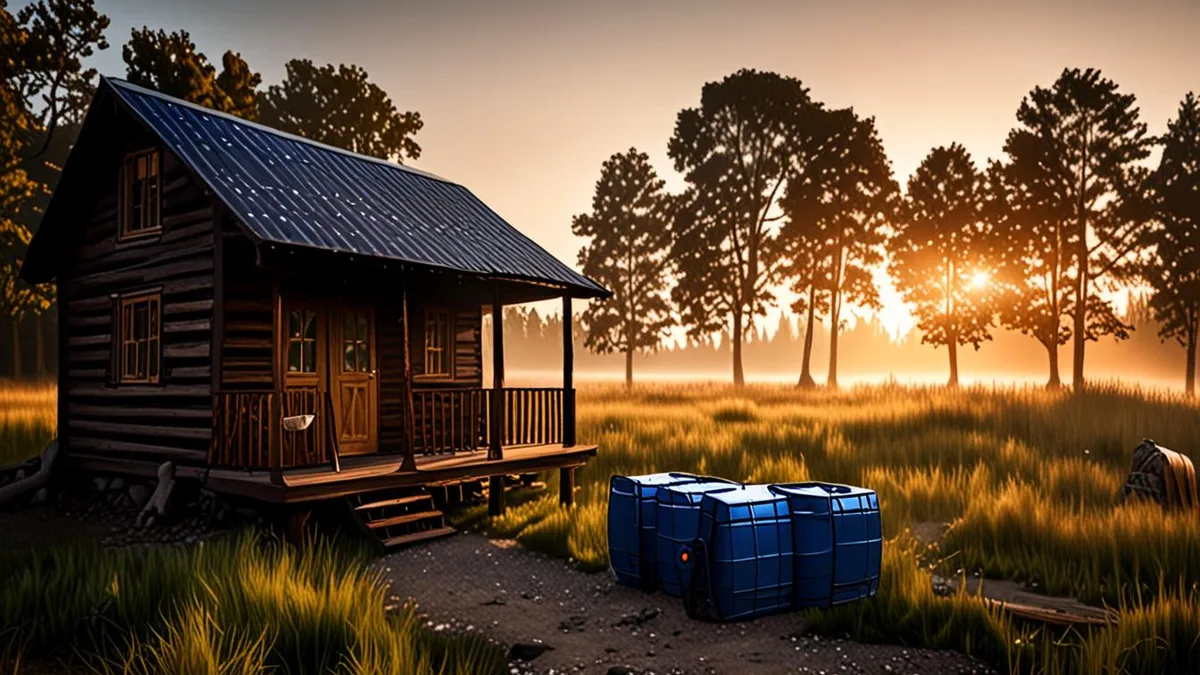
Water, Showers and Toilets Off the Grid
Water works differently off the grid, and it’s the area where expectations most often clash with reality. Showers are typically solar-heated or gas-powered, and at remote sites you may find 3-5 minute water limits to conserve the tank supply. That’s enough for a proper wash, but not for lingering — treat it as a Navy-style shower and you’ll be fine.
Toilets and drinking water
Toilets range widely. Some units have flushing systems running on tanked water, while more remote sites use composting or eco-toilets. Neither is a problem if you know in advance, but a composting toilet surprises guests who assumed a standard bathroom. Check the listing or ask the host directly.
Drinking water often comes from a shared fill point or delivered bottles rather than the tap. Always check whether tap water is potable before drinking it — hosts should state this clearly, and if they don’t, ask or bring your own supply.
Cold weather changes everything. Pipes and solar water heaters underperform in cold months, so if you’re considering a winter stay, confirm how hot water is actually guaranteed — gas heating is the usual answer. Our guide to how cold-weather glamping stays work goes deeper on what winter conditions mean for heating and water systems. In temperate regions, May-September is when solar power and outdoor water systems work most reliably, which is worth factoring into your timing.
How to Prepare: Packing and Mindset for No Power or Wi-Fi
A few days without power or Wi-Fi is easy when you prepare for it, and miserable when you don’t. The difference comes down to one simple habit: doing the digital and practical groundwork at home, where coverage is strong and shops are close, instead of trying to solve problems once you’ve arrived at a remote site with patchy signal. The good news is that this preparation takes about an hour, most of it spent downloading content and tossing a few extras into your bag. Do it the day before departure and you’ll start your trip relaxed rather than scrambling. Here’s how to set yourself up before you even leave the driveway.
- Download everything before you arrive. Offline maps, playlists, podcasts and a few e-books will be your lifeline, because there is no streaming or updating on site. If you’re using your phone for navigation, make sure the offline map covers the final approach too — rural roads sometimes drop out of coverage well before you reach the gate.
- Pack a torch or headlamp per person. Not one for the group — one each. Walking to a shared bathroom at night with a single shared light is how ankles get twisted. Warm layers matter just as much, since evenings without electric heating get chilly fast, and cash is worth carrying in case the card reader at a local farm shop relies on signal.
- Tell one contact your location and dates. A quick message to a friend or family member means nobody panics if you’re unreachable for a few days. It also gives you a safety net if something goes wrong on site and you need someone to act on your behalf.
- Set expectations with your travel companions. This matters most with kids who are used to screens. Bring offline games, cards or a puzzle, and let them know in advance that stargazing is the evening entertainment. Framing it as an adventure rather than a punishment changes everything.
One last tip: charge every device — phones, power banks, cameras and e-readers — to full before you leave home, and switch phones to low-power mode on arrival to stretch that charge across your stay. If you want a fuller rundown of what goes in the bag, this complete glamping packing checklist covers the essentials item by item. An hour of preparation is a small price for a genuinely restful, screen-free break.
How to Choose and Book an Off-Grid Glamping Stay
Booking an off-grid stay is mostly about reading carefully. Listings love the words “eco”, “rustic” and “off-grid”, but they don’t mean the same thing, and hosts use them loosely. A unit can be “eco” because it recycles water yet still have mains power, while a genuinely off-grid cabin might be described as simply “rustic”. Before you book, message the host and ask directly: what exactly is unavailable? Is there any charging at all? How is hot water produced? A host who answers clearly is usually a host who runs a well-organized site.
Reviews are your second tool, but read them with a specific filter. Skip the general “lovely stay, so peaceful” comments and search recent reviews for mentions of power, water and signal reliability. A review from last month saying “lights dimmed by day three of cloud” tells you far more than a five-star rating from two years ago. Also check how the site handles a stretch of bad weather, since solar setups underperform when the sun doesn’t cooperate.
- Timing matters more than for regular glamping. Aim to book 2-3 months ahead for May-September weekends, when off-grid units are popular with the digital-detox crowd. For shoulder-season dates, 4-6 weeks ahead is typically enough.
- Use price as a sanity check. Off-grid stays usually cost 10-30% less than fully serviced units of the same type. If a listing is dramatically cheaper than that, assume facilities are very basic — a long-drop toilet, no heating — and confirm before paying.
- Ask about the backup plan. A good host can tell you what happens if the battery runs low or the gas bottle empties mid-stay. Vague answers are worth taking seriously.
Is Off-Grid Glamping Right for You?
Off-grid glamping suits a specific kind of traveler and is genuinely wrong for another, so it’s worth an honest moment of self-assessment before you book. If your idea of a good time is a digital detox, proper dark skies and real quiet, this is your sweet spot. You’ll trade a few comforts — shorter showers, reading by lantern light, coffee made on a gas stove instead of an electric kettle — for a night sky you can actually see and mornings without notifications. Many people find the trade more than fair.
When to choose something else
Be honest about a few situations. Families with very young children often find the logistics harder than the marketing suggests: night wake-ups without reliable lighting, limited hot water, and no screen backup on a rainy afternoon. And if anyone in your party depends on powered medical devices, a serviced site is the safer choice — don’t gamble on battery capacity. There’s no shame in picking a site with mains power; the point of the trip is enjoyment, not endurance.
A smart first step
If you’re trying off-grid for the first time, pick a site within a short drive of a town. That way, a signal run or an emergency supply stop is an easy trip rather than an expedition. Once you know you love the format — and most first-timers do — you can push further out on the next trip, where the skies get darker and the quiet gets deeper.
Wrapping Up: What No Power or Wi-Fi Really Means
So what does “off-grid” actually mean for your stay? In practice: solar or battery power that handles LED lights and phone charging, hot water from gas or solar systems, and no Wi-Fi on site. You keep the real bed, the heating and the solid roof — you just manage your own power and water a little more carefully than at a serviced unit.
The payoff comes in price and atmosphere. Off-grid stays typically run 10-30% below comparable serviced glamping, and summer weekends book up fast, so plan 2-3 months ahead. Arrive with offline downloads, a charged power bank and realistic expectations, and the quiet, the lantern light and the dark skies become the reason you booked — not a flaw to tolerate. If you have stayed off-grid, share your experience in the comments or pass this article along to a friend considering their first trip.