Safari tents in Africa sound simple enough: a canvas room in the middle of big game country. But the moment you start planning, the questions pile up. Which region fits your budget? When should you go for the best wildlife viewing? And is a “tented camp” actually camping, or something closer to a hotel? The advice you need is scattered across lodge websites, forums and guidebooks, and it rarely lines up.
This guide pulls it together in one place. We explain what a safari tent really is, then break down East Africa (Kenya and Tanzania) and southern Africa (Botswana, South Africa, Namibia and Zambia), region by region. We compare the dry and green seasons, walk through what a stay typically costs and how far ahead to book, and cover the practical side: packing, weather and life in an unfenced camp. A short recap at the end helps you match the trip to your travel style, whether you’re a honeymooner, a family or a first-time safari-goer.
What a Safari Tent in Africa Actually Is
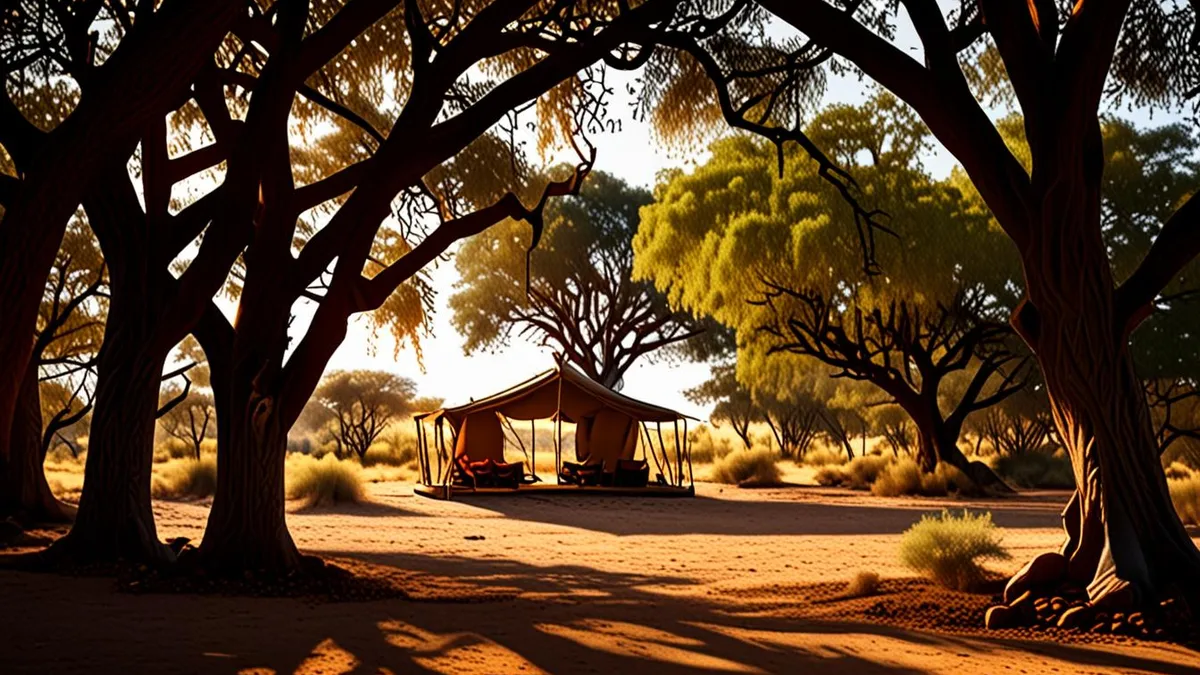
Forget the pop-up tent you pitched at a campsite. A safari tent in Africa is a permanent structure: heavy canvas stretched over a fixed wooden or concrete platform, built to stay up year-round or for a full season. Most are spacious, typically 40–100 m² including a private deck and an en-suite bathroom. You get walls that zip open to the view, but you also get a solid floor, a proper roof and plumbing.
Closer to a hotel room than camping
Comfort levels vary by camp, but the standard is high. Expect real beds with quality linens, hot showers, flush toilets and often extras like a plunge pool, an outdoor bath or a private veranda with lounge chairs. Many camps are powered by solar and run their own water systems, so the “roughing it” part is mostly about location, not amenities. If you’ve slept in a hotel room with a canvas wall and the sounds of the bush outside, you know the appeal.
How this differs from glamping gear
Glamping gear roundups usually compare lightweight canvas tents — bell tents, inflatable models, rooftop tent setups — that you pitch, pack and move yourself. African safari tents are a different category entirely. You don’t carry, pitch or maintain anything; the camp staff does. The canvas is just the architecture. What you’re booking is a furnished suite in a wildlife area, with meals, game drives and guides typically part of the experience, not add-ons you assemble yourself.
East Africa: Kenya and Tanzania
East Africa is the classic safari-tent country, and Kenya and Tanzania are its headline acts. The Maasai Mara in Kenya and the Serengeti in Tanzania together host the Great Migration, with river crossings happening roughly July–October. That window is the most sought-after — and the most expensive — time to be here, so expect peak rates and heavy demand for the best-positioned camps.
From mobile camps to permanent luxury
Tented camps in this region span a wide range. Seasonal mobile camps pick up and move with the herds, so they’re positioned near the action at each time of year — simpler in style, but authentic and often well priced for what you get. At the other end are permanent luxury lodges under canvas, with plunge pools, spa treatments and fine dining. Between them sit semi-permanent camps that offer a middle ground of comfort and price.
When to go for value
The green season is the smart traveler’s secret here. January–February and June bring lush landscapes, newborn animals, lower rates and far fewer vehicles at sightings. Rain is part of the deal, and thicker vegetation can make spotting harder, but photography in the soft light and green grass is superb. If your dates are flexible, these months deliver much of the experience at a fraction of the peak-season cost.
Southern Africa: Botswana, South Africa, Namibia and Zambia
Southern Africa packs a lot of variety into one safari region, and each country offers something distinct for tented-camp travelers. Botswana, South Africa, Namibia and Zambia all have strong safari credentials, but the seasons, access and price points differ enough that it pays to match the country to your priorities.
Botswana and the Okavango Delta
Botswana’s Okavango Delta floods roughly May–August, and that flood pulse transforms the experience. Water-based game viewing — gliding past wildlife by mokoro (dugout canoe) or motorboat — is best in those months, when channels that are dry dust the rest of the year become navigable. Camps here tend to be small, fly-in operations, which keeps visitor numbers low and prices high.
South Africa: easy access and mid-range choice
South Africa’s Kruger area is the region’s easiest entry point. You can self-drive, fly into a nearby airport, and choose from the widest range of mid-range tented camps, with rates typically running $250–$600 per person per night. Good roads, reliable infrastructure and the option to combine a safari with Cape Town or the coast make it a natural first safari.
Zambia and Namibia sit at the remote end of the spectrum. Both offer low-density camps where the May–October dry season concentrates wildlife at shrinking water sources, producing excellent game viewing with very few other vehicles around. Reachability and price reflect that remoteness, so plan for light-aircraft transfers and longer lead times.
Choosing Your Season: Dry vs Green
Most safari destinations in Africa have two broad seasons, and the one you pick shapes almost everything about your trip: what you will see, what you will pay and how far ahead you need to book. The dry season runs May–October in most regions, and it is when game viewing is at its best. Grass is short, water sources shrink, and animals gather where they can drink, making them far easier to find from a vehicle.
The trade-off is demand. Dry-season months are peak season, with peak prices to match, and the most popular camps fill up early. If you want a tented camp in a prime area during the dry months, plan on booking 9–12 months ahead. The green season, November–March, is the opposite story: rates often run 30–50% lower, there are fewer vehicles at sightings, and the landscapes turn green and photogenic. The catch is that rain and thicker vegetation make animals harder to spot, and afternoon downpours can interrupt a game drive.
One window deserves special caution in East Africa: the long rains, March–May. This is the wettest stretch of the year, and some seasonal camps close entirely during these months. If you are set on Kenya or Tanzania, check that your chosen camp actually operates before you book travel in this period.
- Shoulder months can be the sweet spot. June and late October often combine decent game viewing with rates below the July–September peak, and camps are quieter than at the height of the Migration.
- Green season rewards birders. Migratory bird species arrive with the rains between November and March, so the wet months are often the best time of year for birdwatching, not the worst.
- Ask about camp-specific rain plans. Some permanent camps stay open through the rains and offer activities like boating or walking safaris that work well in green conditions, while purely game-drive camps have less to offer when tracks are muddy.
- Photographers often prefer the green season. Dramatic skies, newborn animals and dust-free air make for striking images, even if sightings take more patience than in the dry months.
What a Stay Costs and How to Book
Safari tent pricing is usually quoted per person per night, not per room, and it typically covers far more than the tent itself. In most cases the rate includes meals and twice-daily game drives, so the sticker price is less alarming than it first looks once you compare it to a hotel stay plus separate tours and dining. At the top end, luxury camps commonly run from around $600 to well over $1,500 per person per night in the most sought-after locations.
Timing matters as much as camp choice. The most popular weeks in the Maasai Mara and the Serengeti sell out far in advance, so enquire as early as you can for peak-season travel. Green-season camps are far more forgiving, and a few months of lead time is often enough, sometimes less.
What the rate usually does and does not cover
Before you pay a deposit, confirm exactly what the nightly rate includes. Park access fees, road or light-aircraft transfers, premium drinks, laundry and gratuities are frequently billed separately, and in a national park the daily conservation fees can add a meaningful amount per person per day. Ask the camp or your operator for a full cost breakdown in writing so there are no surprises at checkout.
If you are comparing safari tents against other styles of upscale outdoor stays, it helps to see how the numbers line up across the market — this breakdown of glamping costs by stay type puts safari tents in useful context. And if your dates are flexible, shifting to the green season is usually the single biggest saving available.
Practicalities: Packing, Weather and Camp Life
Safari camps feel luxurious by day, but the weather has real bite, especially after dark. On the open plains of East Africa and southern Africa, nights in June–August can drop close to 10°C even when daytime temperatures are warm enough for shorts and a t-shirt. Pack layers you can add and shed: a fleece or warm jacket for early morning game drives, and a light layer for evenings around the campfire.
Camp life also comes with a rulebook that surprises first-timers. Many camps are unfenced, which means elephants, buffalo, baboons and hippos can and do walk through camp at any hour. After dark, staff will escort you to and from your tent, and you are expected to stay in your tent or call for an escort rather than wander alone. It sounds dramatic, but it quickly becomes routine — and it is part of what makes a safari tent different from any hotel room.
Luggage is the third practical detail that catches people out. Camp-to-camp transfers usually run on small light aircraft, and these typically limit luggage to around 15 kg per person in soft-sided bags. Hard suitcases genuinely will not fit in the hold, so a duffel bag is the standard choice. For a full rundown of what to bring, this complete glamping packing checklist covers the essentials.
- Neutral colors matter more than you think. Khaki, olive and beige keep you unobtrusive on game drives, and bright colors can spook animals at close sightings.
- Binoculars are worth their weight. Camps often share a pair, but having your own means you never wait your turn when a leopard appears in a tree 100 meters out.
- Zip your tent at dusk. Monkeys and baboons are expert tent-raiders, and a zipped canvas flap is usually all it takes to keep your snacks and passport safe.
- Bring a small torch or headlamp. Many camps use low or no lighting between tents at night, both for atmosphere and to avoid disturbing wildlife.
- Check charging arrangements. Some remote camps run on solar power and restrict in-tent charging, offering a charging station in the main area instead.
Matching the Trip to You
So, where does a safari tent actually work in Africa? If the Great Migration is on your list, head to East Africa, where the river crossings draw the biggest crowds roughly July–October. Prefer variety and better value? The countries further down the continent deliver it in spades — think the flooded Okavango Delta in Botswana or remote camps where wildlife gathers at water sources once the dry months set in.
On timing: the dry season is the safe bet for game viewing, while the green season rewards flexible travelers with lower rates and quieter roads. Honeymooners should prioritize private conservancies and tented suites, while families should look for dedicated family tents and check minimum-age policies before booking. Most importantly, decide on your budget, season and region together — that combination will narrow your options far faster than browsing camp after camp. If this helped you plan, leave a comment or share the article.