Glamping in Portugal has a decision built into it: do you wake up to the sound of Atlantic waves or to the silence of olive groves? Many travelers picture both, then struggle to work out which one actually matches the trip they want — and which season delivers it. A clifftop tent in August is a very different experience from a vineyard dome in October, and the price gap between them can be just as wide.
This guide compares the two sides of the country so you can choose with confidence. We look at why glamping in Portugal works so well for first-timers, how the Algarve and the Atlantic coast differ, and what Alentejo, the Douro Valley and Serra da Estrela offer away from the shore. We also break down the seasons, typical costs by stay type and region, and how to match a site to couples or families. By the end, you’ll know whether to book the coast, the countryside, or a one-week combination of both.
Why Glamping in Portugal Works for First-Timers
Portugal is one of the easiest countries in Europe for a first glamping trip, and the main reason is simple: distances are short. Most glamping regions sit within a 2–4 hours’ drive of Lisbon or Porto airports, so you can land in the morning and be watching the sunset from your tent or dome the same day. There’s no long internal flight, no overnight transfer, and no complicated logistics to worry about if it’s your first time booking this kind of stay.
The variety of accommodation helps too. Safari tents, geodesic domes, treehouses and vineyard cabins are all well established here, so you can pick a style that matches your comfort level rather than settling for whatever one site offers. If you’re nervous about “roughing it,” a dome with proper insulation and a real bathroom is a gentle introduction; if you want more of a novelty, a treehouse among the pines delivers it.
A longer season than you might expect
Portugal’s winters are milder than most of Europe’s, which stretches the usable glamping season well beyond the summer months common in northern destinations. Countryside sites often welcome guests in spring and autumn, and some operate year-round. For first-timers, that means more flexibility: you can plan around school holidays or chase lower prices in the shoulder months without writing off the trip entirely. It also means your first glamping experience is less likely to be ruined by cold, wet weather than it might be elsewhere.
Coastal Glamping: The Algarve and Atlantic Beaches
The Algarve is Portugal’s coastal glamping heavyweight, and the sea temperature explains much of its appeal. From August to October the water sits at around 18–22°C, warm enough for proper swimming when the Atlantic further north still feels bracing. If your mental image of a glamping trip involves morning swims and beach afternoons, this is the region that delivers it most reliably.
That popularity comes at a cost. Summer prices in the Algarve are the highest in the country, often €150–€250 per night for a well-located safari tent or dome. Coastal sites in July and August fill up early, so expect to book 3–6 months in advance for the best positions — the tents closest to the water or with any shade tend to go first.
The Atlantic alternative: Comporta and Ericeira
North of the Algarve, the Atlantic coast around Comporta and Ericeira plays a different game. The sea is cooler and the wind blows more often, which makes these stretches noticeably better for surfers than swimmers. The upside is a more laid-back, less resort-like atmosphere, with dune landscapes and beach towns that feel less polished than the Algarve’s main hubs.
Whichever coast you choose, check the practical details before you commit. Some beachside sites have sand, wind and shared facilities that don’t suit everyone, and if you’re bringing a dog along, it’s worth reading up on how to tell whether a glamping site is genuinely pet-friendly before you book. Coastal sites vary widely on this, and the last thing you want is a surprise at check-in after a long drive.
Countryside Glamping: Alentejo, Douro Valley and Serra da Estrela
Inland Portugal rewards travelers who care more about landscape and quiet than sea swimming. The countryside regions each have a distinct personality, and picking the right one matters more than it does on the coast, where beaches are the common denominator.
Alentejo: dark skies and olive groves
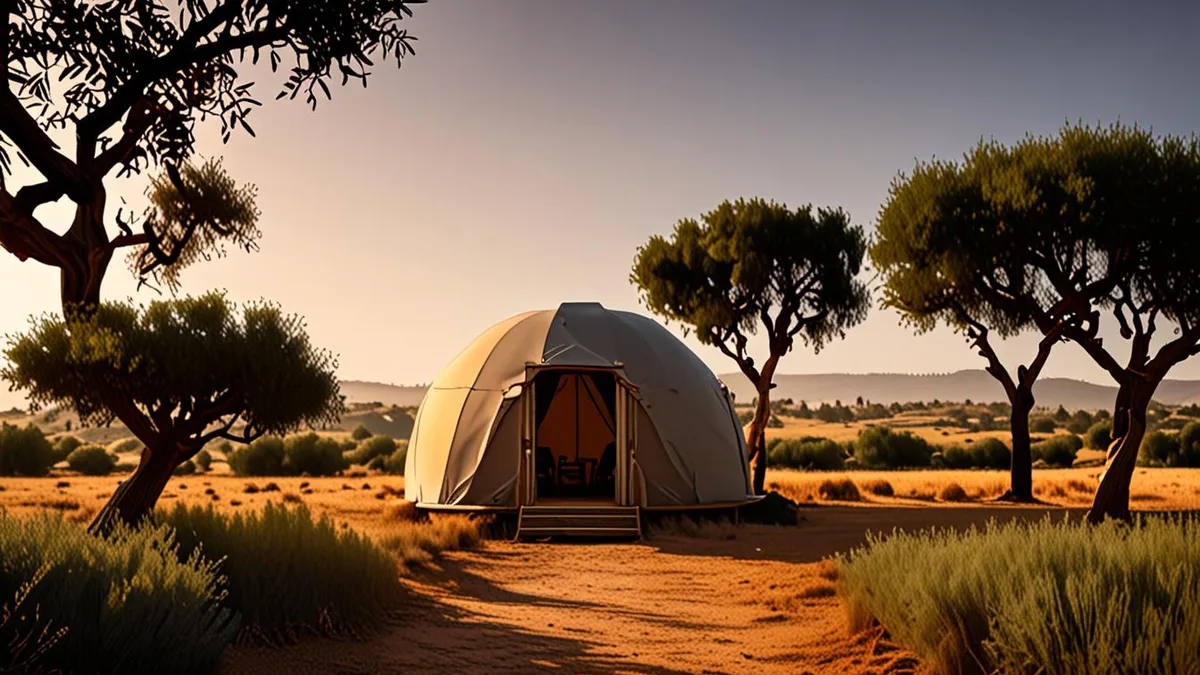
Alentejo is a broad plain of olive groves, cork oaks and wheat fields, and its lack of light pollution has made parts of it official dark-sky areas. Domes and yurts suit this landscape perfectly: you fall asleep under a sky full of stars and wake up to silence. One thing to prepare for is the temperature swing — nights in April and October can drop below 10°C, so pack warm layers even if the days feel mild. Lisbon is roughly 180 km away, making it one of the easiest countryside regions to reach.
Douro Valley and Serra da Estrela
The Douro Valley offers something no coastal site can: glamping among terraced vineyards, often with wine tastings and estate experiences built into the stay. The best windows are May–June and September, when the weather is pleasant and the vineyards are at their most photogenic. Serra da Estrela, Portugal’s highest mountain range, suits cooler-weather stays — think crisp air, hiking trails and some of the best stargazing in the country, all far from coastal crowds.
If wide-open skies and remote landscapes appeal to you, it’s also worth seeing how Portugal compares with more dramatic destinations; this guide to what to expect from glamping in Patagonia and when to go puts the contrast in perspective. For most travelers, though, Alentejo and the Douro offer a far gentler — and closer — version of the same starry-night magic.
Portugal’s Seasons Compared: When to Book and What to Expect
Portugal’s glamping season stretches wider than most of Europe’s, but the calendar still matters. June to August is peak season, and inland sites can get genuinely hot by mid-afternoon. Safari tents with mesh panels and shaded decks come into their own here, while domes without good ventilation can feel stuffy — check that a unit has cross-ventilation or air conditioning before you commit to a summer date.
The shoulder months are where Portugal quietly shines. May, June, September and October bring mild, stable days, warm enough for beach afternoons in the south and comfortable hiking in the countryside. Prices drop noticeably compared with July and August, and sites feel calmer without the school-holiday crowds. September is a particular sweet spot: the Algarve sea is at its warmest, yet summer rates have started to slide.
Winter is a different proposition. November to March suits quiet countryside stays — think wood-fired hot tubs and long stargazing nights in Alentejo — but some coastal sites close entirely for the season. If you’re considering the colder months, it helps to understand how cold-weather glamping stays actually work, because insulation and heating vary a lot between tents and domes.
- July and August are the hottest and busiest months, so family-friendly sites with pools often sell out first and may require the earliest booking window.
- Shoulder-month travelers get a second benefit beyond price: easier access to wine tastings, hikes and town visits without midday heat slowing everything down.
- Winter availability skews rural — Alentejo and Douro Valley sites that stay open year-round tend to be the ones built for cooler nights, not beachfront tents.
- If your dates are fixed to summer, booking early matters more than choosing the exact site; if your dates are flexible, shifting to May or September usually beats hunting for a summer discount.
What Glamping in Portugal Costs by Stay Type and Region
Glamping in Portugal covers a wide spread of price points, and where a stay falls depends mostly on two things: the type of structure and the region. Safari tents and domes sit in the mid-range, while luxury treehouses — the kind with full kitchens, private decks and sometimes plunge pools — occupy the top of the market.
Location and season push prices up or down. Coastal summer bookings sit at the upper end of the range, especially along the Algarve in July and August. By contrast, Alentejo and Douro Valley sites in shoulder months often cost noticeably less, which is why countryside trips in May, June, September or October deliver some of the best value in the country.
What your nightly rate actually covers
Before judging any rate, check what’s included. Two sites charging the same figure per night can feel very different once you add things up. Some stays bundle breakfast or even dinner into the price; others charge separately for everything. A pool, kayaks, bike hire, wine tastings or airport transfers may or may not be part of the deal.
A practical approach: build a rough per-night comparison that includes meals you’d otherwise buy, activities you’d otherwise book, and any cleaning or linen fees. A mid-priced stay with breakfast and a pool can work out cheaper than a cheaper tent where you’re driving to cafés every morning. Also ask about minimum-stay rules in summer — some coastal sites require two or three nights during peak weeks, which changes the total cost of a short trip.
Choosing Your Site: Coast or Countryside, Couples or Families
Who you’re traveling with shapes the right choice as much as where you want to go. Couples and honeymooners tend to lean toward vineyard domes in the Douro Valley or clifftop tents on the coast — stays built around views, privacy and slow mornings. Families have a different checklist: space to spread out, a pool for the hours between outings, and terrain where kids can run around safely without roads or steep drops nearby.
Remote countryside sites deserve extra scrutiny before you book. Check pet policies carefully if you’re bringing a dog — some rural sites welcome animals freely, others restrict them to certain units or seasons. Review patterns matter even more in the countryside than on the coast: a string of mentions about difficult access roads, weak phone signal or thin tent walls in winter should influence which unit type you pick, not just which site.
Finally, match the stay type to the season. The same site can feel perfect in August and disappointing in October if the structure isn’t built for it.
- Insulated domes with proper heating and solid flooring are the safer pick for shoulder months, when Alentejo and Douro Valley nights can feel genuinely cold.
- Airy safari tents with mesh windows and shaded verandas suit dry summer weather best, when airflow matters more than insulation.
- For families, look for sites with fenced pools, flat ground around the tents and shared kitchen facilities — these details show up repeatedly in positive reviews.
- If you’re traveling with a pet, confirm whether there’s an extra fee, whether the unit has its own enclosed outdoor area, and how far you’ll need to drive to walk the dog.
Coast, Countryside or Both: Making Your Choice
So, coast or countryside? If your dream trip involves warm water and long beach days, aim for the coast in summer — Algarve seas are at their best from August to October at around 18–22°C — and book 3–6 months ahead, because coastal summer sites sit at the top of the €80–€250 nightly range. If you picture quiet mornings, vineyard views and better value, the countryside in the shoulder months of May, June, September and October delivers 20–28°C days and lower prices with far less competition for sites.
There’s also a third option worth considering: Portugal’s compact size makes a two-stop trip realistic in a single week, pairing a few coastal nights with a countryside finish. In the end, the right choice comes down to season, budget and whether you’d rather wake up to sea views or vineyard silence. Which would you pick? Tell us in the comments or share this article with your travel partner.