You booked a hotel that proudly listed a fitness center, arrived with your running shoes ready, and found two aging treadmills in a basement corner with no weights in sight. If this has happened to you, you know how misleading the word “gym” can be on a booking page. Hotels with gyms range from full weight rooms with racks and benches to a single exercise bike behind a fire door, and the listing rarely tells you which one you are getting.
This guide shows you how to verify gym quality before you pay. You will learn why listings overpromise, where to find reliable equipment details on booking sites, how to read gym photos with a critical eye, and which questions to email the hotel directly. We will also match gym expectations to your trip type, cover backup plans when the fitness room falls short, and finish with a quick pre-booking checklist you can run in about ten minutes.
Why Hotels with Gyms Are Harder to Judge Than They Look
On most booking sites, any space with exercise equipment can be labeled a gym. That label covers everything from a proper weight room with a dumbbell rack and benches to a single treadmill squeezed into a converted closet. The filter says “fitness center,” you tick the box, and you have no idea what you actually booked until you walk in.
The photo problem
Gym photos make this worse. They usually show the best angle on the day the hotel opened, not the current state of the equipment. That shiny elliptical in the picture may be three to five years old now, out of service, or long gone. Cross-checking with recent guest reviews is the only way to catch a gym that has quietly gone downhill.
Why it matters more on longer trips
On a one-night stopover, a weak gym is an easy shrug. On trips of four nights or more, it is a different story. Miss two or three workouts in a row and your training routine starts to unravel, especially if you are building toward a race or keeping a strength program on schedule. The longer you stay, the more a real gym matters — and the more care you should put into checking it before you book.
Where to Find Reliable Gym Information on Booking Sites
Booking sites hold far more gym detail than most travelers ever dig up, but you have to know exactly where to look. The same platforms you use to compare rates and room types also carry the clues that separate a real fitness room from a treadmill in a corner — you just need a system for reading them. The timing and tools that get you a better rate work just as well for vetting facilities, which is why it pays to learn how to book hotels for less before you start comparing gyms. Once you have a shortlist of two or three candidates, work through the steps below before you commit to anything.
- Filter for “fitness center,” then open the full facility list. The filter only tells you the box was ticked. Scroll to the hotel’s complete amenity list on its own page, where gyms are sometimes described in more detail or flagged with exceptions you would otherwise miss.
- Read the equipment description line by line. Wording matters. “Cardio equipment” can legally mean one stationary bike, while “free weights and machines” signals a real gym. If the listing names a dumbbell rack or benches, take that as a good sign.
- Check the listed opening hours. Many city hotels open their gyms 24 hours, which suits a 6 a.m. session before a full day out. A 6:00–22:00 schedule — common at resorts — can clash with early departures or late dinners, so match the hours to your actual routine rather than hoping they will flex.
- Sort guest reviews by the keyword “gym” or “fitness” and read the 3 most recent mentions. This takes about five minutes and catches most surprises, from broken machines to a gym that quietly closed for renovation months ago. Photos on booking sites are often 3–5 years old, so recent guest comments are your best reality check.
None of these steps takes long, and together they turn a vague amenity checkbox into a clear picture of what you will actually find behind the gym door. Do them in order — filter, read, verify hours, then cross-check reviews — and you will rarely be disappointed on arrival.
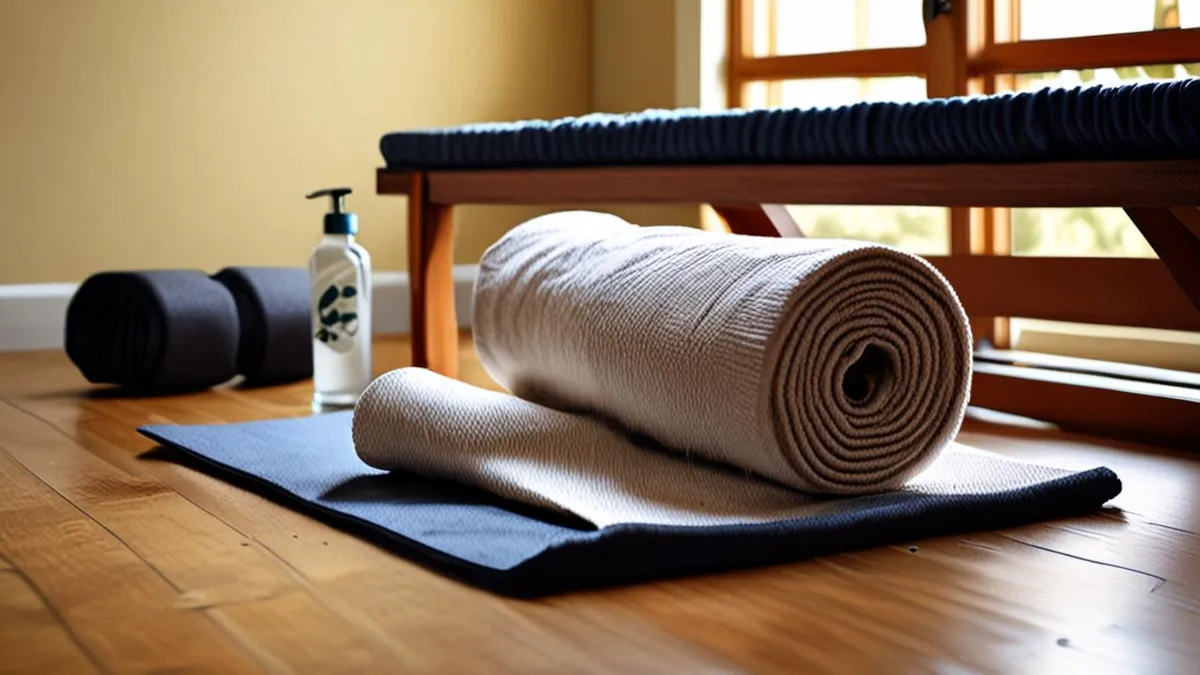
How to Read Photos and Floor Plans of Hotels with Gyms
Photos of hotel gyms tell the truth — if you know how to read them. Start with the simplest test: count the machines. If you can spot two or three cardio units and no dumbbell rack anywhere in the frame, you are looking at a token gym, whatever the listing claims. A proper hotel gym typically has at least two to four cardio machines and a dumbbell rack going up to 20 kg (45 lb).
Next, estimate the room size from context clues. A space of 15–25 m² usually fits little more than two or three machines, while a room of 40 m² or more suggests a fuller setup with racks and benches. Use doors, ceiling tiles and windows as reference points to make a rough judgment.
Then run through the finer details that separate a purpose-built gym from a repurposed back room:
- Mirrors and flooring. Wall mirrors and rubber or sports flooring point to a proper fitness room; bare walls and thin carpet suggest a space that was never designed for workouts.
- Ceiling height. Low ceilings and carpet often mark a converted meeting room — bad news for anything overhead like presses.
- Photo upload dates. Where the site shows them, compare dates. Gym photos are often three to five years old, so weigh recent guest reviews more heavily.
- Camera angles. Distrust gyms photographed only in wide, dark angles. Clear, well-lit shots usually mean the hotel has nothing to hide.
Five minutes with the photo gallery, read this way, will tell you more than the amenity list ever will.
Questions to Ask the Hotel Directly Before You Book
Booking sites will confirm a hotel has a gym. What they won’t confirm is what’s actually inside it. A short email or phone call to the hotel before you book closes that gap, and it takes less time than you might expect.
The single most useful question is also the simplest: ask for the current equipment list. Specifically, ask how many cardio machines there are, what the heaviest dumbbell is, and whether there is a bench or a squat rack. As a rule of thumb, you want to hear about 2–4 cardio machines and a dumbbell rack going up to 20 kg (45 lb). If the front desk hesitates or gives vague answers, that hesitation is information too.
Also clarify where the gym physically is. Some listings count a partner gym down the street as their “fitness center,” which changes your morning routine completely. And ask about renovation plans. A gym “closed for refurbishment” during your dates is one of the most common surprises travelers run into, and it is almost never mentioned on the booking page.
- Ask whether the gym shares space with a spa, pool or conference area, because shared rooms often mean equipment gets moved or removed for events without notice.
- Confirm if towel and water service is provided, since some compact hotel gyms expect guests to bring their own from the room.
- Check whether access requires a deposit, key card activation or a staff member unlocking the door, which can add friction to early morning sessions.
- If the gym is a partner facility, ask for its exact location and hours — partner gyms can add $10–25 per session plus 10–15 minutes of walking each way.
Finally, request recent photos of the fitness room by email. Hotels that answer quickly and willingly usually maintain their facilities well; slow or evasive replies often signal the opposite. Photos taken this week are worth far more than the polished listing images, which are often 3–5 years old.
Matching the Gym to Your Trip: City Stays, Resorts and Star Ratings
Not every trip needs the same kind of gym, and knowing which type of property delivers what saves a lot of disappointment.
City business hotels are the most reliable bet for serious workouts. They cater to regular travelers who train on the road, so they commonly offer 24-hour gyms with solid cardio setups and free weights. You can usually fit in a session at 5:30 or 23:00 without thinking about it.
Resorts work differently. They often trade equipment for space and atmosphere — expect beautiful views, group classes and plenty of room to move, but lighter free-weight setups. If your priority is lifting rather than stretching by a window, a resort gym may leave you underwhelmed.
How star ratings relate to gym quality
Higher star ratings usually mean better gyms. As a rough pattern, 4–5 star properties commonly have fitness rooms of 40 m² or more with a fuller equipment range, while 2–3 star gyms can be minimal — sometimes just a treadmill and a stationary bike in a corner. If you want to understand what those ratings actually promise beyond the gym, this guide to what hotel star ratings really mean breaks it down clearly.
When a small gym is enough
Be honest about your destination, too. If you are headed somewhere you will hike or walk 15,000+ steps a day, a small gym may be perfectly adequate — your legs are getting plenty of work already. In that case, a couple of cardio machines and a light dumbbell rack is a bonus, not a dealbreaker. Weigh the trade-off against the price difference before paying extra for a property with a full weight room you may barely use.
Backup Plans When the Gym Falls Short
Even the most careful research can end with a locked door, a broken treadmill or a “gym” that turns out to be a corridor with a yoga mat. That is why experienced travelers always carry a plan B — and it costs almost nothing to prepare.
The foundation is your luggage. A resistance band weighs a few grams and lets you do rows, presses, squats and pull-aparts in any room, with any floor space. Add running shoes, and you have a complete workout option that depends on no hotel at all. A 20-minute band session plus an outdoor run covers most training goals when the gym falls short.
Your second tool is research done before arrival, not after. Search day-pass apps and check local gym chains near your hotel. In many cities, gyms sell single entries for roughly $5–15, which is cheaper than most hotel “gym access fees” and gives you a far better-equipped facility.
Finally, protect yourself at the booking stage. Choose a room rate with free cancellation whenever the gym is a deciding factor. If the fitness room turns out to be unusable, you can switch hotels without losing money.
- Save two or three nearby gyms in your maps app before the trip, so you are not searching at 6:00 in the morning with limited wifi.
- Check whether day-pass gyms require advance registration or an ID, since some city gyms screen walk-in visitors.
- Learn two or three bodyweight routines in advance — a band circuit, a core routine and a mobility session — so you never waste time deciding what to do.
- Download offline workout videos or a simple timer app, because hotel wifi is often too weak to stream anything.
- If you are attending an event or race during the trip, confirm the backup gym’s hours match your schedule, not just your hotel’s.
With a band in your bag, a day-pass option saved on your phone and a flexible rate, a disappointing hotel gym becomes an inconvenience rather than a ruined trip.
The Quick Pre-Booking Gym Checklist
That disappointment of arriving to find two treadmills in a basement instead of a real gym is entirely avoidable. The routine is simple: filter for fitness centers, read the equipment list and opening hours line by line, then scan 3 recent reviews mentioning the gym. That review check alone takes about 5 minutes and catches most surprises.
Then go one step further. Count the machines in the photos, email the hotel for a current equipment list, and keep a resistance band and a day-pass plan as your backup. Done in about 10 minutes, this routine means the gym you booked is the gym you actually get. If you have your own trick for vetting hotel gyms, leave a comment below or share this article with a training partner who travels.