You’ve found a lodge you love, checked the rates for your dream dates, and felt your heart sink a little. Then you scroll to the shoulder months and see prices that look almost too good. The question that follows is a familiar one: are off-season lodge stays a smart bargain, or will closed facilities, gray skies and short days undo all the savings?
The honest answer is that it depends on where you’re going and what you want from the trip. In this article, we’ll look at why lodges drop their prices in the first place, the real advantages of traveling in quieter months, and the drawbacks you should weigh before booking. We’ll also cover which services often shrink off-season, the destinations where low-season trips work best, how to book wisely, and whether the trade-offs are worth it for your kind of travel.
Why Off-Season Lodge Stays Cost Less
Lodges are unlike city hotels in one important way: they can’t easily fill rooms with business travelers midweek or host conferences when leisure demand dips. Their income depends almost entirely on holidaymakers, so they price strictly by demand. When fewer people want to visit, rates fall, and they fall noticeably.
The clearest example is the shoulder season. In most mountain regions, the months of April-May and October-November sit between the busy winter ski season and the summer hiking season, and rates during these windows are typically 20-40% lower than peak prices. You get the same rooms, the same views and often the same core service, simply at a quieter time of year.
The safari green season discount
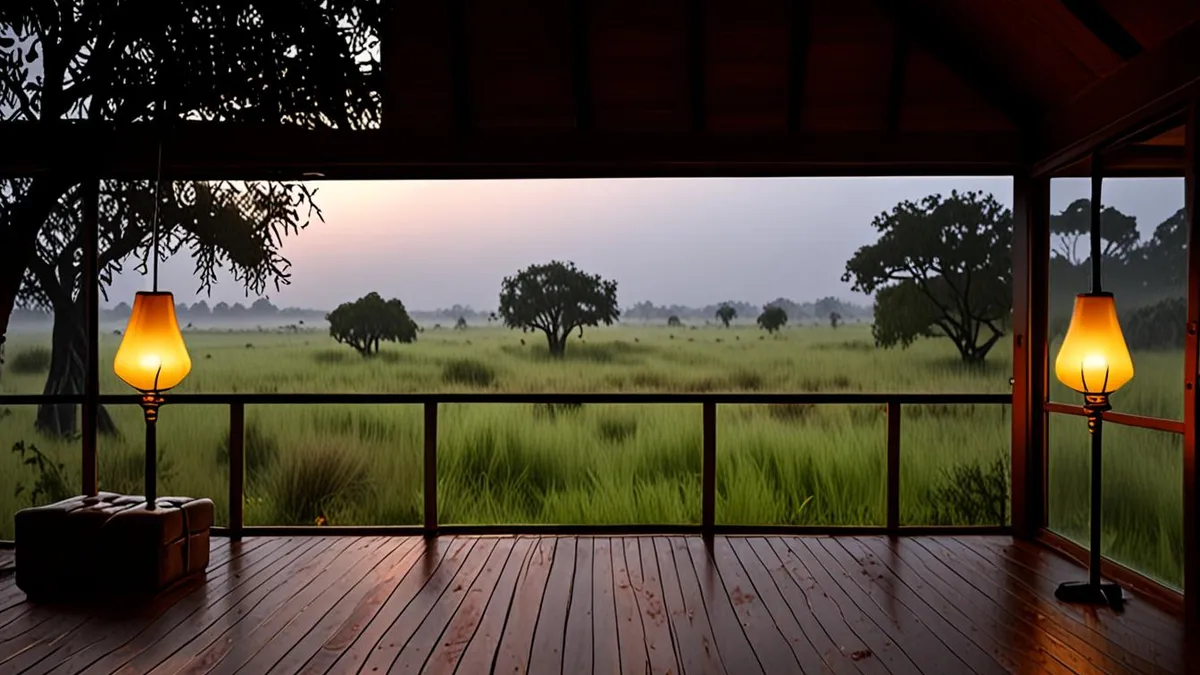
Safari lodges take this even further. During the November to March green season, rates often drop 30-50% below dry-season prices. The reason is straightforward: rain makes game viewing harder, with animals scattered by water sources and hidden by thicker vegetation. Lodges compensate by making the price very attractive.
There’s a quieter benefit too, one that has nothing to do with money. Lower occupancy means fewer guests sharing the lounge, the dining room and the viewing deck. Staff have more time per guest, so you’re more likely to get personal recommendations, flexible meal times and genuine conversation with guides rather than a rushed, assembly-line experience.
The Main Advantages of Traveling Off-Season
The most practical advantage of traveling off-season is simply getting the room you want. In peak season, popular lodges fill their best rooms many months in advance, and you often need to plan 6-9 months ahead to have a real choice of view, layout or corner suite. Off-season, the picture flips: booking 2-3 months ahead is usually enough to secure good availability, and sometimes you can decide on much shorter notice, which makes spontaneous trips far easier to pull off. It also means you can be picky in ways peak-season travelers can’t, asking for the quiet side of the lodge or the room with the best morning light rather than taking whatever is left. If you’re building a booking strategy around dates and rates, our guide to when to book lodge stays by season and price breaks the timing down in more detail.
The landscape itself changes the case too. Green season isn’t just a discount label; it transforms what you see and photograph, and it changes the rhythm of your days at the lodge. And with fewer guests around, staff have room to be generous in ways they simply can’t at full capacity, from lingering conversations over dinner to guides who tailor a drive entirely to your interests.
- Newborn animals on safari: the green months coincide with birthing season for many species, so you may see young antelope, zebra foals and predator activity around vulnerable herds that simply isn’t present in the dry season.
- Dramatic skies for photographers: clearing storms, moody cloud banks and soft post-rain light give landscape photographers conditions that the flat, hazy light of high season rarely matches.
- Lush, refreshed scenery: after rains, dry and dusty reserves turn green, waterfalls run full and mountain slopes regain color that peak-season visitors never see.
- Room choices and upgrades: with low occupancy, lodges can often move you to a better room, honor requests for specific views or layouts, and be flexible about check-in times, because they’re not juggling a full house.
The Drawbacks: Weather, Daylight and Closures
Now for the part of the deal you need to take seriously. Off-season prices are lower for real reasons, and in mountain regions the biggest one is weather. Shoulder months bring rain, early snow or mud on the trails, and the days are dramatically shorter. While midsummer gives you 15 or more hours of light, off-season mountain months offer only 8-9 hours, which compresses your hiking, sightseeing and terrace-sitting time into a narrow window. For a fuller picture of what each month feels like on the ground, see our guide to Rocky Mountain lodge stays and what to expect in every season.
Full closures, not just quiet lodges
The bigger surprise for many travelers is that some lodges don’t operate at all in the off-season. Many alpine properties close entirely in November and April, the gap between the winter and summer seasons, when neither skiers nor hikers arrive in useful numbers. Your dream lodge may simply have its doors shut during your dates, so always check the opening calendar before you fall in love with a rate.
The green-season trade-offs on safari
Safari lodges stay open through the green season, but the downsides are real. Thick vegetation makes spotting animals harder, insects are far more active after the rains, and occasional heavy downpours can disrupt or shorten game drives. None of this ruins a trip for the right traveler, but it does mean you should arrive with realistic expectations rather than dry-season ones.
Reduced Services and Facilities to Expect
Off-season rates come with a trade-off: lodges often scale back what they offer when only a handful of rooms are occupied. At smaller properties, this can mean a set dinner menu instead of à la carte, a single breakfast sitting time, or housekeeping that happens every other day rather than daily. None of this ruins a stay, but it changes the feel of it, so it pays to know in advance.
Facilities are the other area where cuts usually show up. A spa that runs full treatments in peak season might offer massage on request only, and guided activities can be reduced to one departure a day instead of two or three. Shuttle services between the lodge and trailheads or nearby towns are especially prone to reduced schedules, since running a vehicle for two guests rarely makes sense for the operator.
- Meal service: some lodges switch to a fixed menu or close the restaurant one or two nights a week at low occupancy, so ask whether the kitchen runs every day of your stay.
- Pools and hot tubs: heated outdoor pools are sometimes drained or covered in the coldest months, and maintenance work often happens off-season while few guests are around.
- Guided activities: naturalists, guides and activity leaders may be seasonal staff who are off contract in quieter months, meaning fewer or no guided options.
- Front desk hours: small lodges sometimes run with a skeleton crew, which can mean later check-ins or no overnight reception cover.
The simple fix is an email before you book. List the facilities that matter most to you and ask specifically whether each one operates during your exact dates. A lodge that answers clearly and honestly is usually a lodge worth booking.
Where Off-Season Lodge Stays Work Best
Off-season lodge stays are not for everyone, but certain travelers get far more out of them than others. If you know which type of visitor you are, you can decide quickly whether the lower prices justify the trade-offs.
Safari green season for photographers and repeat visitors
The green season at safari lodges, typically from November to March, rewards travelers who have already done the classic dry-season trip. Sightings take more work because thick vegetation hides animals, but the landscapes are at their most photogenic: dramatic skies, fresh green grass and newborn animals everywhere. Photographers who care more about mood and scenery than a guaranteed big-cat sighting often prefer these months, and repeat visitors enjoy seeing a familiar reserve look completely different.
Alpine shoulder months and mild off-seasons
Mountain lodges in the periods just before and after the summer season suit hikers who accept changeable weather and shorter days. Trails are quieter, rates are lower and the light can be beautiful, but you need to be comfortable turning back when conditions shift. If that sounds appealing rather than frustrating, the shoulder season is a good fit.
Then there are destinations where the off-season is mild enough that very little closes. The Scottish Highlands are a good example: lodges there generally stay open year-round, and winter brings moody landscapes, empty roads and cozy fireside evenings. If you are new to the region, our guide to Scottish Highlands lodge stays for first-time visitors covers what to expect. Choosing a destination with a gentle off-season is the easiest way to enjoy lower prices with fewer compromises.
How to Book an Off-Season Lodge Stay
Booking an off-season lodge stay takes slightly more effort than booking a peak-season trip, but those extra steps are exactly what turn a discounted rate into a genuinely good deal. Because low-occupancy periods can also mean reduced services, the details you confirm before paying matter more than they would at the height of the season. Follow the sequence below and you will avoid the most common surprises.
- Start earlier than you think. Off-season dates are usually easier to secure than peak ones, so you have more room to compare lodges, ask questions and wait for written answers without rushing your decision.
- Email the lodge directly. Confirm the exact opening dates for your travel window and ask whether the lodge runs at full service or with reduced staffing, meals and activities during your stay.
- Ask about each facility you care about. Name the spa, pool, guided activities or shuttle specifically, and get written confirmation of what operates on your dates rather than relying on website descriptions that may reflect peak season.
- Read the cancellation terms carefully. Shoulder-season weather is less predictable, so a flexible rate that costs a little more is often worth the premium in case you need to shift dates at short notice.
- Pack for the season, not the brochure photos. Waterproof layers, sturdy footwear and warm kit matter far more off-season than in peak months, even if daytime temperatures look mild on average.
One final habit worth building: keep a copy of the lodge’s written confirmations alongside your booking details. If a facility or service turns out not to be available when you arrive, that record makes any conversation about refunds or adjustments much simpler. It also starts the discussion from a fair position for both sides, since you can point to exactly what was promised and when. A few saved emails rarely take up space, but they can save a whole vacation.
Are Off-Season Lodge Stays Worth It?
So, are off-season lodge stays worth it? If you are flexible, they usually are. Savings of 20-40% on the same rooms are hard to argue with, and the trade-offs — changeable weather, 8-9 hours of daylight instead of 15+, and reduced services — are manageable if you know about them before you book. They suit photographers, repeat visitors and anyone with loose plans far better than first-timers on a tight schedule who need everything to work.
The deciding factor is preparation. Check that the lodge is actually open in your dates, confirm which facilities and activities will run, and book with flexible cancellation terms so a stretch of bad weather doesn’t cost you. Do that, and the lower rates genuinely pay off. Have you tried an off-season lodge stay? Share your experience in the comments, or pass this article along to a travel partner who needs convincing.