You know you want a glamping trip. The problem? Deciding where. A glamping location shapes everything about your stay, from what you pack to how much you pay, and mountains, coast and desert each deliver a very different experience. Pick the wrong terrain for your season or travel style, and even a luxurious safari tent can feel like a compromise.
This guide walks through the practical differences: what each terrain actually offers, how seasons affect availability and price, and what to expect from stays that generally run between about $100 and $500 per night. We’ll compare costs and stay types by terrain, look at how remote or accessible each option tends to be, and help you match the setting to the way you like to travel. By the end, you should know exactly whether your next night under canvas belongs in the mountains, on the coast or out in the desert.
How to Choose a Glamping Location: Start With Your Season
Before you fall in love with a photo of a glass dome or a clifftop tent, work backwards from your travel dates. Terrain and weather are the first filter, and they matter more than any amenity. Get the season wrong and even the most beautiful site becomes uncomfortable — or simply unavailable.
The natural window for each terrain
Mountains work best from June to September, when trails are clear and nights are manageable. Coastal glamping peaks in July and August, which is when the beach weather is most reliable and demand is highest. The desert flips the script entirely: its sweet spot runs from October to April, when daytime temperatures sit around 20-30°C instead of the punishing summer highs.
That desert timing deserves special attention. In summer, temperatures regularly exceed 40°C, and many desert sites either close or reduce their services because running tents at those temperatures is impractical. If your trip falls between May and September, the desert is usually the terrain to skip — check with individual operators before assuming a site is open.
Why shoulder months work everywhere
If your dates are flexible, June and September are the quiet achievers. Along the coast, these shoulder months bring lower prices and fewer crowds while the weather stays usable for beach days. They also line up nicely with the tail ends of the mountain and desert seasons, meaning you can often get good conditions in all three terrains without paying peak rates. Wherever you land, popular sites in high season still tend to require booking 3-6 months ahead, so lock in dates early.
Glamping in the Mountains: What to Expect
Mountain glamping delivers crisp air and big views, but the altitude works both ways. Even on a warm summer day, nights at elevation often fall to 10-15°C, and that chill arrives quickly once the sun drops. Before you book, check whether the tent includes heating or a wood stove, and ask what bedding is provided. A dome that feels romantic in photos can feel bleak at midnight without either.
If hiking is the main goal, treat drive time to trailheads as a deciding factor. Many mountain sites sit 20-60 minutes from the trailheads you’ll actually want, so map the route before committing rather than trusting “close to hiking” in the listing. Road access also matters in the shoulder months: some mountain roads are unpaved, gated or poorly maintained, and a site that’s easy to reach in July can be a muddy, slow drive in late September. Email the host and ask directly about the road in the weeks you plan to travel.
The standard mountain season runs roughly June to September, but insulated domes and cabins stretch that window comfortably into the colder months. If you want snow rather than wildflowers, prioritize insulation, proper heating and a host who operates year-round. For a real-world example of a cold-season mountain trip done well, see this guide to glamping in Patagonia and when to go.
- Ask about water pipes and plumbing in cold months. Heated tents still freeze up if the water supply isn’t winterized, so confirm showers and sinks work if you’re booking outside the summer window.
- Check how firewood is supplied. Some hosts include a daily bundle with your stay, while others charge per crate or leave you to source your own, which changes both the cost and the convenience.
- Look at the tent’s orientation and windows. A dome facing east catches morning sun that warms the interior naturally, while a shaded site under trees may stay cold all day.
- Confirm mobile signal or Wi-Fi before relying on it. Valleys and steep slopes create dead zones even a short drive from town, which matters if you need to check weather or trail conditions daily.
Glamping on the Coast: What to Expect
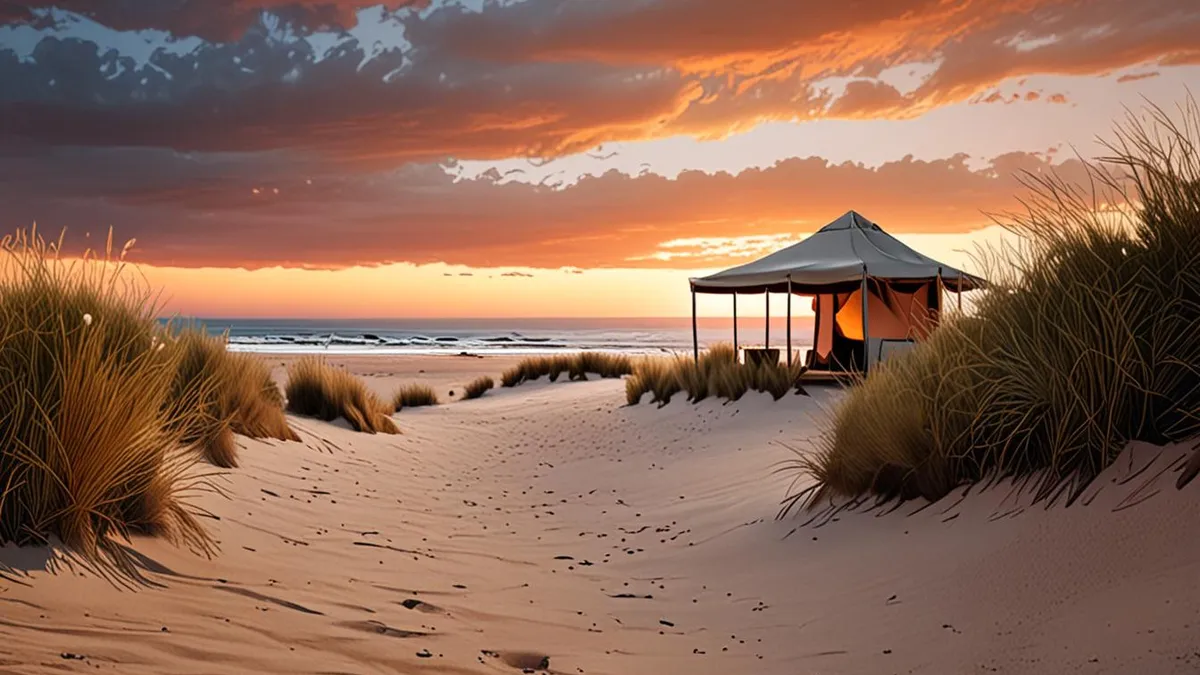
Coastal glamping is the easiest of the three terrains for spontaneous days out. Most sites sit within walking distance of the beach, so you can leave your tent after breakfast, wander down for a swim, and head back for lunch without ever getting in the car. That walkability is the main reason families and first-time glampers tend to gravitate toward the coast.
The trade-off is demand. Coastal glamping peaks in July and August, when both prices and crowds hit their high point, and popular sites often need booking 3-6 months ahead for those peak-season dates. If your schedule allows it, the shoulder months of May, June and September typically bring lower rates and quieter beaches while the weather is still perfectly usable for sand and sea days.
Before you book, look closely at how exposed the site is. Clifftop and dune locations deliver the best views but also catch the brunt of coastal gusts, and flapping canvas can ruin a night’s sleep. Wind exposure is one of the most common weak points at beachside sites, so it pays to ask a few questions before committing.
- Ask how tents are anchored. Well-run coastal sites stake or strap their tents specifically for sea gusts; if a host can’t explain their setup, treat that as a warning sign.
- Check the tent’s orientation. Units angled away from the prevailing onshore wind stay calmer at night, while those facing open water may rattle all evening.
- Look for windbreaks on the map or photos. Dunes, hedgerows, or tree lines between your tent and the shore make a noticeable difference to comfort.
- Bring sand-friendly footwear and gear. Fine sand works its way into everything, so sealed bags and easy-rinse shoes save hassle over a multi-night stay.
- Traveling with a dog? Beach access rules for pets vary by site and season, so check whether glamping sites are pet-friendly before you book.
Glamping in the Desert: What to Expect
Desert glamping rewards travelers who plan for temperature swings. In season, daytime temperatures sit around 20-30°C, which sounds comfortable until the sun drops. Nights can fall below 10°C even in spring and autumn, so warm bedding matters year-round. Before booking, ask the site directly whether tents include heating, extra blankets or a wood stove, and whether those come at no extra cost.
Remoteness is the second big factor. Desert sites often sit 30-90 minutes from the nearest town or airport, which is part of their charm but also part of their logistics. Check the actual drive time rather than trusting a map estimate, since desert roads can be unpaved or slow. Ask whether the site sells or provides basics like water, firewood and snacks, because a forgotten item can mean a long round trip.
Mobile coverage deserves a specific question, not an assumption. Some desert locations have reliable signal while others have none at all, which affects both navigation and emergencies. Download offline maps before you leave and share your itinerary with someone at home.
- Book for October to April: this is the sweet spot, when days are pleasant and sites run at full service; summer stays are often impractical or unavailable.
- Watch for bundled extras: many desert sites include stargazing setups, guided walks or meals, which changes what you’re actually paying for.
- Expect the best value: outside holiday periods, desert glamping is usually the most affordable of the three terrains, so your budget stretches further.
- Pack for darkness: with little light pollution, a headlamp and warm layers for evening stargazing make a real difference.
Comparing Costs and Stay Types by Terrain
Glamping prices vary widely, but a useful planning range is roughly $100 to $500 per night across all terrains. Where you land within that range depends on three things: terrain, stay type and season. Mountain domes and coastal safari tents tend to sit at the higher end, especially in peak months, while simpler bell tents and basic yurts usually come in lower.
Stay type matters as much as location. Yurts and bell tents suit milder conditions, which makes them a good fit for coastal trips and mountain summers. Insulated domes are the pick for desert nights and cold-season stays, because their solid construction and often built-in heating handle temperature swings far better than canvas. If you’re weighing the options, this comparison of glamping domes, safari tents and yurts breaks down the practical differences in comfort, insulation and price.
What’s Actually Included in the Rate
Remote desert sites often bundle meals or guided activities into the nightly rate, which changes the true per-night comparison. A $200 desert stay with dinner, breakfast and a guided excursion included can cost less overall than a $150 coastal tent where you’re cooking for yourself and paying separately for activities. Compare what each rate covers before judging on price alone, and check whether extras like heating, firewood or bedding upgrades carry additional charges.
Matching the Location to Your Travel Style
The right terrain depends less on the landscape itself and more on who’s traveling. A clifftop dome that feels romantic for two can feel cramped and exposed for a family of four, and a remote desert site that thrills adventurers may exhaust parents managing young kids. Match the location to your travel style first, then narrow down within it. It also helps to be honest about comfort thresholds: if you know you struggle with cold nights or long drives, pick a terrain and stay type that spares you both.
Honeymooners generally do best with coastal and desert sites, which offer privacy and sunset views that mountains can’t always match. Desert sites in particular tend to sit 30-90 minutes from the nearest town, which keeps things quiet if remoteness appeals to you. Families usually find the coast the easiest option, since many sites sit within walking distance of beaches, meaning no long car transfers with tired kids. Adventure seekers should head for the mountains, which give the best access to hiking and climbing, but verify how far you’ll actually drive to trailheads before booking.
Whatever your style, ask specific questions before you pay. Vague marketing photos rarely show the practical details that make or break a stay, so put these questions to the host directly:
- Honeymooners: check for ensuite bathrooms and adults-only policies, since sharing a communal washblock or hosting a family reunion next door can undo the romance quickly.
- Families: confirm family-friendly layouts, such as separate sleeping areas for kids, and ask about on-site safety like fencing near water or steep drops.
- Adventure seekers: ask the host which trailheads are reachable within a short drive and whether they can advise on local guides or equipment rental.
- Mixed groups: look for sites with multiple unit types, so less hardy travelers get an insulated dome while others opt for a simpler tent.
Mountains, Coast or Desert: Which Should You Pick?
If your trip revolves around hiking and you want cool nights, the mountains are your match, with a season that typically runs June to September. If you want the simplest all-rounder with beach days on tap, pick the coast, aiming for July and August or saving money in the shoulder months of May, June and September.
The desert is the value pick, with the best rates and incredible star skies from October to April, as long as you can handle remoteness and nights that can drop below 10°C. Match the terrain to your season, budget and travel style, and the choice usually makes itself. Still torn between terrain? Tell us your trip plans in the comments or share this article with a friend who needs help deciding.