Dreaming of a night under desert stars but unsure when to go, what it costs and how comfortable a luxury tent in the Sahara or Wadi Rum really is? You’re not alone. Desert glamping in Morocco and Jordan looks effortless in photos, but the reality involves long 4×4 transfers, freezing winter nights and camps that operate seasonally. Knowing these details before you book makes the difference between a magical trip and a frustrating one.
This guide walks you through everything worth knowing. We’ll compare Merzouga’s dunes with Wadi Rum’s sandstone valleys, break down the best seasons for a comfortable stay, explain what traditional and luxury camps actually include, and cover realistic costs, booking tips and a practical packing list. By the end, you’ll know which desert suits your route, how far ahead to reserve and what to expect once the sun goes down and the stars come out.
Why Desert Glamping in Morocco and Jordan Is Different
Desert glamping in Morocco and Jordan is nothing like staying at a safari lodge or a countryside resort. These camps sit deep in the dunes or valleys, typically 30–60 minutes from the nearest village, and many can only be reached by 4×4 or, in some cases, by camel. That remoteness is the whole point — but it also shapes everything about your stay, from how you arrive to what happens if you forget something at home.
Expect real temperature swings
The desert is a land of extremes. A day that feels pleasantly warm can turn sharply cold after sunset, and in December and January nights can drop close to 0°C. Camps provide blankets, but you’ll want proper layers, especially for dinner and stargazing outside the tent.
Seasonal camps and simple pleasures
Many camps are seasonal operations. From June to August, when daytime heat becomes intense, a large number close entirely or run a reduced service, so availability and comfort levels vary by month. Don’t expect pools, spas or extensive on-site facilities either. The experience revolves around what the desert itself offers: stargazing on some of the darkest skies you’ll ever see, climbing dunes at sunrise, and the rare silence of a landscape with no roads, no traffic and no light pollution. If you go knowing that, you’ll love it.
Best Time to Go: Seasons and What to Expect
Timing makes or breaks a desert glamping trip. The prime window runs from October to April, when daytime temperatures sit at a comfortable 20–28°C — perfect for dune walks, camel rides and long dinners under the stars. Outside this window, conditions change quickly, so it pays to know what each month brings.
December and January deserve special mention. The skies are often at their clearest, making stargazing superb, but nights can drop near 0°C. Pack warm layers — a fleece, a proper jacket and thick socks — because you’ll want them the moment the sun sets. If you’re traveling with a pet or wondering which camps accommodate animals, it’s worth reading up on how to find out whether a glamping site is pet-friendly before you book.
Spring has its quirks too. March and April can bring occasional winds and a sandy haze that softens the light and occasionally interrupts the views. And summer? Simply avoid it.
- June to August: daytime heat regularly exceeds 40°C, and most camps close or run a reduced service, so choices shrink dramatically.
- October and November: among the most popular months, with stable weather — but that popularity means tents sell out fastest.
- December to February: the coldest stretch, ideal for crisp stargazing if you’re prepared for near-freezing nights.
- March and April: warm days but a higher chance of wind-blown sand, so pack a scarf or shemagh.
Where to Base Yourself: Merzouga vs Wadi Rum
Both destinations deliver unforgettable nights in the desert, but they offer very different landscapes and travel logistics. Choosing between them comes down to your route, your budget of time and how long you can stay.
Merzouga and the Erg Chebbi dunes
Merzouga, on Morocco’s eastern edge, is the gateway to Erg Chebbi, a sea of tall, photogenic dunes. Camps here are reached by 4×4 from the village, and the journey itself — bouncing over sand tracks as the dunes rise around you — is part of the experience. The trade-off is distance: Merzouga lies about 8–9 hours by road from Marrakech, so most travelers build it into a multi-day loop through the Atlas Mountains rather than a quick side trip. That extra travel time is exactly what keeps the dunes feeling remote, and it pairs naturally with stops in mountain towns and kasbah country along the way.
Wadi Rum’s valleys and domes
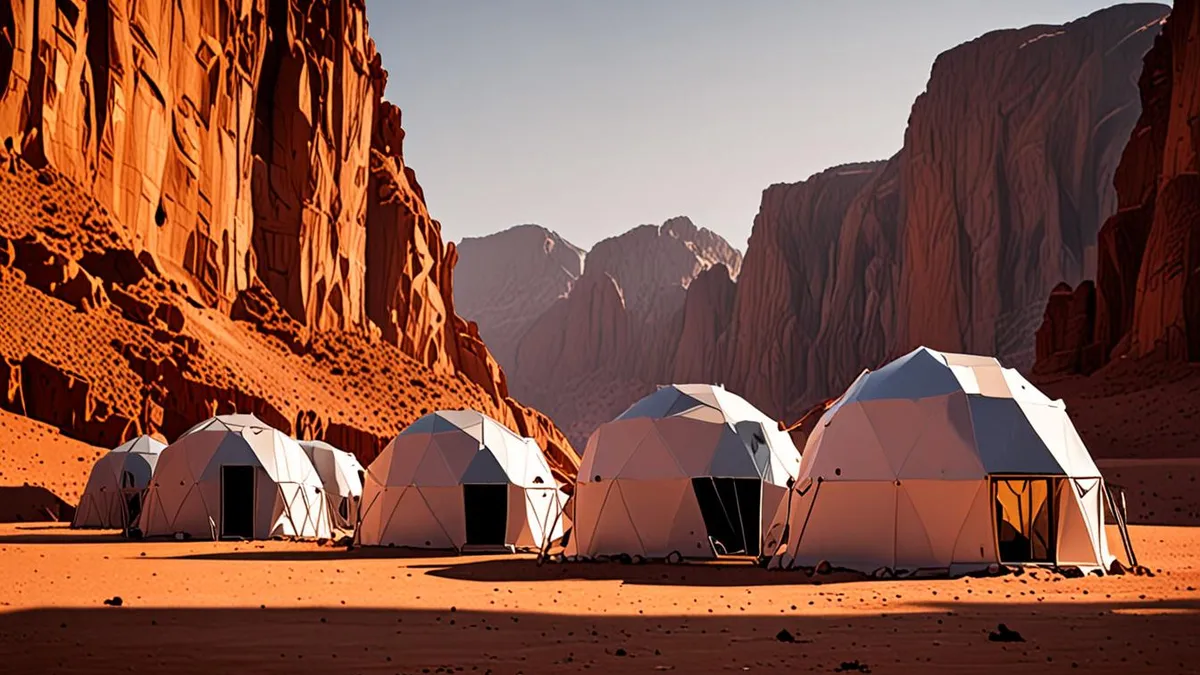
Wadi Rum in Jordan offers a completely different kind of drama: vast sandstone valleys, natural arches and towering rock domes that have doubled for Mars in films. Camps sit 15–45 minutes from the visitor center, making transfers shorter than in Morocco. Logistics are easier too — Wadi Rum is about a 4–5 hour drive from Amman, or roughly a 1-hour flight, which makes it a natural fit for shorter add-on trips alongside Petra or the Dead Sea. You can realistically arrive in the afternoon, watch the sun set behind the rock formations and still be back on the road the next morning. If your time is limited, Wadi Rum is usually the simpler choice; if you’re planning a longer Moroccan road trip, Merzouga rewards the extra days it demands.
Types of Desert Camps and What You Get
Desert camps in Morocco and Jordan come in two broad styles, and the difference shows up quickly in both comfort and price. At the lower end of the $100–$400 range, you’ll find traditional Berber-style tents: thick woven rugs on the floor, low beds, candle or lantern lighting and bathrooms in a separate block shared with other guests. They’re simple, atmospheric and often the most authentic option.
At the top end, luxury safari tents and geodesic domes add real beds, proper furniture, heating or fans and en-suite bathrooms. Expect to pay roughly 30–50% more for these en-suite units. If you’re weighing the two styles, it helps to read up on how glamping domes, safari tents and yurts differ from each other before you commit to one.
Infrastructure is where desert camps differ most from hotels. Most run on solar power, so electricity is limited to evening hours, and remote spots have no Wi-Fi at all. Meals are typically included: a slow-cooked tagine dinner in Morocco, or a zarb-style feast cooked under the sand in Jordan.
- Shared bathroom blocks: usually bucket-style or basic flush toilets a short walk from your tent, so bring a torch and a small toiletry bag for nighttime trips.
- En-suite bucket showers: even in luxury tents, water is often heated by solar or gas and delivered as a bucket shower — hot but brief, so shower early before the evening rush.
- Charging points: many camps offer a single charging station near reception rather than outlets in every tent, so bring a power bank for cameras and phones.
- Common areas: luxury camps typically add a fire pit, lounge tent or rooftop terrace where dinner and stargazing happen, which matters more than the tent itself for the overall experience.
- Drum sessions and entertainment: some Moroccan camps include evening Gnawa drumming around the fire; ask when booking if you’d prefer a quieter stay.
Costs and How to Book
Desert glamping is often more affordable than travelers expect, and most camps bundle dinner and breakfast into the nightly rate. That matters more here than in most destinations, because the nearest restaurant can be an hour away and there are no alternatives once you are at camp. If you want to see how desert tents compare with safari lodges, domes or treehouses, this breakdown of how much glamping costs by stay type is a useful reference.
Booking and timing
Peak months are October, November, March and April, when the weather is at its best and availability tightens fast. Book 2–3 months ahead for these periods, especially if you want a specific camp or an en-suite tent. In quieter months you can often book closer to your dates, but popular camps still fill up around holidays.
Transfers and deposits
One detail catches travelers out: the 4×4 transfer from Merzouga village or the Wadi Rum visitor center is sometimes charged separately from the nightly rate. Confirm this when booking so you know the true total, and ask whether the transfer is shared or private, since that can affect both cost and departure time.
Also read the cancellation terms carefully. Remote camps often require a deposit to hold your tent, and their policies can be stricter than city hotels because a cancelled booking is hard to refill. If your itinerary might shift, look for camps with flexible rebooking rather than the lowest price.
What to Pack for a Desert Night
Packing for a desert night is all about layers. Days can push past 25°C even in winter, while December and January nights drop near 0°C — and you’ll be sitting outside around a fire for hours, feeling every degree. Think in three layers: a t-shirt for the afternoon, a fleece or sweater for sunset, and a warm jacket or down layer for after dark. A beanie and light gloves take up almost no space in your bag but make a huge difference once the sun goes down.
The sun and sand deserve just as much attention as the cold. A scarf or shemagh protects your face and neck when the wind picks up, and sunscreen and sunglasses are essential from mid-morning onward. Sand finds its way into everything, so a small bag or stuff sack for electronics helps, and a bandana or buff keeps grit out of your camera and mouth on windy days. After dark, camps have minimal lighting, so a headlamp is non-negotiable.
- Scarf or shemagh: a light cotton one doubles as sun protection by day and an extra neck layer at night; locals wear them for good reason.
- High-SPF sunscreen and lip balm: there’s almost no shade on the dunes, and lips crack fast in dry desert air — reapply through the afternoon.
- Headlamp or torch with spare batteries: paths between tents are unlit, and phone flashlights drain quickly in the cold.
- Refillable water bottle: you’ll drink more than you expect in dry air, and camps can refill from large jugs rather than single-use bottles.
- Moisturiser: skin dries out noticeably overnight; a small tube of face and hand cream makes a real difference by day two.
- Closed shoes: sand gets everywhere, but sneakers or light boots handle cold sand at night better than sandals.
Planning Your Desert Glamping Trip
A night under desert stars is far more comfortable than most people imagine: luxury tents and domes come with real beds, en-suite bathrooms and hearty dinners, all within a typical range of $100–$400 per night including breakfast and dinner. The key decisions come down to three things. First, choose between Morocco’s dune landscapes around Merzouga and Jordan’s rock valleys in Wadi Rum based on your route and the time you have available. Second, travel between October and April, when daytime temperatures are pleasant, and reserve 2–3 months ahead for the busiest months of October, November, March and April.
Third, match your camp type and budget within that $100–$400 range before confirming transfers, since 4×4 rides from the nearest village or visitor center are sometimes charged separately. Get those three pieces right and the rest — the silence, the stars, the dunes at sunrise — takes care of itself. Have you slept in a desert camp in Morocco or Jordan? Share your experience in the comments, or pass this article along to a travel companion.