Booking glamping for large groups sounds like an easy win until you start phoning sites. Suddenly a “sleeps 30” listing turns out to mean several separate units, each priced individually, with a group cap buried in the FAQs and a minimum stay nobody mentioned on the phone. If you are planning a trip for eight or more people, the usual browse-and-book approach rarely works.
This guide walks you through the whole process step by step. We cover which site types actually suit big groups, what a multi-unit weekend typically costs per person, how far ahead to book and what minimum stays to expect, and the group rules worth checking before you pay a deposit. We also compare the best UK regions and seasons, explain how to vet a site properly, and finish with a simple checklist for pulling the whole trip together without last-minute surprises.
Which Site Types Work Best for Glamping for Large Groups
Not every glamping site is built for a group of ten. Some of the most photogenic stays — a single treehouse, a one-off yurt on a farm — sleep only a handful of people, which means half your group ends up twenty minutes down the road at a different property. For a proper group trip, you want everyone waking up on the same site.
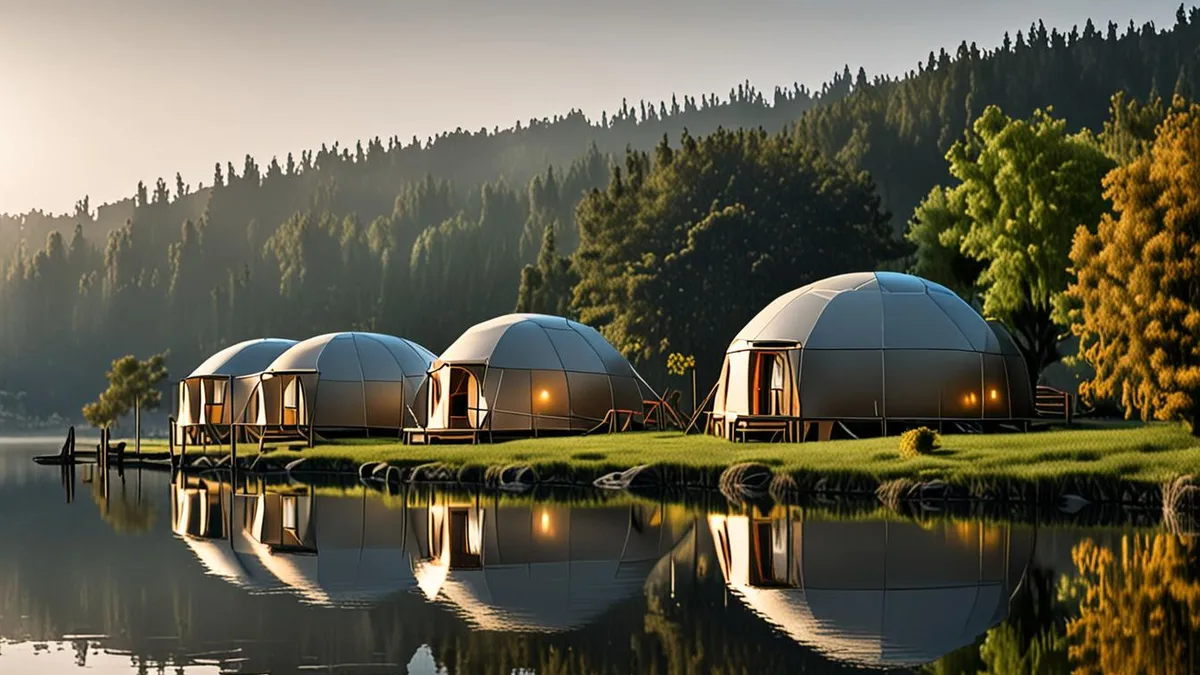
Safari tent camps and dome villages are usually the best fit. At these sites, units sit close together on one site, often arranged around a shared lawn or courtyard, so your group can move between tents without driving anywhere. Most units sleep two to six people, so a group of eight or more will still need to book several units — but at a camp-style site, those units are neighbors rather than separate bookings scattered across a region.
Why exclusive hire changes everything
The strongest option is a site offering exclusive hire, where your group gets all the units and shared facilities to itself. You are not sharing a fire pit with a stag party you have never met, and you can plan meals, games and late evenings without worrying about neighbors. Some sites only allow large groups to book on an exclusive basis anyway, so it is worth asking early in your search.
Shared facilities matter just as much as the units themselves. A communal barn, covered dining shelter or large fire pit makes group meals and evenings far easier — cooking for twelve around individual tent stoves gets old fast. Look for sites that advertise a group kitchen, long dining tables or a barn you can use in wet weather, because in the UK you will almost certainly need it.
One rule of thumb: avoid single-unit stays like standalone treehouses or one-off yurts unless you deliberately plan to split across nearby sites. They suit couples’ weekends, not group trips.
How Much Group Glamping Costs Per Person
The first question every group organizer asks is the same: what will this actually cost per person? For a multi-unit glamping weekend in the UK, a realistic starting point is £1,500-£4,000 per weekend for a group of 8-12 people in peak season. That range is wide because it covers everything from basic bell tents to high-spec safari tents with private bathrooms, and it assumes you are booking several units rather than one.
Per-person figures vary just as much. A £2,000 weekend split across twelve people is very different from the same total split across eight, so work out your headcount before comparing sites. If you want a broader picture of how different stay types are priced, this glamping cost breakdown by stay type is a useful reference point before you start collecting quotes.
There is also good news in how you book. Booking several units at one site usually works out 10-20% cheaper per person than making separate bookings, because sites save admin time and prefer filling their whole calendar with one group. But pricing models differ: some sites quote a single group rate, others charge per unit, and a few add a per-head surcharge for extra guests beyond a unit’s base occupancy.
- Group rate vs per-unit rates: ask directly which model the site uses. A single group rate can be easier to split fairly, while per-unit pricing rewards groups that fill every bed.
- Extra-guest charges: some units price on two adults and add fees for a third or fourth sleeper, so a “cheap” unit can grow once your full headcount is counted.
- What is included: check whether bedding, towels, firewood and use of a communal kitchen or barn are in the price or charged as extras, since these add up across a large group.
- Deposit terms: sites often ask for a larger deposit on multi-unit bookings than on single stays, which affects how much you collect from the group up front.
Timing is the biggest lever of all. Off-peak weekends in September-October or April-May can cut the total by 20-40%, which on a £3,000 booking is the difference between a stretch and an easy split. If your group can travel outside the school summer holidays, you will usually get better units for less money.
Booking Lead Times and Minimum Stays for Groups
Group bookings run on a different clock to a weekend for two. The more units you need, the earlier you should be talking to sites, because availability for large parties disappears fast and sites often want to deal with one point of contact rather than ten separate guests. The more important it becomes to get the terms in writing before you start collecting money from friends, since chasing half a dozen people for deposits is stressful enough without unclear cancellation terms on top.
- Reserve 3-6 months ahead for peak-season trips. For group travel in June-August, most sites need 3-6 months of lead time, and exclusive-hire weekends often go earlier still because you are taking the entire site off the market. If your dates are fixed around a birthday or anniversary, book as soon as you can.
- Expect a minimum stay. Many sites enforce a 2-3 night minimum stay for multi-unit bookings, especially on weekends, so a single Saturday night is usually not an option for a large group. Factor the extra nights into everyone’s leave and budget before you commit.
- Ask for one group contract. Request a single contract covering all units so cancellation terms apply consistently to everyone, rather than each unit having its own booking with its own small print. This also makes refunds simpler if one person drops out.
- Pay the group deposit up front. Confirm the balance deadline in writing before circulating costs to the group, so you know exactly when you need everyone’s share collected. Build in a buffer week for late payers.
- Put the details in writing to the site. A short email confirming unit numbers, dates, headcount and any agreed group rate protects you if staff change or prices shift between deposit and balance. Keep the thread handy in case questions come up later.
One more thing to settle early: if anyone in your group wants to bring a dog, ask about pet policies at the same time as you agree dates. Rules vary widely between sites, and some units within the same site may have different pet terms, so confirm which specific units allow animals before assigning beds. It is far easier to check whether a glamping site is pet-friendly before you sign a group contract than to renegotiate afterwards, and a last-minute kennel booking rarely suits anyone.
Group Rules to Check Before You Commit
Group size limits are the first thing to pin down. Many sites cap groups at 10-20 people, and once you go above that threshold they often require exclusive hire, meaning you book every unit on site. If your headcount is close to a cap, ask the host directly rather than assuming you can squeeze in two extra campers.
Noise is the next big one. A group of a dozen friends celebrating a birthday can easily fall foul of a site’s quiet-hours policy, and some hosts will end a stay early if rules are broken. Get the specifics in writing before you pay any deposit, and share them with the whole group so nobody is surprised at 11pm.
Before you commit, run through this checklist with the site owner:
- Quiet hours and noise limits: ask exactly when quiet hours start and end, and whether there are decibel-based rules or simply a “no disturbance” expectation.
- Amplified music and fires: confirm whether speakers are banned outright, and whether large or open fires are allowed, or only raised fire pits in designated spots.
- Day visitors: if friends or family are joining for the day but not staying overnight, check whether visitors are permitted, if there is a per-head charge, and how many the site allows at once.
- Parking: ask how many cars the site can hold, whether each unit has its own allocated spaces, and whether overflow parking exists if your group arrives in eight or nine vehicles.
Getting these answers early protects both your booking and your deposit. A site that answers clearly and willingly is usually a site that hosts groups regularly and knows what to expect.
Choosing a Region and Season for Your Group Trip
The good news for UK group trips is that you have real choice. The South West, the Lake District and Scotland offer the widest selection of multi-unit glamping sites, from safari tent camps to dome villages, so you can usually find somewhere that fits both your budget and your headcount.
Season matters just as much as location. June to August gives you the best chance of good weather, but it also brings the highest prices and the tightest availability for large groups, since you are trying to secure several units at once. If you want the same trip for less money, aim for the shoulder months of May, September or early October, when milder weather often holds and group rates drop noticeably.
Match the region to your plans
Think about what your group actually wants to do. If you are planning hikes, a site near national park access in the Lake District or Scotland makes sense. If the trip is more about beach days and pub evenings, the South West coastline is hard to beat. For gentler weekends of countryside walks and long dinners, almost any rural region works.
It helps to compare regions side by side before you commit, and our guide to the best UK glamping regions compared breaks down what each area offers for different kinds of trips. Whichever region you pick, book early for summer dates, because large-group availability disappears fastest in the most popular areas.
Vetting a Site for a Large Group Stay
Not every glamping site is set up for a dozen people, so vetting is worth an hour of your time. Start with reviews, but read them with a filter: look specifically for comments from other group bookings. Those reviewers will tell you how the site handles noise, whether units feel cramped when full, and how responsive the hosts were when things went wrong.
Photos can be misleading about spacing, so go a step further before paying. Ask the site for a video call or a floor plan showing how far apart the units sit and where the shared facilities are. If the fire pit is right next to one tent and the showers are a five-minute walk from the others, you want to know before your group arrives, not after.
Bed configurations matter more than most groups expect. A unit advertised as sleeping six might mean two doubles and a sofa bed, which works for families but not for a mixed group of friends. Confirm the exact setup per unit, then assign beds before anyone pays.
- Ask about bedding and linen: check whether bedding and towels are included per guest or charged as an extra, since this affects your per-person costs.
- Confirm sleeping capacity honestly: ask whether the maximum occupancy per unit includes sofa beds or only proper beds, so nobody ends up on a fold-out they did not expect.
- Pet policy details: if someone is bringing a dog, confirm pets are allowed in the specific units you are booking, whether there is a pet fee, and if dogs must stay on leads around livestock.
- Group-specific facilities: ask whether the communal barn, fire pit or dining shelter is shared with other guests or reserved for your group, since this changes how easy group meals will be.
A site that answers these questions quickly and clearly is usually a safe bet for a large group. Evasive or vague answers are a signal to keep looking.
Putting It All Together
Planning a glamping trip for eight or more people becomes far less stressful once you know where the friction usually lies. Since most units sleep 2-6, larger groups will need to book several units or arrange exclusive hire of a whole site. For a summer trip, get your request in 3-6 months ahead, and before signing anything, check group caps, quiet-hours policies and minimum stays — these are the details that catch large groups out.
On money, a weekend for 8-12 people across multiple UK units typically falls in the £1,500-£4,000 range, and choosing shoulder months can trim that noticeably. Vet reviews from other group bookings, confirm bed layouts per unit, then circulate costs so everyone knows their share early. If this helped you plan your trip, leave a comment or share the article with your group chat.