Glamping in Portugal sounds like an easy win: comfortable tents and domes, beautiful landscapes and warm weather. The problem is that the country offers three very different regions, and they suit very different trips. Pick the Alentejo expecting beach days, or the Algarve hoping for silence and stars, and you may spend your holiday wondering what went wrong. Season matters just as much as region, since summer heat, crowds and prices change the experience dramatically.
This guide compares the three main glamping regions so you can match one to your travel style. We cover what makes each region distinct, when to visit the Alentejo for stargazing and wildflowers, how to handle Algarve high-season trade-offs, why the Douro Valley’s harvest season sells out fast, plus a quick decision guide, realistic costs and booking timing. By the end, you should know exactly which region to book and when.
Why Glamping in Portugal Differs by Region
Portugal is a compact country, yet its glamping regions feel like three different holidays. The Alentejo, stretching inland from Lisbon, is a world of vast open plains, cork oak forests and some of the darkest night skies in Europe. Sites here tend to sit on quiet farm estates, where the main soundtrack is wind through the trees rather than traffic or beach bars.
Coast versus countryside
The Algarve, in the far south, is Portugal’s coastal playground. Glamping sites here are the most numerous, sitting within easy reach of golden beaches, limestone cliffs and lively towns. If you want the widest choice of sites and the simplest access to restaurants, shops and the sea, this is where you’ll find it.
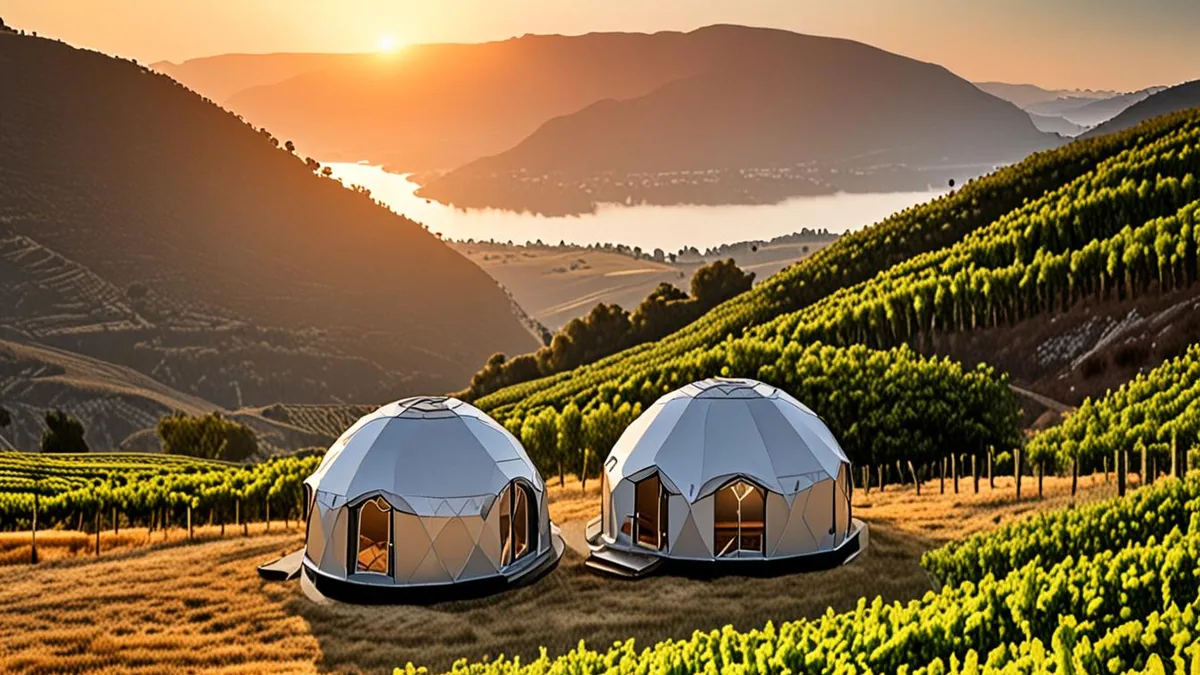
The Douro Valley, east of Porto, adds a third flavor entirely: terraced vineyards stacked above a winding river. Domes and cabins here often overlook wine country, and stays pair naturally with tastings, river trips and long dinners.
Matching region to travel style
The key is honesty about what kind of trip you want. Solitude seekers belong in the Alentejo, beach holidaymakers in the Algarve, and food and wine lovers in the Douro. Each region rewards a different pace, and the sections below break down seasons, costs and booking windows for each.
Alentejo: Quiet Plains and Stargazing
The Alentejo is Portugal’s slow lane: a vast inland region of rolling plains, cork oak forests and wheat fields, with far more stars than streetlights. Glamping here usually means safari tents and eco-domes set on working farm estates, roughly 1.5–2.5 hours’ drive from Lisbon. That drive filters out the crowds, which is precisely the point.
When to go
Plan for April to June or September to October. In July and August, the Alentejo interior often exceeds 35°C, which turns stargazing and estate walks into endurance sports. Spring is the region at its best: April brings wildflower meadows in full bloom, and the official Dark Sky area offers exceptional night skies, with the Milky Way clearly visible on clear nights.
Who it suits
This is a region for couples and slow travelers rather than families hunting for activities. Days revolve around estate life, long lunches, stargazing decks and quiet drives between whitewashed villages. If that sounds like your ideal trip, it’s worth reading up on what makes a site romantic and calm before booking; our guide to choosing a glamping site for a honeymoon covers the details that matter for a quiet escape for two. If your group needs constant entertainment, however, the Alentejo may feel too sparse.
Algarve: Coastal Glamping and High-Season Trade-Offs
The Algarve is where glamping in Portugal meets the beach holiday, and it’s the obvious pick if sand and sea are the point of your trip. The region has the widest choice of sites in the country, ranging from small tent pitches tucked behind dunes to larger resorts with pools, restaurants and kids’ activities. Many sites sit within a short drive of beaches, cliff walks and town centers, so you can mix nights under canvas with easy days out. The trade-off is popularity: beach season runs roughly May to early October, and July and August are the busiest and priciest months by far. If you can travel in June or September, you’ll often get near-summer weather with fewer crowds and calmer roads.
Rates reflect that demand. Expect roughly €80–150 per night in mid-season, rising to €150–300 or more per night in high summer, when even basic safari tents can double in price. Booking ahead matters more here than anywhere else in Portugal: reserve 4–6 months ahead for July and August stays, and 2–4 months ahead for shoulder months like June or September. Families should also check whether sites cap the number of children per tent, as some Algarve properties price extra guests separately.
What to check before you book
- Access to beaches and towns: some Algarve sites sit in the hills above the coast, so check actual driving times to your nearest beach and whether you’ll need a car for every trip.
- Shade and cooling: summer nights stay warm, but tents heat up fast in the afternoon sun, so look for sites with shaded decks, fans or air conditioning.
- Pet policies: if you’re traveling with a dog, don’t assume tent sites accept animals; this guide to finding out whether a glamping site is pet-friendly explains how to verify before you pay.
- Noise levels: sites near popular beach towns can be lively in high season, so if you want quiet, look for properties slightly inland or ask about the site’s layout when booking.
Douro Valley: Vineyard Domes and Harvest Season
The Douro Valley is Portugal’s most scenic glamping setting, and the timing of your trip matters more here than almost anywhere else. The two ideal windows are April to June, when the terraced hillsides are fresh and green, and the harvest season, which runs from late August to mid-October. Both offer comfortable daytime temperatures, but they deliver very different experiences.
Getting there is straightforward. The valley sits roughly 1.5 to 2 hours’ drive east of Porto, which makes it an easy add-on to a city break. Many travelers pair their glamping stay with a river cruise or visits to nearby quintas for tastings, so it’s worth planning a few days rather than a single night.
What the accommodation looks like
Unlike the Algarve’s wide mix of sites, the Douro is dominated by domes and cabins perched on terraced vineyards. The views over the river bends are the main draw, but be ready for the practical side: access roads can be steep and winding, and nights cool down noticeably even in summer. Pack layers for the evenings.
Harvest weeks are when the valley feels most alive, with picking activity in the vineyards and a buzz around the wine villages. That atmosphere comes at a cost in availability. Harvest-season dates are the quickest to sell out in the entire country, so if you want a dome above the vines in September or early October, reserve well ahead rather than hoping for a late deal.
How to Choose Your Region: A Quick Decision Guide
With three regions that feel this different, the right choice comes down to your travel style and the season you can travel. Portugal is a compact country, but the gap between a quiet inland plain, a beachfront cliff and a terraced vineyard is bigger than the map suggests. Rather than trying to see everything, pick the region that matches the holiday you actually want, then let the season decide your dates. Work through these questions in order and you’ll land on the region that fits.
- Are you traveling with kids who need beaches and amenities? Then the Algarve is your answer, ideally in June or September. You get warm sea, family-friendly sites and easier access to towns, without the peak-season crush of July and August.
- Do you want silence, stars and open space? Choose Alentejo in spring or autumn. The plains and cork oak forests are quiet year-round, but the mild shoulder months make slow walks and stargazing genuinely comfortable.
- Is food, wine and scenery the point of the trip? Book the Douro Valley in harvest season. The terraced vineyards, river views and wine-country experiences are at their most atmospheric when the grapes are being picked.
- Now match the stay type to the climate. Domes insulate well and suit the Douro’s cooler nights, while safari tents suit the open Alentejo estates. If you’re unsure how these structures differ in comfort and seasonality, this comparison of glamping domes, safari tents and yurts breaks down the practical differences.
It’s also worth being honest about how you like to travel. If you need daily structure, restaurants and things for the kids to do, a remote Alentejo estate can start to feel isolating after two nights, however beautiful the night sky. If you hate crowds, the Algarve in midsummer will test your patience no matter how good the site is. Glamping amplifies the setting around it, so the setting matters more than the tent.
Once you’ve settled on a region, the last step is simply aligning your dates with its best window and booking early enough. Each region rewards travelers who plan around its rhythm rather than fighting it, and the difference between a well-timed trip and a badly timed one is bigger in Portugal than in most European destinations.
Costs and Booking Timing for a Portuguese Glamping Trip
Glamping in Portugal is generally affordable compared with Western Europe’s resort destinations, but prices swing sharply by region and season. As a baseline, budget roughly €80–150 per night mid-season across all three regions. That covers well-equipped safari tents, domes and cabins, though exact rates vary by site, size and what’s included.
The biggest premium is Algarve high summer. Rates there typically climb into the €150–300+ per night range, which is why the same tent that feels like a bargain in May can feel expensive in August. The Douro’s harvest weeks and Alentejo’s spring weekends also command higher prices than their off-peak periods, so timing affects your budget everywhere.
Booking timing matters as much as the rate itself, and the busiest windows sell out fastest, so reserve early for peak periods rather than hoping for last-minute deals.
- Car hire is effectively essential. All three regions are easiest to reach and explore by car, whether that’s the drive from Lisbon toward Alentejo or from Porto into the Douro, and most sites sit well away from public transport.
- Check what the nightly rate includes. Some Portuguese glamping sites bundle breakfast, kayaks or wine tastings into the price, while others charge separately, which can shift the real cost per night noticeably.
- Compare minimum-stay rules. Popular sites in all three regions often require two- or three-night minimums in their busiest windows, which affects whether a short break is realistic.
- Watch for seasonal rate calendars. Many sites publish week-by-week pricing, so shifting a stay by a single weekend can move you into a cheaper band.
Which Portuguese Region Should You Book?
The answer comes down to matching region, season and travel style. Alentejo is the pick for quiet, stargazing and a spring or autumn escape on open plains. The Algarve suits beach holidays and offers the widest site choice, but summer stays need early booking. The Douro delivers vineyard views and its most atmospheric weeks during harvest season.
Whichever region you choose, time your trip around the season that suits it best and reserve well in advance rather than leaving it to chance. That single decision does more for your trip than any individual site selection. If this helped you decide, leave a comment with your pick or share the article with a travel partner.