Planning a safari often starts with excitement and ends with confusion. You find lodges at USD 150 a night and others at USD 900, both promising unforgettable game viewing, and it is genuinely hard to tell what the extra money buys. Will a cheaper camp ruin the experience, or will a luxury lodge leave you paying for extras you never needed? That uncertainty is exactly what safari lodge tiers are meant to solve.
This guide breaks down the three tiers side by side: what each price band typically includes, where the lodges sit, how game drives differ, and which hidden costs can quietly change the real price of your stay. We also cover how to match a tier to your trip and when to book for the best rates and availability. By the end, you should be able to compare quotes confidently and pay for what you actually value.
What Safari Lodge Tiers Actually Mean
Safari lodge tiers are defined by price per person per night, not by star ratings or online review scores. A budget lodge typically runs USD 100-250 per person per night, mid-range sits around USD 250-600, and luxury starts at USD 600 and can climb past USD 1,500. These bands matter because they tell you what to expect before you read a single review.
Here is the part that surprises many first-time safari travelers: all three tiers typically include meals and two game drives a day. The wildlife itself is identical whether you sleep under a thatched roof or a canvas roof. What changes is the level of exclusivity, the staff-to-guest ratio, and the location inside or outside the reserve.
Why labels can mislead you
Tier labels vary between operators. One company’s “luxury camp” is another’s standard mid-range lodge, and marketing language rarely helps. The safest approach is to compare what is actually included: how many game drives, which drinks, what transfers, and whether park fees are part of the quote. A mid-range lodge that bundles everything can end up costing less in total than a cheaper lodge that bills each item separately.
Budget Safari Lodges: What You Get for USD 100-250
Budget safari lodges usually mean simple rooms or permanent tents set outside the park or on its edge. Facilities are basic or shared, and the focus is squarely on getting you into the reserve for game drives rather than on the accommodation itself. For many travelers, that trade is exactly right: you spend most of your day in the bush anyway, and a comfortable bed with hot meals is all you really need back at camp. Expect honest, unfussy service rather than extras, and treat the lodge as a base rather than a destination in its own right.
Game drives at this tier typically run in larger 9-seat vehicles, often shared with other guests and following fixed departure schedules. You will still see the same animals, but you have less say over when you go out and how long you linger at a sighting. If a leopard sighting is the highlight of your trip, that limited flexibility is the main compromise to accept.
The best value window is the shoulder season, roughly November to March in East Africa. Rates drop during these months while wildlife viewing remains strong, which effectively stretches your budget further without changing the product. Green-season landscapes are also at their most photogenic, with fewer vehicles competing for sightings.
What to check before booking a budget lodge
- Distance to the park gate: lodges outside the reserve can be an hour or more from the gate, which cuts into your time on game drives each morning.
- Vehicle sharing: ask how many seats the drive vehicle has and whether strangers fill them, since a full 9-seater limits window access and movement for photography.
- What the rate excludes: budget rates often leave out drinks, park fees and sometimes transfers, so request a full cost breakdown before comparing prices.
- Power and water: some budget camps rely on generators or solar with limited hours, worth knowing if you need to charge cameras or use a hair dryer.
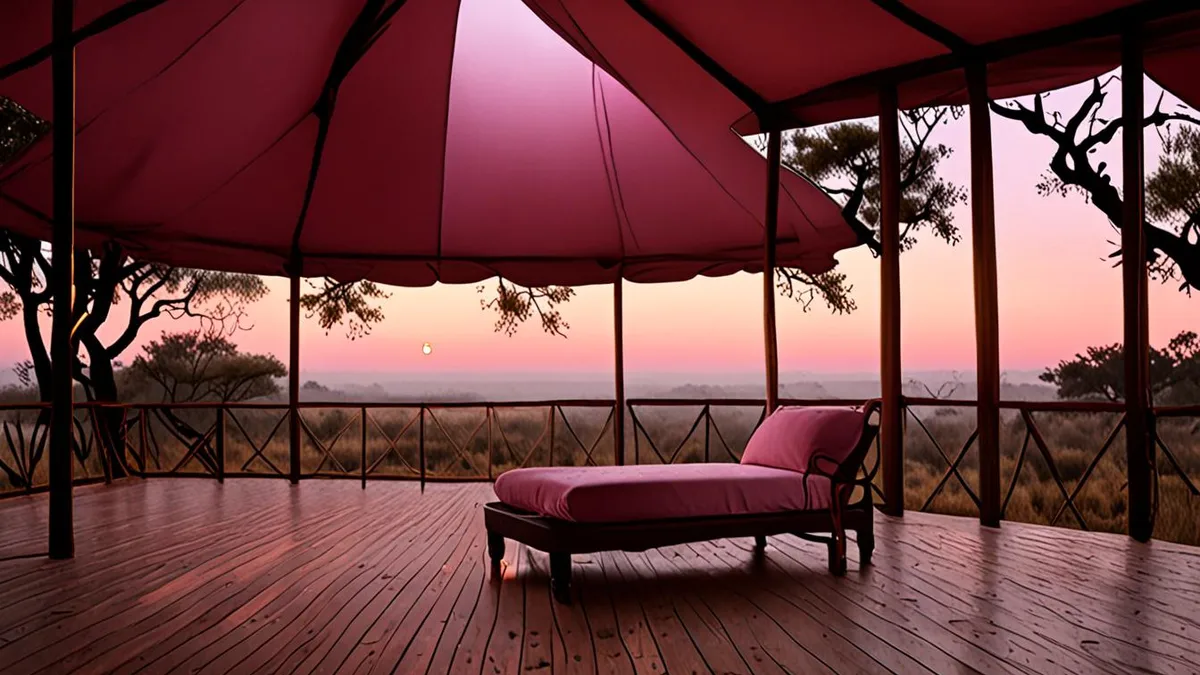
Mid-Range Lodges: The USD 250-600 Sweet Spot
Mid-range lodges, typically USD 250-600 per person per night, are where safari comfort and value line up best. You get en-suite rooms or tents, often located inside or bordering a reserve, plus extras that budget camps rarely offer: a pool for the hot afternoon hours and communal dining where guests swap sightings over dinner.
The game drive experience improves noticeably at this tier too. Vehicles carry smaller groups than budget camps, and drive times are more flexible, so your guide can stay longer at a leopard sighting instead of turning around for a fixed schedule. For help picking a specific area and time of year, see this guide on how to choose a safari lodge in Kruger by area and season.
All-inclusive pricing becomes the norm
This is the tier where all-inclusive pricing, covering meals, drinks and game drives, becomes standard rather than an upsell. That matters more than it sounds. When your quote bundles everything, the total cost of your safari is far easier to predict, and you avoid the drip of bar bills, laundry charges and excursion fees that can inflate a cheaper-looking stay.
In practice, a mid-range all-inclusive lodge often delivers better overall value than a budget lodge whose extras add up. If your trip is longer than a few nights, this predictability also makes budgeting across multiple lodges much simpler.
Luxury Safari Lodges: What USD 600+ Buys You
At USD 600-1,500+ per person per night, luxury safari lodges sell something budget and mid-range camps simply cannot: access. Many top-end properties sit inside private concessions bordering national parks, where exclusive agreements allow activities that public-park rules forbid. That means off-road driving to follow a leopard into thick brush and night drives to spot nocturnal predators on your way back to camp. Lodges inside the parks themselves must stay on designated roads and close at dusk, no matter how good the sighting is.
The service side of the equation changes just as much. Game drives are usually capped at 3-6 guests per vehicle, often with a private guide and tracker pair, so you never fight for a window seat. Back at camp, expect butler or host service, à la carte gourmet dining, and rates that are typically all-inclusive of meals, drinks and activities.
- Off-road tracking rights: guides can leave the track network to position the vehicle for photography, something impossible in a public park where vehicles must remain on roads.
- Night drives with spotlights: a chance to see leopards hunting, bushbabies and hyena activity that daytime-only parks never show you.
- Walking and boating safaris: private concessions often add these activities, which park regulations generally restrict.
- Guaranteed window seats: with 3-6 guests per vehicle, every traveler gets an unobstructed view and room for camera gear.
Timing matters more at this tier than anywhere else. During peak season, rates can run 30-50% above base prices, so the same camp, same guides and same concession can cost dramatically less in shoulder months. If your dates are flexible, you get the identical product for noticeably less. For a closer look at how these camps work on the ground, see our guide to safari lodges in Tanzania and what to expect from them.
Hidden Costs That Change the Tier Comparison
Two lodges can quote the same nightly rate and still cost very different amounts once the bill arrives. The reason is what sits outside the headline price: park fees, drinks and transfers. Comparing tiers fairly means adding these up before you book, not after.
Conservation and park fees are the biggest surprise for first-time safari planners. They are usually billed separately from your accommodation and can add USD 30-80 per person per day, at every tier from budget to luxury. On a week-long trip for two, that is a meaningful sum you need to budget for on top of the nightly rate.
What each tier actually includes
Budget lodges often quote a low nightly rate but exclude drinks, park fees and sometimes even game drive fuel levies. Mid-range and luxury quotes, by contrast, are usually all-inclusive, covering meals, drinks and drives in one figure. This is why a USD 250 mid-range stay can end up cheaper in total than a USD 200 budget camp with everything added on. Always ask operators for the total nightly cost per person, fully loaded, before comparing options. If you are weighing a lodge stay against a regular hotel booking, our article on whether a lodge or hotel suits your trip better breaks down how these stay types differ.
Getting there: road vs fly-in
Access is the other hidden variable. Remote luxury camps often sit far from any practical road network, so you will need light-aircraft transfers, which add a separate cost to your quote. Budget and mid-range lodges, typically located near park gates or along drivable routes, suit self-drive itineraries or shared road transfers, keeping arrival costs low. Check with your operator whether transfers are included in the rate or quoted separately, as practice varies widely.
How to Choose Your Tier and When to Book
The right tier depends less on your budget ceiling than on what you actually want from the trip. A couple celebrating an anniversary has different priorities than a family stretching a two-week itinerary across several parks. A honeymooner might happily pay for a private vehicle and a butler, while a group of friends may prefer more nights at a comfortable mid-range camp. Use the steps below to match your tier and your booking timeline.
- Define your trip priority. If this is a once-in-a-lifetime wildlife pilgrimage and you want private concessions, small vehicles and top guides, luxury justifies its price. If you are planning a longer trip with several parks, mid-range stretches further across more nights.
- Count your nights, not just your nightly rate. Longer trips magnify the cost gap between tiers, so a mid-range camp lets you add extra nights or a second destination for the same total spend as a shorter luxury stay.
- Set your booking window. Mid-range and luxury lodges for the June-October peak season need 9-12 months of lead time, while budget options typically require 3-6 months. Booking earlier also gives you first pick of camps and room types.
- Check migration timing if it matters to you. The Great Migration river crossings in the Serengeti fall around July-September, and luxury camps positioned along the route sell out first. If that spectacle is your goal, book the earliest of all.
- Confirm what is included before committing. Ask for the fully loaded nightly cost, including park fees, drinks and transfers, so you compare tiers on equal terms.
Whichever tier you land on, locking in dates early is the single biggest lever you have. Prices and availability only move one direction as your travel window approaches, and the best-positioned camps are the first to fill. If your dates are flexible, a short phone call or email to a few camps can quickly reveal which ones still have space and which are already waitlisting. That five-minute check can save you weeks of planning around a camp that was never available in the first place.
Wrapping Up the Safari Lodge Tier Comparison
The price gap between safari lodge tiers comes down to three things: exclusivity, vehicle size and what is included. Budget lodges (USD 100-250), mid-range camps (USD 250-600) and luxury properties (USD 600-1,500+) all typically cover meals and game drives, so you are never paying for the basics. What changes is how many guests share your vehicle, whether the camp sits on a private concession, and how much service surrounds your stay.
If you feared overpaying, the fix is simple: compare total nightly cost, including drinks and park fees, rather than the tier label. If you feared missing out, remember the booking windows: 3-6 months for budget options, and 9-12 months for mid-range and luxury lodges in peak season. Neither budget nor luxury is objectively better — the right tier is the one that matches your trip length and wildlife priorities. If this breakdown helped you plan, leave a comment or share the article with a fellow traveler.