Glamping for honeymoons has exploded in popularity, and for good reason: a private tent under the stars sounds like the perfect start to married life. The problem is that photos rarely tell the whole story. Some sites deliver genuine romance, while others turn out to be a tent in a field with a shared bathroom down the path and a neighbor’s campfire three meters away.
This guide helps you separate the truly romantic sites from the merely photogenic ones. We’ll cover what makes a honeymoon stay different from a regular glamping trip, which accommodation types suit couples best, how to vet a site’s privacy and setting, and which amenities actually matter. You’ll also find practical advice on booking timing and rates, the questions to ask before you pay, and a short checklist for finding your perfect site. By the end, you’ll know exactly what to look for and what to walk away from.
What Makes Glamping for Honeymoons Different From a Regular Stay
The biggest difference between a honeymoon stay and a regular glamping trip comes down to one word: privacy. Romance is hard work when you can hear your neighbor’s playlist or wave at strangers from your bed. Look for sites with separated units, screened decks or standalone pitches rather than rows of tents packed side by side. A good operator will tell you honestly how the units are spaced; a vague answer usually means they’re close together.
Honeymoon extras versus standard stays
Honeymoon-grade sites bundle extras that standard sites rarely include: a welcome drink on arrival, a private hot tub on the deck, or in-tent dining brought to your door. These touches aren’t just marketing fluff. They mean the site has designed the experience around couples rather than families or groups, and that shows up in everything from lighting to how staff handle your requests.
Atmosphere also matters more than a long activity list. A sunset view, a fire pit you can linger at and genuinely dark skies for stargazing will do more for your honeymoon than proximity to group amenities like a shared pool or a busy communal kitchen. When comparing sites, ask yourself which photos make you want to linger, not just which ones look impressive.
Choosing the Right Accommodation Type for Two
The accommodation type you choose shapes the whole feel of your honeymoon, so it’s worth thinking beyond “tent looks cute in photos.” Each style has real strengths and trade-offs, and the right pick depends on how long you’re staying, what season you’re traveling in and what you want out of the nights you spend there. If you’re torn between styles, it helps to read a fuller comparison of the key differences between glamping domes, safari tents and yurts before committing.
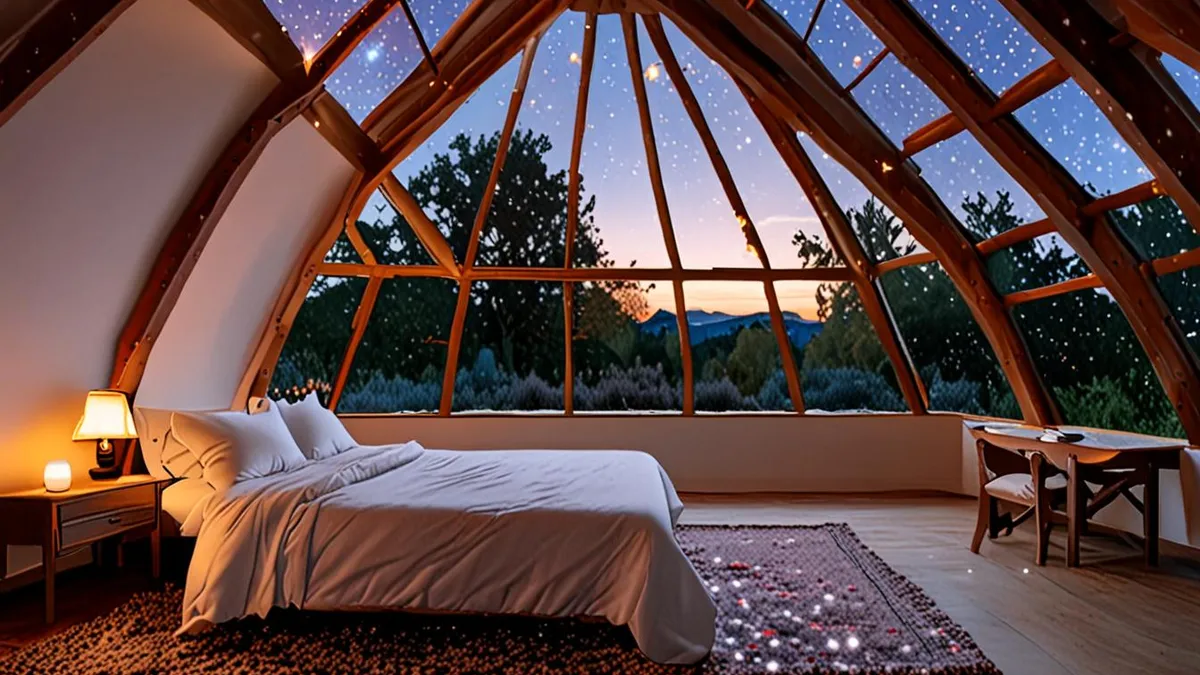
Geodesic domes with clear panels are the most popular honeymoon pick for a reason: you can lie in bed and watch the stars. Safari tents win on sheer space, with the largest floor plans and deck areas of any style. Yurts and cabins give up some novelty but deliver year-round comfort and far better insulation when nights turn cold.
- Domes: clear panels mean you can stargaze from bed, but ask whether there’s a blind or shade if you want darkness for sleeping in.
- Safari tents: the generous deck space suits longer stays of 4-7 nights, giving you room for outdoor dining and lazy mornings.
- Yurts: their round shape and felt or canvas insulation hold warmth well, making them a safer bet for cooler-season trips.
- Cabins: the least “glamping” option on paper, but solid walls mean no wind noise and the most reliable comfort in bad weather.
Match the style to your trip length and the forecast, not just your Pinterest board. A dome in July and a cabin in November are two very different honeymoons.
Privacy and Setting: How to Vet a Site’s Location
Privacy is the single biggest factor separating a magical honeymoon from a disappointing one, and it’s also the hardest thing to judge from a website. The good news is that a few direct questions and some map work will tell you almost everything you need to know before you book.
How secluded is it really?
Start by asking how many units share the property. Five or fewer units usually means real seclusion; a site with dozens of tents means you’ll hear neighbors and queue for space around shared facilities. Then check sightlines yourself using maps and photos. Zoom in on satellite view: neighboring tents, a road running behind the property or nearby farm buildings can all ruin the mood once you’re actually there. Guest photos often reveal more than the professional shots, since they show what you see from the deck rather than what the photographer chose to frame.
Location also needs to work practically, not just romantically. Most honeymoon-grade sites sit within 1-2 hours’ drive of an airport or town, which balances remoteness with an easy arrival after a long flight. A site that takes five hours to reach might sound wonderfully isolated, but landing after an overnight flight and then facing a long drive is nobody’s idea of a romantic start.
Finally, remember that setting affects price. Remote, genuinely private sites command a premium, and it can help to understand how glamping costs break down by stay type so you know what you’re paying for. If a site’s price seems high, check whether that seclusion is what justifies it.
Amenities That Make or Break a Romantic Stay
Nothing sours a romantic escape faster than a midnight walk to a shared bathroom block in the rain. An en-suite bathroom with a hot, well-pressurized shower is the single most important comfort to prioritize, and it is the number one complaint couples report after a disappointing glamping trip. Keep in mind that en-suite bathrooms appear mainly in the top tier of luxury sites, so treat them as a filtering question when you compare options, not a given.
Once the basics are covered, it is the extras that separate a genuinely romantic stay from a basic one. A private hot tub on your own deck, a wood stove or fireplace inside the tent, and proper quality bedding with real mattresses and layered linens make the difference between camping with a nicer view and a true honeymoon experience. Ask exactly what the bedding includes, because “glamping” can mean anything from a thin air mattress to a king bed with down duvets.
Climate control is the detail couples most often forget to check. Even well-built tents can get cold in shoulder-season nights and uncomfortably warm during a July-August heat wave, so confirm what the site provides before you book.
- Heating: ask whether the unit has a wood stove, electric heater or propane heating, and whether firewood is supplied or costs extra.
- Cooling: in peak summer heat, look for operable windows, ceiling or portable fans, and shaded deck orientation rather than relying on a single mesh panel.
- Hot water capacity: ask whether the shower runs on a tank or an on-demand system, since small tanks can run cold halfway through two back-to-back showers.
- Blackout and ventilation options: quality bedding matters more if you can also block early sunrise light and keep air moving on humid nights.
When to Book: Seasons, Lead Times and Rates
Timing is the biggest lever you have on both price and atmosphere at a honeymoon glamping site. Peak season in the Northern Hemisphere runs June through September, and the most romantic units at the best sites sell out first. For those dates, plan on booking 6-9 months ahead, especially if you want a weekend slot, since premium honeymoon-oriented sites commonly enforce minimum stays of 2-3 nights on weekends.
Why shoulder season works in your favor
If your dates are flexible, target May or late September through October. Rates in these shoulder months typically drop 20-40% compared with peak season, and the property is quieter, so you are far less likely to hear neighbors on the next deck. The weather is usually still pleasant enough for hot tubs and fire pits, and you get more attention from hosts who are not stretched thin.
What to budget
For a genuinely honeymoon-grade site, expect to pay roughly $200-$500 per night, compared with $80-$200 for standard glamping. Before you pay, confirm in writing exactly what that rate includes: is the private hot tub use unlimited or metered, are meals, champagne or decorations bundled in, and are there cleaning or service fees added at checkout? A site that looks expensive may actually be good value once the extras are counted, and a cheap one can balloon once everything is added separately.
Questions to Ask Before You Confirm the Booking
The difference between a good booking and a great one usually comes down to a handful of direct questions asked before you pay the deposit. Good hosts answer them happily, and vague or evasive answers tell you just as much as the replies themselves. This matters even more for honeymoons, where a small miscommunication about dinner arrangements or a promised decoration can color an entire trip. If you have never booked this kind of stay before, it helps to read a beginner’s guide to planning your first glamping trip so you know what a normal booking process looks like and which steps typically come before payment.
- Ask about connectivity. Find out whether there is cell service on the property and whether Wi-Fi reaches the units themselves, not just the main lodge. If you want a true digital detox, confirm that explicitly and ask whether there is any way to reach the host or emergency services without a signal.
- Verify meal options. Ask whether the site offers on-site dining, what form it takes, and how far the nearest restaurants are in driving time, ideally within a 20-30 minute drive. If neither applies, check what self-catering facilities exist, such as a kitchenette, grill or basic cooking equipment in the unit.
- Get honeymoon touches in writing. Many hosts can arrange late checkout, room decoration, flowers or a private dinner, but only if you ask ahead. Request written confirmation of whatever is promised, including timing and any extra cost, so nothing depends on a friendly verbal yes.
Send these questions in a single message early in the booking process, and keep the replies saved. This is especially useful if you are booking several months out, since staff or policies can change between your inquiry and your arrival, and a written record removes any ambiguity. A host who answers clearly and thoroughly before you pay is a strong sign of how they will handle anything that comes up during your stay itself, from a cold night to a delayed check-in. If the answers come slowly or feel evasive, treat that as useful information too, and consider looking at other sites before you commit your deposit.
Finding Your Perfect Honeymoon Glamping Site
The difference between a truly romantic honeymoon site and just a tent in a field usually comes down to three things working together: real privacy, the right accommodation type for you as a couple, and honeymoon-level amenities like en-suite bathrooms, hot tubs and thoughtful extras. A site that nails all three at a price you’re comfortable with is the one worth booking.
Timing matters too. If you’re set on peak season dates between June and September, book 6-9 months ahead, since premium sites often require 2-3 night minimums on weekends and fill quickly. If your dates are flexible, shoulder months like May or late September through October can cut rates by 20-40% while giving you quieter surroundings. Whatever you choose, vet the location, amenities and policies with direct questions before you confirm, and get any honeymoon touches in writing. Found this helpful, or have a glamping honeymoon story of your own? Share it in the comments.