You booked the resort, counted down the days, and then you opened the fine print: a dress code policy that mentions “smart casual” and “elegant evenings,” and suddenly you’re wondering whether your trusty beach shorts will get you turned away at dinner. If that sounds familiar, you’re not alone. Resort dress codes confuse even seasoned travelers, partly because every property phrases them a little differently.
The good news is that most resorts follow the same basic pattern, and once you understand it, packing becomes simple. This guide explains why dress codes exist, breaks down the three common tiers from casual to formal, and shows what each venue type actually expects at lunch versus after sunset. You’ll also find a realistic packing strategy for a one-week stay, plus notes on kids, gala nights, and destinations where modest dress matters beyond the resort gates. By the end, you’ll know exactly what to pack and when to wear it.
Why Resort Dress Codes Exist
Walk through any large resort and you’ll notice the atmosphere shifts from one end of the property to the other. The poolside snack bar at noon is all towels, flip-flops, and dripping swimsuits. By 8 pm, the fine-dining room two buildings away has dimmed the lights and set the tables with cloth napkins. Resort dress codes exist to signal that shift, telling guests what kind of experience each venue is designed to deliver.
It’s not about rules for their own sake
It’s easy to see dress codes as fussiness, but they serve a practical purpose: they protect the experience for everyone. A couple celebrating an anniversary doesn’t want to dine next to someone in a wet swimsuit, and a family grabbing burgers by the pool doesn’t want to worry about sandy feet on a restaurant floor. That’s why even the most relaxed luxury resorts enforce their codes consistently, rather than treating them as optional suggestions.
Enforcement, however, varies more than you might expect. Some venues take a friendly approach and keep a stash of loaner trousers or collared shirts at the host stand, so a guest who underpacked can still dine. Others simply refuse entry at the door, no matter how far you traveled or how much you paid for the reservation. The safest move is to read your resort’s specific policy before departure and ask at guest services if anything is unclear, because the difference between a loaner shirt and a locked door often comes down to the individual property.
The Three Common Resort Dress Code Tiers
Most resort restaurants fall into three dress code tiers, and once you can recognize them, every policy on a resort website starts to make sense. The tier usually matches the venue’s role on the property: the more occasion-driven the setting, the stricter the code. A beach bar where you grab a smoothie in your swimsuit and a candlelit à la carte restaurant where you celebrate a birthday are simply playing by different rules, and the dress code is how the resort communicates that difference before you ever walk through the door.
It also helps to think about where you’ll be staying when you choose your room category, since some accommodations put you closer to the casual venues while others suit guests planning more formal evenings. If you’re still deciding, this comparison of overwater bungalows versus beach villas can help you match your accommodation to the kind of resort experience you want, dress codes included.
Here’s how the three tiers break down in practice:
- Casual: Swimwear cover-ups, shorts, and sandals are accepted. This tier is typical of buffets and beach bars, though many resorts still draw the line at bare torsos and wet clothing indoors.
- Smart casual: Long trousers, collared shirts or blouses, and closed or dressy sandals. Beachwear and athletic wear are out, and some resorts additionally frown on logos or very casual T-shirts in these venues.
- Formal or elegant: Dresses, suits, or jackets. This tier appears mainly at gala nights and specialty fine-dining venues, and some resorts suggest specific colors or themes for these events, so it’s worth checking the schedule in advance.
When you read a resort’s dress code page, match each venue to one of these three tiers and you’ll know immediately what belongs in your suitcase and what stays home.
Dress Codes by Venue: Buffets, Specialty Restaurants and Bars
The same resort can have completely different rules depending on where you’re standing, which is why it helps to think venue by venue rather than treating “the dress code” as one blanket policy. A property with a strict fine-dining room may be perfectly relaxed at its beach grill, and both attitudes are intentional.
Buffets: relaxed, but not lawless
Main buffets are the most forgiving venues on any property, especially at breakfast and lunch, when guests drift in straight from the pool. That said, relaxed doesn’t mean anything goes. Beachwear and flip-flops are almost always banned from indoor restaurants, even at lunch, and footwear is required at lunch and dinner across most properties. A light cover-up and sandals will get you through nearly every buffet meal of your stay.
Specialty restaurants and evening venues
Specialty restaurants usually carry stricter codes than buffet venues, and the à la carte spots in particular tend to enforce smart casual in the evening, roughly from 6:30 pm onwards. If you’ve booked a teppanyaki table or an Italian fine-dining night, plan on long trousers and a collared shirt or blouse rather than the shorts you wore at lunch. Reservations are often made weeks in advance, so it’s easy to forget which venue you booked until the host reminds you at the door.
Lobby bars and evening entertainment venues follow a similar rhythm. Many resorts keep daytime rules loose everywhere, then expect smart casual after sunset in the spaces where guests gather for cocktails, live music, or shows. A good habit is to check the evening schedule on arrival and treat any indoor, after-dark venue as smart casual unless the resort says otherwise.
What Smart Casual Actually Means
Smart casual is the dress code most resort guests worry about, and honestly, it is simpler than it sounds. For men, the basic formula is trousers that reach the knee or longer, a polo or collared shirt, and dress sandals or loafers. That is it. You do not need a blazer or a tie at the vast majority of resorts, and a neat pair of chinos with a pressed polo will pass at almost any à la carte restaurant.
Jeans sit in a middle zone. Some resorts accept them if they are dark, undamaged and free of rips, while others refuse denim outright in the evening. If you plan to rely on jeans for dinner, check the resort’s own dress code page before you pack rather than discovering the rule at the host stand.
Smart casual for women
For women, the options are wider: a sundress, a skirt, a jumpsuit or tailored trousers all work, paired with sandals or wedges. A light maxi dress is a favorite among frequent resort travelers because it looks polished, stays cool in tropical evenings and takes up almost no space in a suitcase.
The gray areas to watch
A few items cause the most confusion at the door. Tailored shorts, dark jeans and capris are accepted at some resorts and rejected at others, sometimes even between venues on the same property. The safest approach is to treat them as daytime-only pieces and confirm the resort’s written policy in advance. When in doubt, a pair of long trousers or a dress removes all ambiguity and gets you seated without a second glance.
How to Pack for Resort Evenings Without Overpacking
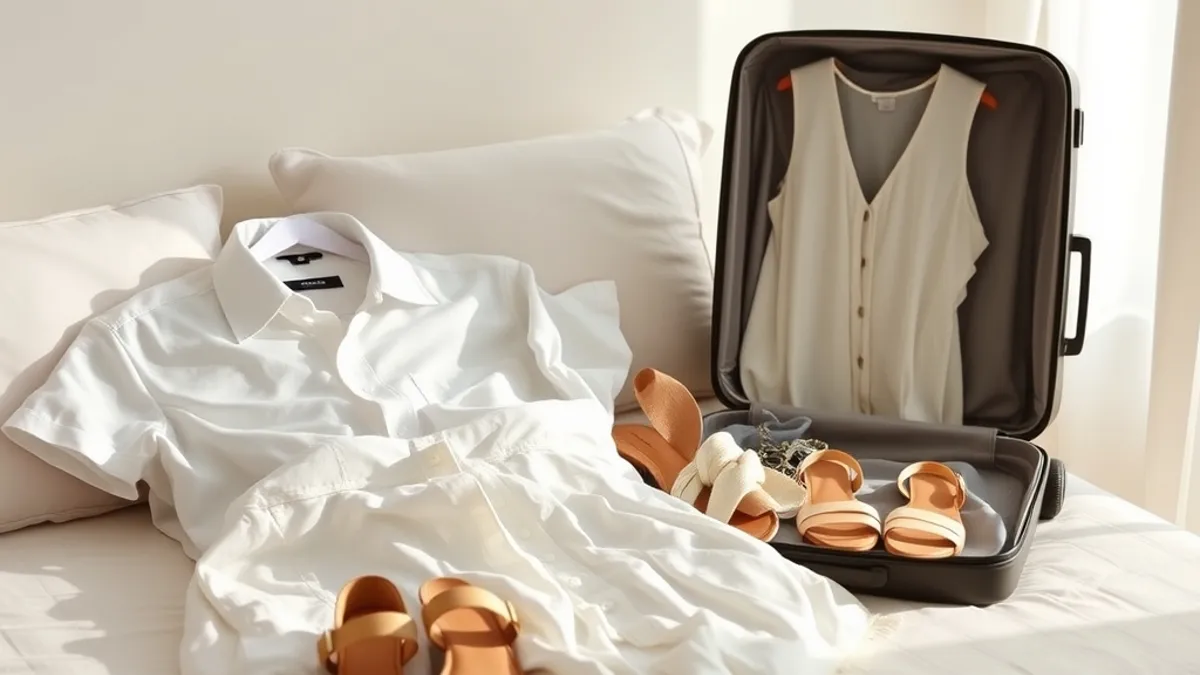
The biggest packing mistake resort guests make is bringing a different outfit for every dinner. For a one-week stay, two to three mix-and-match evening outfits are usually enough, especially since specialty restaurants and buffet dinners rarely happen on consecutive nights at the same formality level. Swap the shirt or the accessories and the same base outfit reads as new.
Fabric choice matters more than quantity. Linen and cotton handle humid tropical evenings comfortably, resist wrinkles better than you might expect when rolled, and compress down small in your luggage. Save the heavier fabrics for a cooler destination.
One thing first-timers forget: restaurants at many resorts are heavily air-conditioned, and stepping in from a warm evening into a chilled dining room can feel genuinely cold. A light layer solves that instantly.
- One dressier option: a cocktail dress or a jacket-and-trousers combo covers gala nights and any formal venue, and it doubles as an outfit for a nice dinner off-property.
- One pair of dressier shoes: loafers or wedges in a neutral color meet both smart casual and formal requirements, so you never need to pack a second pair of evening footwear.
- A compact light layer: a thin cardigan or linen blazer handles cold dining rooms and doubles as sun protection on breezy excursions.
- A spare collared shirt or blouse: one extra top lets you reuse the same trousers twice without anyone noticing, which effectively doubles your outfit count.
Pack with the dress code tiers in mind rather than the number of nights, and you will find your evening wardrobe takes up less than half a suitcase.
Special Cases: Kids, Gala Nights and Cultural Destinations
Dress codes sound strict on paper, but resorts apply them with more flexibility than most guests expect, especially when children are involved. Many resorts enforce dress codes only for guests aged 12 and over, which means younger kids can typically come to dinner in whatever they are comfortable wearing. Teenagers, on the other hand, are usually held to the same smart casual standard as adults, so pack one presentable outfit for them too.
Gala and theme nights
If you are staying at an all-inclusive resort, keep an eye on the weekly entertainment schedule you receive on arrival. Gala or theme nights can temporarily raise the dress code to formal for that evening, even at venues that are normally smart casual. These nights are often the highlight of the week, with special menus and entertainment, so a single dressier outfit in your suitcase earns its place quickly. Check the schedule the day you arrive rather than dressing down on the one night it matters.
When the dress code follows you off the resort
In some destinations, modest dress expectations extend beyond the resort gates. In the Maldives, for example, local inhabited islands ask visitors to cover shoulders and knees, and parts of the Middle East have similar expectations for excursions away from private resort grounds. If you are weighing a trip there, it helps to read up before booking, and a guide like Maldives overwater vs beach villa costs explained by season covers practical planning details for that destination. Packing a lightweight long skirt or a loose shirt you can pull on for a day trip keeps you respectful and comfortable without adding real bulk to your bag.
Key Takeaways on Resort Dress Codes
So, will your beach shorts get you turned away at dinner? If dinner means the main buffet, probably not, though swimwear and flip-flops are still off the table. If you’ve booked a specialty restaurant or a gala night is on the schedule, shorts won’t make it past the door. Resort dress codes come in three tiers: casual for buffets, smart casual for most evening venues, and formal for gala nights and fine-dining rooms.
The good news is that smart casual is easier than it sounds: long trousers and a collared shirt for men, a dress or trousers for women. Pack two to three versatile evening outfits and one dressier option, and you’re covered for a typical one-week stay. Check your resort’s own policy before you fly, and you can leave the panic at home. Found this helpful? Leave a comment or share it with a fellow traveler.