You’ve narrowed your trip down to a cozy cabin or a glamping tent, but you’re unsure which one actually fits your travel style, budget and season. It’s a common dilemma: both promise a nature-based escape, yet they deliver very different experiences once you arrive. The cabin vs glamping tent question usually comes down to how much comfort and privacy you need, who you’re traveling with, and when you’re going.
This guide breaks the decision into clear, practical parts. We start with the core differences between the two stay types, then look at when a glamping tent shines and when a cabin is the smarter pick. From there, you’ll find a cost comparison showing what you actually pay for, an honest look at comfort and weather trade-offs, and advice on matching each stay to your trip type — honeymoons, family trips, winter getaways and first-time glamping. By the end, you’ll know exactly which option suits your next escape.
Cabin vs Glamping Tent: The Core Differences at a Glance
At first glance, cabins and glamping tents can look similar in photos — both promise a scenic setting and a proper bed. Up close, they’re built for different purposes. A cabin is a solid structure with real walls, a roof and usually a private bathroom, heating and a full kitchen. A glamping tent is a canvas stay: you get a real bed, furnishings and often lighting and heating of some kind, but far fewer utilities than a cabin.
Shared facilities vs self-contained
The biggest practical difference is what’s attached to your accommodation. Glamping tents usually share bathroom blocks and communal cooking areas, so a midnight trip to the toilet often means stepping outside and walking a short distance. Cabins are self-contained — everything you need is under one roof, which matters a lot in bad weather or with young children.
Space and who each suits
Space differs sharply between the two. Glamping tents typically offer around 200–400 sq ft and sleep 2–4 guests, while cabins typically run 400–1,000 sq ft and suit groups of 4–8. A useful way to frame the choice: a cabin buys you structure and privacy, while a tent buys you closeness to nature and a sense of novelty. Neither is better — they simply serve different trips.
When to Choose a Glamping Tent
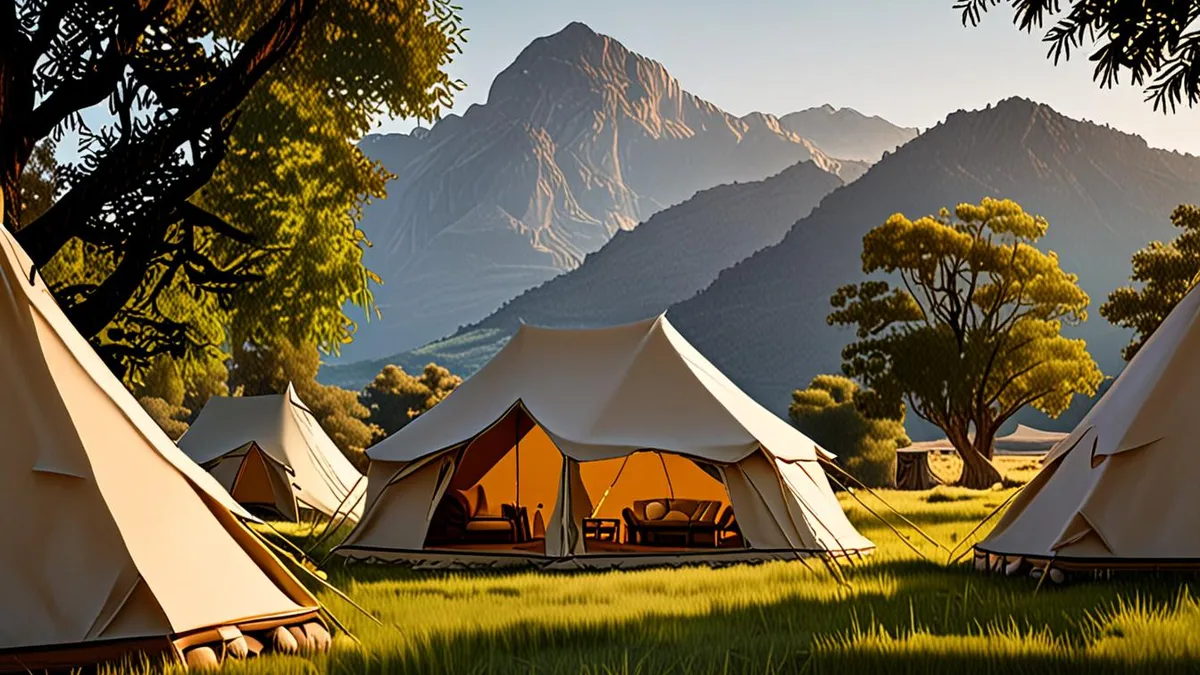
Glamping tents are at their best during fair-weather trips between May and September. In temperate regions, most canvas stays operate in this window and many close entirely in winter, so the season decides your options before anything else. It also happens to be when the scenery around these sites is at its best — wildflowers, warm evenings and long dusks that make the canvas walls feel like a feature rather than a compromise.
Tents suit couples and small groups of 2–4 who want an outdoorsy feel without sleeping on the ground. If you value atmosphere over private facilities — falling asleep to rustling leaves, owls and distant streams — a tent delivers that in a way a cabin rarely can. If you’re still deciding which tent style appeals, this comparison of glamping domes, safari tents and yurts explains how the main options differ in space, insulation and feel.
Expect to pay $100–$300 per night, and note that peak summer weekends often book out 2–6 months ahead. A few signs a tent stay is right for you:
- You’re traveling light on luggage. Tent sites typically provide the main furnishings, so you mainly bring clothing and personal items rather than bedding or cooking gear.
- Your trip centers on the outdoors anyway. If your days are spent hiking, swimming or kayaking, a shared bathroom block is a minor inconvenience rather than a dealbreaker.
- You can travel midweek or in shoulder months. June and early September often offer the same canvas experience with more availability than peak summer weekends.
When a Cabin Is the Better Pick
For cold-weather trips, a cabin is the only realistic option. Cabins stay open and heated through winter, while most glamping tents close entirely once temperatures drop. If your getaway involves snow, frosty mornings or short winter days, solid walls and reliable heating stop being a luxury and become the whole point of the stay. If you’re curious how the tent alternative works in the cold season, this guide to glamping in winter and cold-weather stays covers what’s actually possible.
Cabins are also the better pick for larger groups of 4–8 and family setups that need multiple beds and a private kitchen. Cooking your own meals in a proper kitchen, rather than queueing at a communal camp kitchen, makes a week-long group trip far easier to manage. And when private bathrooms, solid walls and all-weather reliability matter more than novelty, the cabin wins every time — rain on the roof is atmospheric, but only when you’re warm and dry underneath it.
Typical rates run $120–$350 per night, and winter holiday dates need early booking. A few situations where a cabin clearly makes sense:
- You’re planning a multi-night stay. Having a full kitchen and fridge lets you cook real meals, which keeps longer trips comfortable and food costs down.
- Your group includes older relatives or toddlers. En-suite bathrooms and no outdoor walks at night remove the trickiest logistics of a nature stay.
- You want a base, not just a bed. Cabins give you indoor space to spread out on a rainy afternoon — board games, cooking and downtime all happen under one roof.
Cost Comparison: What You Actually Pay For
At first glance, the nightly rates overlap so much that the choice can look like a coin flip. But the sticker price only tells part of the story — what matters just as much is what each rate actually includes once you arrive.
Cabins bundle the essentials into one price: a private bathroom, a full kitchen and heating are all part of the deal. With a glamping tent, you may face add-on fees for linens, firewood or access to shared facilities. None of these extras is huge on its own, but they add up, especially over a longer stay. For a clearer picture of how each stay type breaks down, this glamping cost breakdown by stay type is a helpful reference.
Which works out cheaper overall?
For couples, tents often cost less overall — you’re paying one rate for a space sized for two to four people, and you’ll likely eat out rather than cook anyway. For groups of four or more, cabins usually win on a per-person basis: split the nightly rate four ways and each person typically pays less than they would for most tent stays, with a kitchen that cuts your food budget too.
Finally, budget with the season in mind. Shoulder-month tent stays — late May, early June or September — can drop well below peak summer pricing, so shifting your dates by a few weeks can make a real difference to the total.
Comfort, Weather and Practical Trade-offs
Weather is where the two stay types diverge most sharply. A cabin handles rain, wind and cold without any impact on your stay — you might hear the storm outside, but it stays outside. A glamping tent, even a well-built one, can feel noisy or chilly on wet nights. Canvas flaps in the wind, and temperatures can drop noticeably once the sun goes down, even in summer.
That said, tents give you something cabins can’t: proximity. You’re sleeping in the landscape itself, closer to wildlife and starlight than any solid-walled structure allows. The trade-off is convenience — bathroom blocks are usually shared or nearby rather than en-suite, often a walk of 50–200 m from your tent. That’s fine on a dry evening and less fun at 2 a.m. in the rain.
Kitchens, storage and packing
Inside, the difference continues. Cabins offer lockable storage and a full kitchen, so you can cook proper meals and leave gear out without worry. Tents usually provide coolers, a camp kitchen or access to nearby communal cooking — workable, but it changes how you plan meals and store food, especially anywhere wildlife is active.
Packing differs too. A cabin stay is closer to a hotel trip: bring clothes and food and you’re set. A tent stay rewards extra layers for cool evenings, torches for the walk to the bathroom block and a bit more thought about what you’ll need between dusk and dawn.
Matching the Stay to Your Trip Type
The right choice depends less on the accommodation itself and more on the trip you’re taking. A stay that’s perfect for a couple’s anniversary would be a headache for a family with toddlers, and vice versa. Before you book, think honestly about who is traveling, how they sleep and how much time you’ll actually spend inside. Two couples who loved the same tent might have completely different needs from your group. Here’s how the two options line up against the most common trip types.
Which stay fits which trip?
- Honeymoons and couples’ escapes: a glamping tent wins on romance during the May–September window — think lantern-lit evenings, canvas walls and nature sounds instead of a TV. Many tent sites position decks or hot tubs specifically for two-person stays.
- Family trips with young children: cabins make the logistics easier. Private bathrooms mean no midnight walks across a campsite, and solid walls let naps happen even when other guests are outside. A proper kitchen also makes picky-eater meals far simpler.
- Winter or shoulder-season getaways: cabins are the dependable choice. They’re bookable year-round, including snow season, while many tent operations close entirely in winter.
- First-time glampers: a tent stay in high summer is the gentlest introduction to outdoor accommodation — warm nights, long daylight hours and the full facilities operating at their best.
If your trip spans two of these categories — say, a family escape in September — weigh which factor matters more: the season’s lower prices and quieter campsites, or the certainty of private facilities. Groups with mixed preferences can sometimes compromise by booking a cabin plus a tent on the same site, so ask operators when you inquire. In most cases, the trip type decides the accommodation, not the other way around. Match the stay to your worst-case scenario, not your best day.
The Bottom Line: Cabin or Glamping Tent?
So which one wins? If you’re a couple traveling in the warm months and want to fall asleep to nature sounds, a glamping tent at $100–$300 per night is hard to beat. If you’re heading out in winter, traveling with a group of 4–8, or simply want your own bathroom and kitchen, a cabin at $120–$350 per night is the safer, more comfortable bet.
In practice, your season, group size and need for private facilities decide the winner far more than the nightly rate does — the prices overlap, but the experiences don’t. Match the stay to those three factors and you’ll rarely regret the choice. If you’ve stayed in one or the other recently, tell us how it went in the comments, or share this article with someone still deciding.